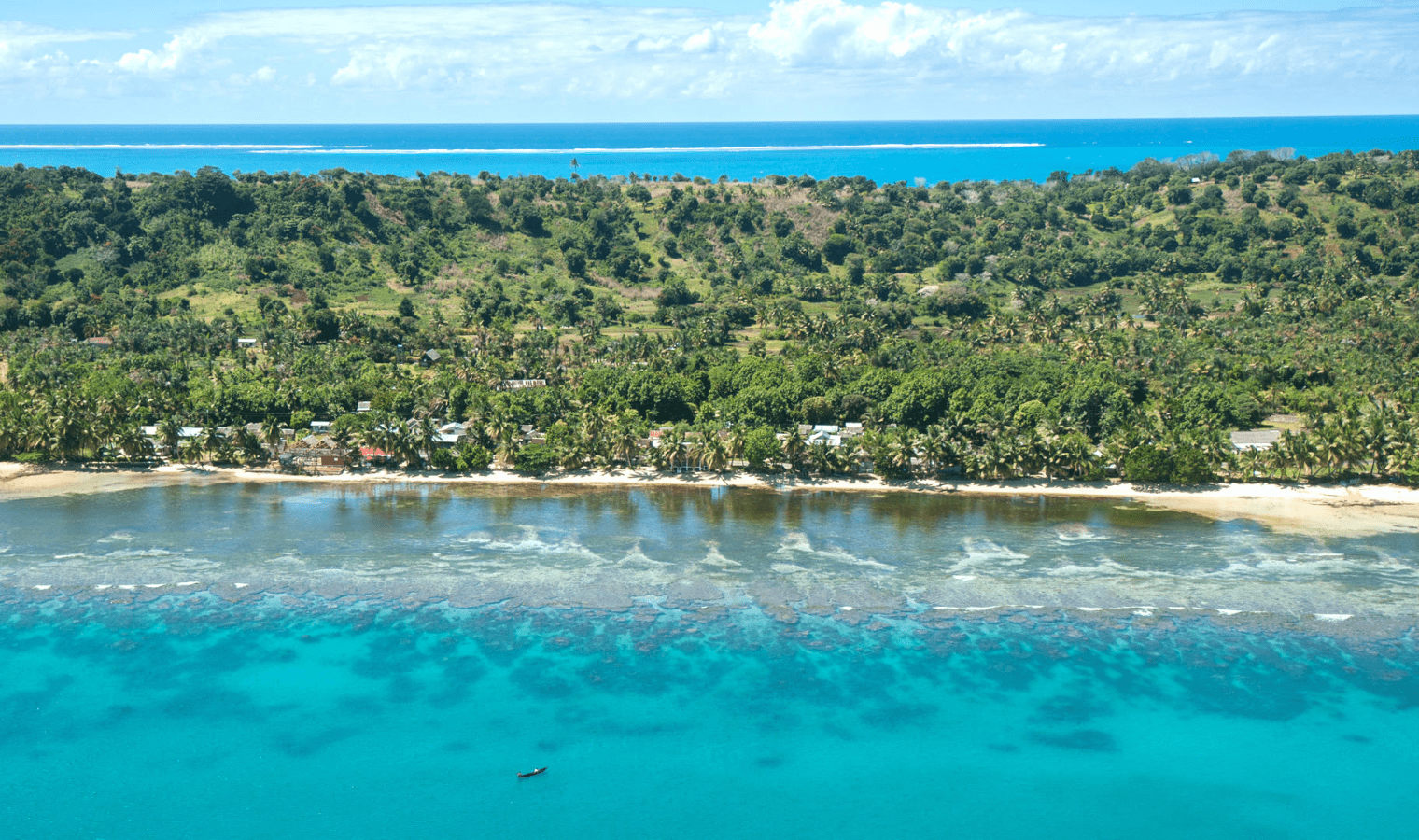
Sainte Marie Island, also known as Nosy Boraha, is one of Madagascar’s most enchanting island destinations. Located just off the country’s lush eastern coast, this long tropical island combines palm-fringed beaches, fishing villages, coral lagoons, fascinating pirate history and one of Madagascar’s most memorable wildlife experiences: humpback whale watching.
Unlike some destinations that are visited mainly for their beaches, Sainte Marie offers much more than a tropical escape. You can spend a morning exploring historical sites around Ambodifotatra, cross the lagoon to idyllic Île aux Nattes, cycle through villages and tropical vegetation, snorkel in clear waters and, during whale season, head out into the Sainte-Marie Channel in search of humpback whales.
For travellers looking to combine rainforest, wildlife and time beside the Indian Ocean, Sainte Marie also fits naturally into a journey through eastern Madagascar. Our 12-Day East Madagascar Tour: Andasibe, Pangalanes and Sainte-Marie combines the island with Andasibe rainforest, the Pangalanes Canal and Ankanin’ny Nofy.
Here is everything you need to know before visiting Sainte Marie Madagascar.
Where Is Sainte Marie Island in Madagascar?
Sainte Marie lies off the east coast of Madagascar in the Indian Ocean and is also known by its Malagasy name, Nosy Boraha.
The island is long and narrow, stretching for roughly 60 kilometres while remaining only around five kilometres wide in many places. Its main town, Ambodifotatra, is located in the southern part of the island.
This geography gives Sainte Marie two very different coastal atmospheres. On one side, you find waters protected by the channel separating the island from mainland Madagascar. On the other, the island faces the open Indian Ocean.
At Sainte Marie’s southern tip lies another small island that has become one of the region’s most beautiful places to visit: Île aux Nattes.
Despite its tropical setting, Sainte Marie has remained relatively peaceful and low-key compared with more developed beach destinations. Fishing villages, tropical vegetation and small-scale accommodation contribute to its relaxed atmosphere.
Why Visit Sainte Marie Madagascar?
Sainte Marie is especially interesting because it brings several very different experiences together in a relatively small area.
You can come for:
- Humpback whale watching
- Tropical beaches and lagoons
- Île aux Nattes
- Snorkelling and diving
- Pirate history
- Cycling and island exploration
- Tropical vegetation
- Fishing villages and local life
- A peaceful beach stay after exploring mainland Madagascar
For many travellers, however, what makes Sainte Marie special is its atmosphere.
This is not an island that needs to be explored at high speed. Part of the pleasure is slowing down, following the coastal road, stopping in villages, walking beside the lagoon and allowing time for the weather and the rhythm of island life.
1. Go Whale Watching in Sainte Marie
Whale watching is one of the great reasons to visit Sainte Marie.
Every year during the southern hemisphere winter, humpback whales migrate into Madagascar’s warmer waters to breed and give birth. Sainte Marie is one of the country’s best-known places to observe them.
The main period to consider is generally July to September, although whales may begin appearing around the island earlier in the season.
A boat excursion can offer opportunities to observe behaviours such as breaching, tail slapping and mothers travelling with their calves. As with any wildlife encounter, sightings and behaviour can never be guaranteed.
Whale watching should always be done with responsible operators that respect appropriate distances and avoid disturbing the animals.
If seeing whales is an important reason for your trip, read our complete guide to whale watching in Madagascar before choosing your dates.
What is the best month for whale watching in Sainte Marie?
July and August are particularly popular months, while September can also be excellent.
If whales are your absolute priority, we recommend planning the rest of your Madagascar itinerary around this period rather than simply hoping to see them at another time of year.
2. Spend a Day on Île aux Nattes
Just south of Sainte Marie is Île aux Nattes, a small tropical island separated from the main island by a narrow channel.
It is one of the places that most closely matches the classic image of a tropical escape: white sand, coconut palms, turquoise water, small villages and a peaceful lagoon.
The crossing is traditionally made by pirogue and takes only a short time from the southern end of Sainte Marie.
Once there, you can walk around the island, swim, enjoy the beach, discover village life or simply spend a slow day beside the lagoon.
Île aux Nattes is small enough to explore without rushing, and walking is one of the best ways to experience it.
Our East Madagascar itinerary includes time on both Sainte Marie and Île aux Nattes, allowing the island stay to become the relaxing final chapter of a journey through Madagascar’s eastern rainforests and waterways.
3. Discover Sainte Marie’s Pirate History
Paradise beaches are only one side of Sainte Marie.
The island also has an extraordinary maritime history.
During the seventeenth and eighteenth centuries, Sainte Marie became associated with pirates operating across the Indian Ocean. Its position near major maritime routes and its sheltered anchorages made the island an attractive refuge.
Today, traces of this past can still be explored around Ambodifotatra.
One of the best-known historical sites is the Saint-Pierre Pirate Cemetery, often simply called the Pirate Cemetery. Old graves surrounded by tropical vegetation overlook an area deeply connected with Sainte Marie’s maritime history.
Nearby historical sites include Îlot Madame, the area associated with Île aux Forbans and the Catholic church of Ambodifotatra, completed in 1857.
Rather than visiting the cemetery alone, consider exploring the historical area with a local guide. The stories, legends and historical context make the experience far more interesting than simply looking at old tombstones.
4. Explore Ambodifotatra
Ambodifotatra is Sainte Marie’s main town.
It is not a large city and that is part of its charm. The town provides an opportunity to see everyday island life, visit the historical sites and explore the harbour area.
It is a useful contrast with the quieter beaches and villages elsewhere on Sainte Marie.
Take your time rather than treating Ambodifotatra as somewhere to pass through. Markets, small shops, local restaurants and everyday activity provide a glimpse of Sainte Marie beyond its resort image.
Travelling respectfully is especially important when exploring communities in Madagascar. Customs can differ considerably between regions, so our guide to Madagascar customs and traditions is useful reading before your trip.
5. Discover Sainte Marie by Bicycle
Because Sainte Marie is long and relatively narrow, cycling is a wonderful way to experience parts of the island.
A bicycle allows you to travel slowly enough to notice details you would easily miss from a vehicle: small villages, tropical plants, rice fields, roadside stalls, fishing communities and glimpses of the ocean through the vegetation.
You do not necessarily need to cycle the entire island.
Choose one section, allow plenty of time and combine your ride with stops for swimming, lunch or a village visit.
Road and weather conditions can vary, so ask locally about the most suitable route before setting out.
6. Visit the Natural Pools in Northern Sainte Marie
Travellers who venture towards the northern part of Sainte Marie discover a wilder side of the island.
Among its attractions are the natural pools, where rock formations create protected areas beside the powerful Indian Ocean.
Some of these places also have cultural significance and local fady, or taboos, should be respected.
This is one reason why travelling with a local guide can add so much to a visit. Madagascar’s landscapes are not simply scenery: many places are connected to traditions, ancestors and community beliefs.
Never assume that swimming, entering a location or behaving in a particular way is automatically permitted simply because a site appears accessible.
7. Explore Ampanihy Bay and Sainte Marie’s Tropical Landscapes
Sainte Marie is much greener than many travellers expect from a tropical island destination.
Its humid eastern climate supports lush vegetation, palms, spices and tropical plants.
Ampanihy Bay is one of the places where visitors can discover a different environment from the island’s better-known beaches, with mangroves and coastal vegetation creating a quieter landscape.
Elsewhere on the island, routes pass through villages and areas where crops such as cloves, vanilla, cinnamon and other tropical plants may be encountered.
This greenery is part of a broader contrast within Madagascar. The east is humid and tropical, while other regions of the country contain dry forest, limestone formations, baobabs and semi-arid landscapes.
If Madagascar’s unusual flora and fauna interest you, discover more in our article about Madagascar’s biodiversity.
8. Enjoy Sainte Marie’s Beaches
Sainte Marie has many beaches, but the island is not simply one continuous stretch of perfect white sand.
That is precisely what makes exploring it enjoyable.
Some areas have calm lagoon waters, others are bordered by vegetation and coconut palms, while the exposed eastern coast feels much wilder.
The beaches around the southern part of the island and Île aux Nattes are particularly appealing for travellers seeking a classic tropical atmosphere.
Rather than trying to find one supposedly « best beach », we recommend exploring several parts of the island.
What is perfect for swimming may not be the same place you prefer for walking, snorkelling, sunsets or simply enjoying the landscape.
For more inspiration around Madagascar’s coastline, you can also explore our guide to the most beautiful beaches in Madagascar.
9. Go Snorkelling or Diving
Sainte Marie is surrounded by marine environments that make snorkelling and diving possible in several areas.
Coral reefs, tropical fish and other marine species add another dimension to the island.
Conditions are not identical everywhere or every day, so it is better to choose your site according to sea conditions and obtain advice from an experienced local operator.
Diving can also reveal another aspect of Sainte Marie’s maritime past, with wrecks and historical sites beneath the water in some areas.
Even if you are not a diver, snorkelling around suitable parts of the lagoon can be a rewarding way to experience the island from a different perspective.
10. Experience Local Life and Malagasy Food
A trip to Sainte Marie should not be reduced to beaches and excursions.
The island is inhabited by communities with their own rhythms, traditions and relationship with the sea.
Fishing plays an important part in island life, and seafood naturally appears on many menus. Depending on where you stay and what is available locally, meals may feature fish, crab, prawns, coconut, rice and tropical fruit.
Eating Malagasy dishes during your trip is another way to discover the country beyond its landscapes.
Before travelling, take a look at our guide to traditional Malagasy dishes to discover some of the flavours you may encounter during your journey.
When Is the Best Time to Visit Sainte Marie Madagascar?
For many travellers, May to November is a particularly good period for including Sainte Marie in a Madagascar itinerary.
However, the best month depends on what you want to experience.
May and June
The main rains are generally easing and the island remains very green.
This can be a good period for travellers interested in nature and quieter island exploration.
July to September
This is the most important period if your priority is humpback whale watching.
It is also Madagascar’s cooler dry season, making it an excellent time to combine Sainte Marie with rainforest and wildlife destinations elsewhere in eastern Madagascar.
October and November
Conditions can still be attractive, with warmer temperatures as Madagascar moves towards its wetter summer season.
December to March
Sainte Marie lies on Madagascar’s humid east coast, so the wet season deserves careful consideration.
Rainfall can be heavier and tropical weather systems can affect travel plans.
The island remains accessible at different times of year, but itineraries should allow more flexibility during the wetter months.
Madagascar has significant regional climate differences, so do not choose your travel dates based only on the weather in Sainte Marie. Our month-by-month guide to the best time to visit Madagascar compares conditions across the country.
How to Get to Sainte Marie Madagascar
There are two principal ways to reach Sainte Marie: by air or by sea.
Flying to Sainte Marie
Sainte Marie has its own airport in the southern part of the island.
Domestic flights can connect the island with Antananarivo, depending on current schedules.
Flying is normally the easiest option for travellers with limited time.
However, domestic flight schedules in Madagascar can change. Always verify the latest timetable before building a tightly connected itinerary.
Travelling to Sainte Marie by boat
Sainte Marie can also be reached by sea from Madagascar’s eastern coast.
This option works particularly well when Sainte Marie is part of a longer journey through eastern Madagascar.
For example, our East Madagascar tour travels progressively from Antananarivo through Andasibe, Manambato, Ankanin’ny Nofy, the Pangalanes Canal, Toamasina and Mahambo before reaching Sainte Marie, then returns to Antananarivo by air.
This creates a much richer journey than simply flying to the island and back.
Sea conditions and transport operations can change, so crossings should always be organised according to current local conditions.
How Do You Get Around Sainte Marie?
Transport on Sainte Marie is relatively informal compared with a large tourist destination.
Depending on where you are staying and how far you want to travel, options may include:
- Taxi or private vehicle
- Tuk-tuk
- Bicycle
- Scooter
- Walking
- Pirogue for certain island and lagoon crossings
- Boat excursions
The island may look small on a map, but remember that it is very long.
Trying to explore the far north, Ambodifotatra and Île aux Nattes in one rushed day would miss much of what makes Sainte Marie enjoyable.
How Many Days Do You Need in Sainte Marie?
We recommend at least three full days, and ideally four or five if Sainte Marie is an important part of your Madagascar trip.
With three days, you could combine:
Day 1: Ambodifotatra, pirate history and island exploration
Day 2: Île aux Nattes
Day 3: Whale watching in season or beaches and nature outside whale season
With four or five days, you gain the freedom to explore further north, cycle through the island, snorkel, relax and adapt activities to the weather.
Sainte Marie is not a destination that benefits from rushing.
If you are travelling all the way to the island, it deserves enough time to experience its atmosphere rather than simply ticking off attractions.
Sainte Marie or Nosy Be: Which Island Should You Choose?
This is a common question when planning a first trip to Madagascar.
Both islands offer tropical scenery and marine activities, but they have different personalities.
Choose Sainte Marie if you prefer:
- A quieter island atmosphere
- Humpback whale watching from July to September
- Lush eastern landscapes
- Pirate history
- Île aux Nattes
- A journey combining Andasibe and eastern Madagascar
- Slow island exploration
Choose Nosy Be if you prefer:
- A larger tourism infrastructure
- Numerous surrounding islands
- A wider choice of marine excursions
- Northern Madagascar
- Diving and snorkelling
- A beach extension after exploring the north
Neither island is automatically better.
The right choice depends on the month you travel, your itinerary and the experiences you value most.
Is Sainte Marie Worth Visiting?
Yes, particularly if you are looking for more than a conventional beach holiday.
Sainte Marie combines tropical scenery, wildlife, history and local life in a destination that still feels connected to the rest of Madagascar.
It works especially well as the final stage of an eastern Madagascar journey.
After hearing the indri in Andasibe, travelling through the lakes of the Pangalanes Canal and exploring the forests around Ankanin’ny Nofy, arriving on Sainte Marie provides a complete change of rhythm.
Rainforest gives way to coastline.
Roads give way to lagoons.
Wildlife walks give way to beach walks and, in whale season, excursions into the Sainte-Marie Channel.
That contrast is one of the reasons we particularly enjoy combining these destinations.
Plan an East Madagascar and Sainte Marie Journey
Sainte Marie can be visited on its own, but combining the island with eastern Madagascar creates a much more complete experience.
Natura Travel’s 12-Day East Madagascar Tour: Andasibe, Pangalanes and Sainte-Marie brings together some of the region’s highlights:
- Andasibe rainforest and the indri
- Endemic wildlife and chameleons
- The lakes and waterways of the Pangalanes Canal
- Ankanin’ny Nofy
- Palmarium Reserve
- Toamasina and the east coast
- Sainte Marie
- Île aux Nattes
- Humpback whale watching during the season
- Tropical beaches and time to relax
The journey is private and can be adapted according to your dates, interests and preferred pace.
You can also compare this itinerary with our other private Madagascar tours if you are still deciding which part of the country to explore.
Before your trip, we also recommend reading our 21 essential things to know before travelling to Madagascar, especially if this will be your first visit to the island.
Frequently Asked Questions About Sainte Marie Madagascar
What is Sainte Marie Madagascar known for?
Sainte Marie is best known for its tropical landscapes, Île aux Nattes, pirate history and humpback whale watching. It also offers beaches, snorkelling, diving, cycling and opportunities to experience local island life.
What is the Malagasy name for Sainte Marie?
Sainte Marie is also known as Nosy Boraha.
When can you see whales in Sainte Marie?
Humpback whales are usually associated with the period from approximately July to September around Sainte Marie, although the exact timing varies from year to year.
Is Île aux Nattes worth visiting?
Yes. Île aux Nattes is one of the highlights of a stay in Sainte Marie. Its small size, lagoon, coconut palms and beaches make it perfect for a relaxed day trip or longer stay.
How long should you stay in Sainte Marie?
Three days is a reasonable minimum, while four or five days allows more time for beaches, Île aux Nattes, historical sites, nature and whale watching during the season.
Can you fly to Sainte Marie?
Yes. Sainte Marie has a domestic airport. Flight schedules vary, so current connections should always be checked when planning the itinerary.
Can you travel from mainland Madagascar to Sainte Marie by boat?
Yes. Maritime connections operate from Madagascar’s east coast. Schedules and departure points can vary, and journeys should be organised according to current sea and operating conditions.
Is Sainte Marie good for a beach holiday?
Yes, but its appeal goes beyond beaches. Travellers can combine relaxation with history, whale watching, local culture, nature, cycling and marine activities.
What is the best time to visit Sainte Marie?
For general travel, May to November is an attractive period. For humpback whales, July to September is particularly important.
Can Sainte Marie be combined with Andasibe?
Yes, and it is one of our favourite combinations in eastern Madagascar. Andasibe offers rainforest and lemurs, while Sainte Marie provides beaches, marine life and a slower island atmosphere. The Pangalanes Canal and Ankanin’ny Nofy can also be included between the two destinations.
Discover Sainte Marie with Natura Travel
Sainte Marie is a place to slow down.
Come for the whales, stay for the beaches. Come for Île aux Nattes, discover its pirate history. Come looking for a tropical island and leave remembering the fishing villages, lush vegetation and quiet roads as much as the Indian Ocean itself.
At Natura Travel, we design private, tailor-made journeys in Madagascar according to your travel dates, interests and available time.
If Sainte Marie is part of your dream trip, we can combine it with eastern Madagascar’s rainforests and waterways or incorporate it into a personalised itinerary designed around the experiences you want most.
Explore our East Madagascar tour and start planning your journey to Sainte Marie.