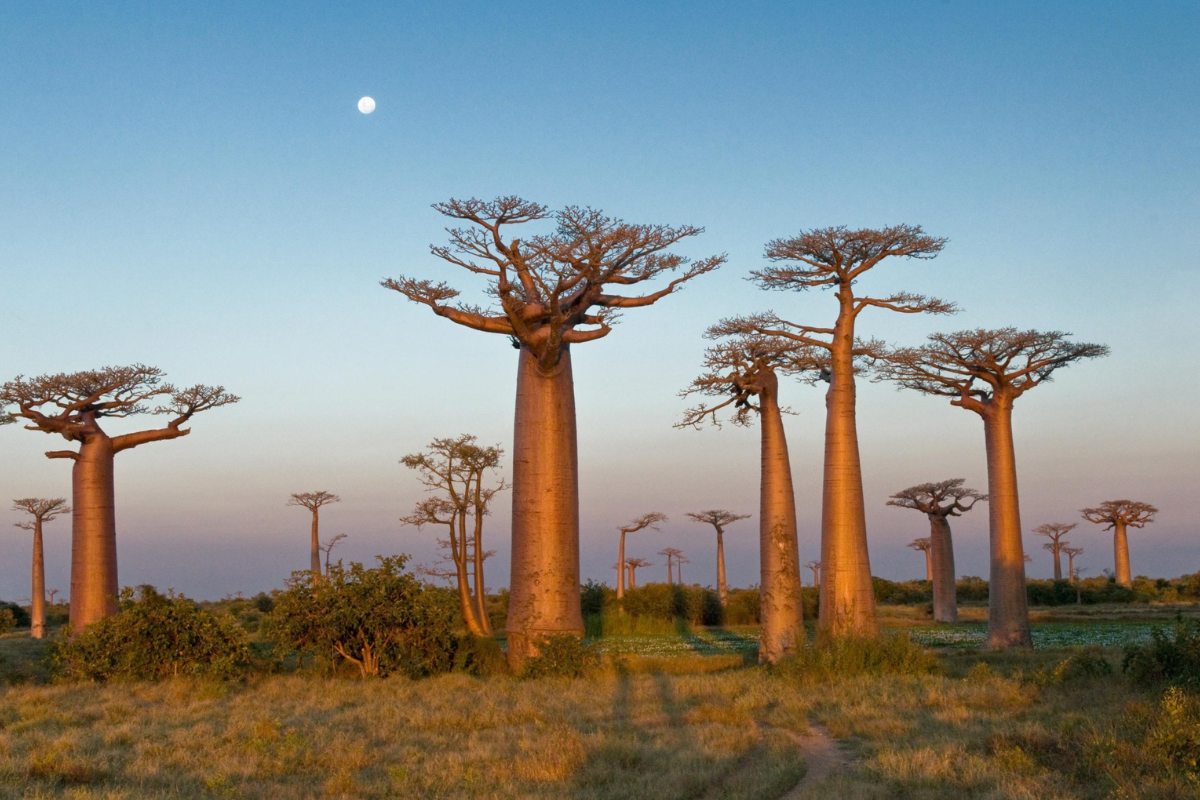
When is the best time to visit Madagascar? For most travelers, the months from April to November offer some of the best conditions for exploring the island. Rainfall is generally lower, roads are easier to navigate, and conditions are particularly suitable for wildlife watching, hiking, national parks and beach stays.
However, Madagascar is a vast island with very different climates from one region to another. The tropical east remains greener and wetter, the south and southwest are much drier, the Highlands can become surprisingly cool, and the north has its own seasonal patterns.
The best month for your trip therefore depends on what you want to see and where you want to go.
Whether you dream of meeting lemurs in the rainforest, walking through the Tsingy, photographing baobabs, watching humpback whales or relaxing on a tropical beach, this month-by-month guide will help you decide when to travel.
If you are still planning your itinerary, you can also explore our Madagascar tours or read our guide to 21 essential things to know before travelling to Madagascar.
When Is the Best Time to Visit Madagascar?
In general, Madagascar has a warmer, wetter season from approximately November to April and a cooler, drier period from May to October. However, local conditions vary considerably across the island.
For many first-time visitors, May to October is an excellent period to travel. These months are particularly suitable for road trips, hiking and exploring national parks.
But there is no single perfect month for everyone.
As a general guide:
| Travel experience | Recommended period |
|---|---|
| First trip to Madagascar | May to October |
| Hiking & national parks | May to October |
| Tsingy de Bemaraha | Dry season, especially July to October |
| Lemur watching | May to November |
| Baby lemurs | September to November |
| Humpback whales | Mainly July to September |
| Nosy Be & northern beaches | April to November |
| Sainte-Marie | May to November |
| Southern Madagascar | April to November |
| Western Madagascar | July to October |
Late September through early November can be particularly interesting for wildlife enthusiasts, as this period coincides with the birth season of several lemur species.
Let us look at Madagascar month by month.
Madagascar in January: Green, Tropical and Rainy
January falls in the heart of Madagascar’s warm and rainy season.
Landscapes are intensely green, vegetation is lush and temperatures are generally warm. However, heavy rainfall can affect roads and travel times, particularly in remote regions.
January is therefore not usually the first month we recommend for a large overland itinerary.
It can still work for travelers who are flexible and who focus on destinations that remain accessible, but itineraries need to be planned carefully around local weather conditions.
Best for: lush scenery, slower trips and travelers with flexible plans.
Keep in mind: rain and tropical weather can make some road journeys less predictable.
Madagascar in February: Beautiful but Unpredictable
February is another very wet month in much of Madagascar and falls within the period when tropical storms and cyclones can affect the country.
This does not mean that it rains continuously, but weather disruptions can make complex itineraries difficult to plan.
If you travel in February, it is usually better to avoid trying to cover too many regions in a short period.
A flexible itinerary designed with local knowledge is particularly important at this time of year.
Best for: experienced travelers comfortable with changing plans.
Less suitable for: ambitious road trips and remote western destinations.
Madagascar in March: The End of the Main Rains Approaches
March is still part of the rainy season, but conditions gradually begin to move toward the drier months.
The island remains beautifully green, making this an attractive time for photography and tropical landscapes.
However, tracks in remote regions may still be difficult, so March is better suited to carefully selected itineraries than to trips requiring extensive off-road travel.
For anyone traveling during Madagascar’s wetter months, understanding the country’s distances and infrastructure is important. Our guide to things you should know before travelling to Madagascar explains what to expect before you arrive.
Madagascar in April: A Great Shoulder-Season Month
April is when Madagascar becomes particularly interesting for many travelers.
The heavy rains generally begin to ease, landscapes are still wonderfully green and more routes become accessible.
It is an excellent transition month between the rainy and dry seasons.
Travelers can begin considering classic road trips through the Highlands and toward southern Madagascar.
For adventure lovers, our Unique Landscape of the Great Island tour combines the Highlands, Ranomafana, Andringitra and Isalo National Parks. Natura Travel recommends April to November as the best season for this itinerary.
Best for: green landscapes, road trips, hiking and fewer peak-season visitors.
Madagascar in May: One of the Best Months to Explore
May is one of our favorite months for discovering Madagascar.
Conditions become drier across many parts of the island, while vegetation still retains much of its post-rainy-season greenery.
It is an excellent month for walking, exploring national parks and discovering Madagascar’s remarkable fauna and flora.
Madagascar’s wildlife is one of the main reasons to visit the country. Before your trip, discover why the island is so exceptional in our guide to Madagascar’s biodiversity.
May is also an excellent time to start exploring eastern Madagascar. Our East Madagascar tour combines Andasibe, the Pangalanes Canal, Ankanin’ny Nofy and Sainte-Marie, with May to November indicated as its best travel period.
Best for: rainforest, lemurs, hiking and multi-region journeys.
Madagascar in June: Cooler Weather and Outdoor Adventures
June brings cooler conditions, particularly in Antananarivo and the Central Highlands.
For travelers planning a physically active holiday, this can be a major advantage. Hiking in places such as Isalo or Andringitra is generally much more comfortable than during the hot and humid summer months.
Warm clothes are nevertheless useful in the Highlands, especially early in the morning and at night.
June also marks the beginning of an exciting period along parts of Madagascar’s coast as migrating humpback whales begin appearing around the island.
Best for: trekking, national parks, wildlife and active holidays.
Madagascar in July: Peak Adventure Season
July is one of Madagascar’s most popular travel months.
Dry conditions make many road trips easier, including routes that are difficult or impossible during the rainy season.
This is an excellent time to explore western Madagascar, including the extraordinary limestone formations of the Tsingy de Bemaraha.
If you want to understand how these incredible formations were created before seeing them yourself, read our guide to the Tsingy of Madagascar.
You can also explore our West Madagascar tour, featuring the Big Tsingy, baobabs and some of the country’s most iconic western landscapes. Natura Travel identifies July to October as the best season for this route.
July is also an excellent month for humpback whale watching around Sainte-Marie.
Best for: Tsingy, baobabs, whales, trekking and road trips.
Madagascar in August: Wildlife, Whales and Beaches
August is another outstanding month to visit Madagascar.
The dry season makes it possible to combine very different experiences in a single journey: national parks, wildlife, dramatic landscapes and tropical beaches.
It is also an important month for whale watching.
Humpback whales migrate through Madagascar’s waters, with Sainte-Marie being one of the country’s best-known whale-watching destinations.
Our dedicated guide explains where and when to go whale watching in Madagascar. Around Sainte-Marie, July to September is a key period, while whale-watching opportunities around Nosy Be can extend later into the year.
August is also a good month to explore northern Madagascar and finish your journey on the beaches of Nosy Be.
Best for: whale watching, wildlife, beaches, Tsingy and classic Madagascar itineraries.
Madagascar in September: One of the Best Months Overall
If we had to recommend one period that combines weather, wildlife and accessibility, September would be high on the list.
Conditions are still predominantly dry in many regions, but temperatures gradually begin to rise.
September is particularly exciting for wildlife enthusiasts. For a number of lemur species, the period from late September into the following months is associated with newborns, creating wonderful opportunities for wildlife observation.
It is also still possible to combine wildlife encounters with whale watching in suitable coastal regions.
For travelers who want a classic Madagascar experience combining rainforest, lemurs, landscapes and the south, our Great South Madagascar tour is particularly well suited to the April-November travel period.
Best for: lemurs, wildlife photography, hiking, road trips and whales.
Madagascar in October: Fantastic for Wildlife
October is another exceptional month for nature lovers.
The weather becomes warmer, wildlife activity increases and several lemur species may be seen with young.
This makes October particularly attractive for photographers and travelers whose priority is Madagascar’s endemic wildlife.
It is also one of the final prime months for exploring remote parts of western Madagascar before the wetter season begins to return.
In the north, the combination of warm weather, marine life and beaches makes October an excellent period for a tropical extension.
Our Nosy Be tour combines northern Madagascar with Ankarana and a relaxing stay on Nosy Be. The itinerary operates throughout the year, with April to November identified as its best period.
Best for: baby lemurs, photography, beaches, western Madagascar and northern Madagascar.
Madagascar in November: Warm Weather and a Changing Season
November is a transition month.
Temperatures increase and rainfall gradually begins to return, although conditions can still be very pleasant depending on the region and the year.
For wildlife enthusiasts, early November can remain particularly interesting for observing young lemurs.
It can also be a good month for travelers who want warmer conditions without necessarily traveling during the busiest part of the dry season.
Northern Madagascar is worth considering at this time. Travelers interested in landscapes, national parks and coastline can discover our Between Earth and Sea tour, which includes Ankarafantsika, Ankarana, Montagne d’Ambre and Antsiranana.
Best for: wildlife, warmer weather and shoulder-season travel.
Madagascar in December: Tropical Summer Begins
December brings warmer, more humid conditions and increasingly frequent rain across much of Madagascar.
The countryside becomes greener and tropical vegetation flourishes.
However, as the rainy season develops, road conditions can become less reliable in some regions.
December can still be suitable for a holiday, particularly when the itinerary is designed around accessible destinations rather than remote overland routes.
Travelers visiting at this time should build some flexibility into their plans.
Best for: tropical scenery, festive-season travel and carefully planned itineraries.
Best Time to See Lemurs in Madagascar
Lemurs can be observed throughout the year in Madagascar, but the drier months generally make forest exploration easier.
May to November is an excellent broad period for a wildlife-focused journey.
September, October and early November are especially interesting because several lemur species give birth around this period, meaning travelers may have opportunities to see young animals alongside their mothers.
Andasibe is particularly famous for the Indri, while Ranomafana, Anja Reserve and many other protected areas offer very different lemur encounters.
Best Time for Whale Watching in Madagascar
For humpback whales, plan your trip during the southern hemisphere winter.
Around Sainte-Marie, July to September is one of the key periods for whale watching.
Nosy Be and its surrounding islands offer different marine wildlife experiences later in the season as well.
For more details about destinations and timing, read our complete guide to whale watching in Madagascar.
Best Time to Visit Madagascar for Beaches
Madagascar is much more than a wildlife destination.
Its coastline offers white-sand beaches, turquoise lagoons, coral reefs and tropical islands.
For travelers looking to combine exploration with relaxation, April to November is generally an excellent window for northern and western beach destinations.
Nosy Be is ideal for travelers looking for beaches, snorkeling, diving and nearby islands. You can learn more about the destination in our guide to Nosy Be, the Perfume Island.
On the east coast, Sainte-Marie offers a quieter atmosphere, tropical scenery and the added attraction of seasonal humpback whales.
So, What Is the Best Month to Visit Madagascar?
There is no single answer, but for a first visit we particularly recommend May to October.
Choose:
- April or May for green landscapes and the beginning of the dry season.
- June to August for hiking, accessible roads and whale watching.
- September for one of the best combinations of weather and wildlife.
- October for warmer temperatures and excellent lemur-watching opportunities.
- November for a quieter transition period before the main rains.
If your priority is western Madagascar and the Tsingy, consider July to October.
If you want to combine rainforest, lemurs and Sainte-Marie, May to November is particularly suitable.
For the Great South, April to November offers excellent conditions for a classic Madagascar road trip.
Plan Your Madagascar Trip with Local Experts
Choosing the right month is only the first part of planning a trip to Madagascar.
Choosing the right region and accommodation is equally important, as hotel availability and travel conditions can vary throughout the year. Read our guide to where to stay in Madagascar to compare the best areas, hotels and lodges for your itinerary.
Distances are long, road conditions vary and each region has its own ideal season. Trying to visit too many places in one trip can mean spending more time in transit and less time actually experiencing the country.
That is why a well-designed itinerary matters.
At Natura Travel, we create private and tailor-made journeys according to your travel dates, interests and available time.
Whether you want to see lemurs, walk through the Tsingy, photograph baobabs, discover Malagasy culture, watch whales or simply relax beside the Indian Ocean, we can design an itinerary around the experiences that matter most to you.