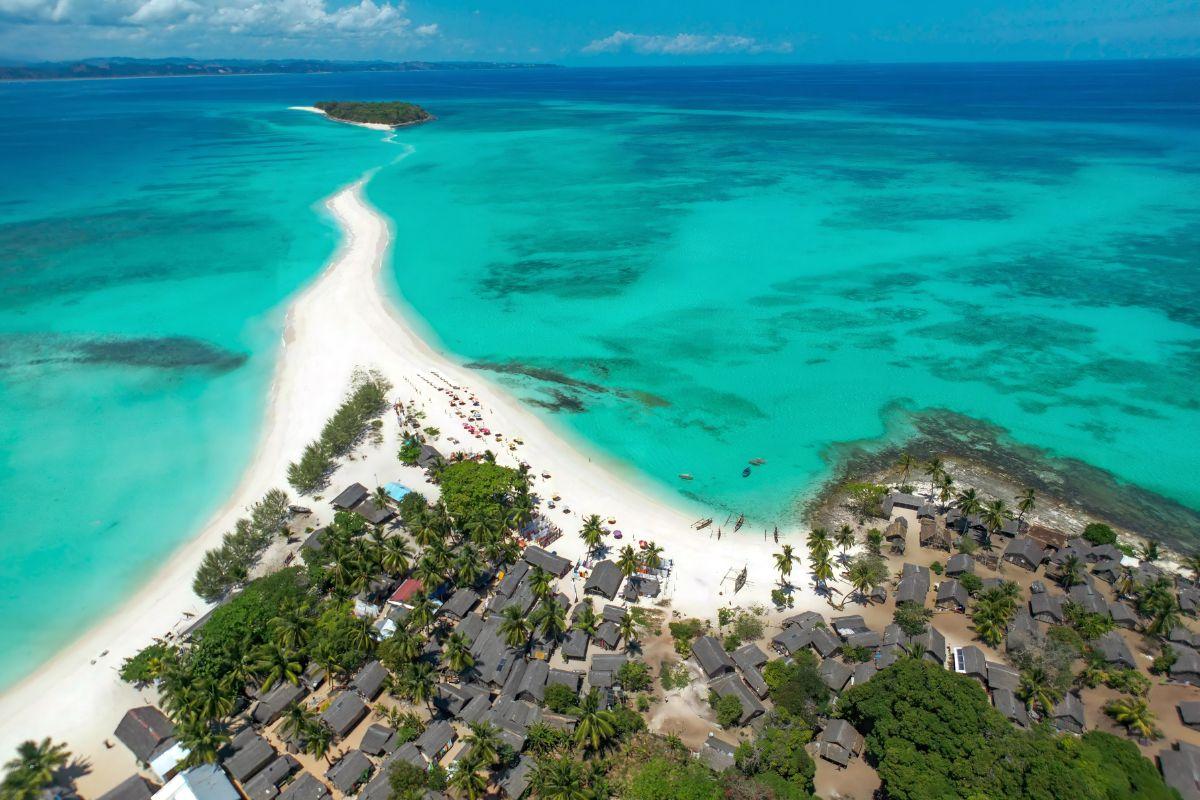
Madagascar is not only a land of lemurs, rainforests and dramatic landscapes. Surrounded by the Indian Ocean and the Mozambique Channel, the island also offers an extraordinary variety of tropical beaches, turquoise lagoons, coral reefs, remote fishing villages and small islands where life follows the rhythm of the sea.
From the islands of the Nosy Be archipelago in the northwest to Sainte-Marie and Île aux Nattes in the east, the lagoons of the southwest, the wild coastline around Fort-Dauphin and the remote beaches of western Madagascar, there is no single Madagascar beach experience.
Some destinations are ideal for swimming, snorkelling and island hopping. Others are better suited to diving, kitesurfing, whale watching, discovering Vezo fishing communities or simply slowing down after an adventurous journey across the island.
This guide introduces the main beach and island destinations in Madagascar and helps you decide which coastline best fits your journey.
Explore Madagascar’s Beaches & Islands
- Why choose Madagascar for a beach holiday?
- Which Madagascar beach destination should you choose?
- Nosy Be and its islands
- Diego Suarez and Madagascar’s far north
- Sainte-Marie and Île aux Nattes
- Mahambo, Foulpointe and the east coast
- Masoala and the northeast coast
- Mahajanga and the northwest mainland
- Morondava and Belo-sur-Mer
- Ifaty, Salary and the southwest coast
- Anakao and Nosy Ve
- Madagascar’s remote deep south
- Fort-Dauphin and the southeast
- Marine life and whale watching
- What can you do at Madagascar’s beaches?
- Best time for a beach holiday
- Combining beaches with a Madagascar tour
- Frequently asked questions
Why Choose Madagascar for a Beach Holiday?
Madagascar offers something very different from a conventional tropical beach destination. The coastline is enormous, but tourism remains concentrated in relatively small areas. This means that travellers can still find quiet islands, fishing villages, undeveloped coastlines and beaches where the surrounding nature is as important as the sand itself.
One of Madagascar’s greatest advantages is the possibility of combining completely different experiences within the same journey. A trip can begin with lemurs and rainforest, continue through mountains or national parks and finish beside a tropical lagoon.
You might spend the morning walking through a forest in search of endemic wildlife and, a few days later, swim in the warm waters of the Mozambique Channel. You can combine trekking with beach relaxation, whale watching with island life or baobab landscapes with remote coastal villages.
If nature is an important part of your trip, discover our guide to wildlife and nature in Madagascar .
Which Madagascar Beach Destination Should You Choose?
The best destination depends less on finding the single “best beach” and more on the experience you want to have.
| Destination | Best For | Atmosphere |
|---|---|---|
| Nosy Be | Island hopping, snorkelling, diving, beaches | Easy-going and well developed |
| Sainte-Marie | Whales, tropical scenery, slow travel | Peaceful and authentic |
| Île aux Nattes | Lagoon, white sand, relaxation | Small and tranquil |
| Ifaty & Mangily | Beach after the RN7, reef, nature | Relaxed southwest coast |
| Anakao | Snorkelling, diving, Vezo culture | Remote fishing-village atmosphere |
| Salary Bay | Lagoon, quiet beach stay | Remote and exclusive |
| Diego Suarez | Kitesurfing, bays, island excursions | Adventurous |
| Fort-Dauphin | Wild coast, mountains and beaches | Dramatic and scenic |
| Masoala | Rainforest, sea and remote nature | Expedition-style |
| Morondava | Baobabs, sunsets and west-coast atmosphere | Laid-back coastal town |
Nosy Be: Madagascar’s Most Famous Island Destination
Located off Madagascar’s northwest coast, Nosy Be is the country’s best-known tropical island destination and an excellent choice for travellers who want to combine beaches with boat trips, snorkelling, diving and island hopping.
Nosy Be itself offers a good range of accommodation and restaurants, while the surrounding archipelago makes the destination particularly interesting. You do not have to remain on one beach throughout your stay. Each neighbouring island offers a different experience.
Andilana
Andilana, on the northwestern side of Nosy Be, is one of the island’s best-known beach areas. It is a good choice for travellers looking for a classic tropical setting with sand, warm water and beach accommodation.
Madirokely and Ambatoloaka
Madirokely and neighbouring Ambatoloaka provide a more lively beach atmosphere. Restaurants, accommodation and excursion operators make this part of Nosy Be convenient for travellers who want easy access to both the sea and local nightlife.
Nosy Komba
Nosy Komba lies between Nosy Be and Madagascar’s mainland. The island combines beaches, traditional villages, tropical vegetation and a much quieter atmosphere than the most developed areas of Nosy Be.
It works particularly well for travellers who want a slower island experience while remaining within easy reach of the wider archipelago.
Nosy Tanikely
Nosy Tanikely is one of the most important marine excursions around Nosy Be. The small protected island is especially known for snorkelling, diving and its coral ecosystem.
Because reefs lie close to the island, it is one of the most accessible places in the region for travellers who want to discover Madagascar’s underwater world without organising a long diving expedition.
Nosy Sakatia
Nosy Sakatia lies just west of Nosy Be and offers a quieter environment of beaches, vegetation, villages and coastal waters.
It is often visited on a day excursion but can also appeal to travellers who prefer a peaceful island atmosphere away from the busier parts of Nosy Be.
Nosy Iranja
Nosy Iranja is one of the most photogenic island excursions in northwestern Madagascar. Two small islands are connected by a long sandbank that becomes a defining feature of the landscape.
White sand, clear water and the feeling of being far from the mainland make Nosy Iranja particularly appealing for travellers searching for classic tropical-island scenery.
The Mitsio Archipelago
North of Nosy Be lies the more remote Mitsio Archipelago. These islands are better suited to travellers interested in sailing, diving, remote beaches and multi-day marine adventures rather than conventional resort tourism.
Tsarabanjina is one of the best-known islands in this area and represents a more exclusive style of beach stay.
The Radama Islands
Southwest of Nosy Be, the Radama Archipelago offers another possibility for sailing and exploring remote islands along Madagascar’s northwest coast.
These archipelagos show why Nosy Be works so well as a gateway to the sea: the main island can be comfortable and easy to access while more remote islands are only a boat journey away.
Natura Travel combines northern Madagascar with Nosy Be on our Northern Madagascar and Nosy Be Tour .
Diego Suarez and the Beaches of Madagascar’s Far North
The far north around Antsiranana, also known as Diego Suarez, provides a very different coastal experience from Nosy Be.
Here, enormous bays, windswept landscapes, turquoise lagoons and limestone scenery create one of Madagascar’s most dramatic seaside regions.
Ramena Beach
Ramena is the classic beach escape from Antsiranana. The fishing village and long beach provide a relaxed coastal base and also serve as a departure point for excursions into the surrounding bay.
The Emerald Sea
The Emerald Sea, or Mer d’Émeraude, is a shallow turquoise lagoon near the entrance to Diego Suarez Bay.
Boat excursions from the Ramena area lead towards sandy islets and brilliant shallow water, making this one of the most visually striking marine landscapes in northern Madagascar.
Sakalava Bay and the Three Bays
The coastline east of Antsiranana includes Sakalava Bay and the series of landscapes commonly known as the Three Bays.
This part of Madagascar is especially interesting for active travellers. The winds of the northern season make Sakalava and nearby Babaomby important areas for kitesurfing and windsurfing.
Nosy Hara
Further west of the northern tip of Madagascar, the Nosy Hara marine area offers dramatic limestone islands and a far more remote experience. This is not a conventional beach-resort destination, but it can appeal to travellers looking for marine nature and expedition-style exploration.
The coast around Diego can be combined naturally with Amber Mountain and Ankarana on our North Madagascar Tour .
Sainte-Marie: Tropical Island Life on Madagascar’s East Coast
Sainte-Marie, also known as Nosy Boraha, lies off Madagascar’s humid east coast and offers a completely different atmosphere from Nosy Be.
The island is long, narrow and tropical, with fishing villages, coconut palms, lush vegetation, lagoons and quiet coastal roads.
Sainte-Marie is particularly suited to travellers who want a beach stay that still feels closely connected to Malagasy life and nature.
It is also one of Madagascar’s most famous locations for observing the humpback whale (Megaptera novaeangliae) during its seasonal migration.
Île aux Nattes
Immediately south of Sainte-Marie lies the much smaller Île aux Nattes. Its white-sand beaches, coconut palms, shallow lagoon and absence of large roads create one of Madagascar’s most relaxed island settings.
The island is small enough to discover slowly on foot, with swimming and time beside the lagoon forming an important part of the experience.
Read our complete guide to Sainte-Marie for detailed practical information.
Or experience the island as the final chapter of our East Madagascar Tour: Andasibe, Pangalanes and Sainte-Marie .
Mahambo, Foulpointe and Madagascar’s East Coast
Madagascar’s eastern coastline is lush, humid and strongly influenced by the Indian Ocean. It feels greener and more tropical than the dry southwest.
Mahambo
Mahambo is a peaceful coastal village north of Toamasina. It can be used as a beach stop on the journey towards Sainte-Marie and offers a slower atmosphere than Madagascar’s larger coastal towns.
Our East Madagascar itinerary includes Mahambo between the Pangalanes Canal and Sainte-Marie.
Foulpointe
Foulpointe, also known as Mahavelona, is one of the best-known seaside destinations on the east coast and is particularly popular with Malagasy holidaymakers.
Its lagoon and coastal setting make it a convenient option for travellers who want to combine Toamasina and the east coast without travelling all the way to Sainte-Marie.
Sea and weather conditions on Madagascar’s east coast can change, so local advice should always be followed before swimming or arranging marine excursions.
Masoala: Where the Rainforest Meets the Sea
The Masoala Peninsula in northeastern Madagascar offers one of the island’s most extraordinary combinations of terrestrial and marine nature.
Here, tropical rainforest descends towards bays, lagoons and the sea. The experience is less about conventional beach resorts and much more about wilderness, rainforest walks, village stays, snorkelling and exploring a remote coast.
Masoala is particularly appropriate for adventurous travellers who want beaches to be part of a nature expedition rather than the only purpose of their holiday.
If this kind of journey appeals to you, also explore our page about hiking and trekking in Madagascar .
Mahajanga and the Northwest Mainland
Mahajanga offers a more urban and distinctly Malagasy seaside experience. It is an important coastal city where evenings on the waterfront, seafood, local life and beach excursions can be combined with journeys into northwestern Madagascar.
Amborovy
Amborovy is one of Mahajanga’s main beach areas and offers accommodation and easy access from the city.
Grand Pavois
Further along the coast, Grand Pavois provides another popular seaside escape and a more open coastal atmosphere.
Mahajanga is not a direct substitute for a small tropical island such as Nosy Be or Île aux Nattes. Its appeal lies in combining beach time with a lively Malagasy coastal city and nearby natural attractions.
Morondava and Belo-sur-Mer: Beaches, Baobabs and the West Coast
Madagascar’s west coast is famous primarily for dry landscapes, baobabs and Tsingy, but the region also has a strong connection with the Mozambique Channel.
Morondava
Morondava is a relaxed coastal town and the principal gateway to the Avenue of the Baobabs, Kirindy and the route towards Tsingy de Bemaraha.
Nosy Kely is the town’s main tourism and beach area. Morondava is best considered a coastal base with memorable sunsets rather than a classic coral-island beach destination.
Belo-sur-Mer
South of Morondava, Belo-sur-Mer offers a much more remote coastal experience.
The area is associated with traditional wooden boat building, fishing communities, offshore coral islets and an atmosphere far removed from Madagascar’s better-known beach resorts.
Travellers who enjoy remote coastal journeys can connect this region conceptually with our river and boat adventures in Madagascar .
Ifaty, Salary Bay and Madagascar’s Spectacular Southwest Coast
Madagascar’s southwest coast is one of the most rewarding regions for travellers who want to combine dry landscapes, marine environments, Vezo culture and long stretches of beach.
The climate and scenery are completely different from the humid east. Behind the coast lie dunes, baobabs and spiny vegetation, while offshore reefs and lagoons shape life along the Mozambique Channel.
Ifaty and Mangily
Ifaty and Mangily are among the most accessible beach destinations in southwestern Madagascar and make a natural conclusion to a journey down the RN7.
After visiting Ranomafana, the highlands, Isalo and other inland landscapes, arriving beside the sea provides a dramatic change of pace.
Travellers can relax beside the coast, explore the marine environment or visit the remarkable spiny vegetation for which the southwest is known.
Ifaty is the final beach destination on our Southern Madagascar Tour: Ranomafana, Isalo and Ifaty .
Salary Bay
North of Toliara, Salary Bay is known for its bright turquoise lagoon, pale sand and remote setting.
It is a strong option for travellers looking for a quieter beach stay and who are comfortable travelling farther along the southwest coast.
Ambatomilo
Ambatomilo continues the sequence of remote beaches and lagoons north of Toliara.
White sand, clear water and a relatively undeveloped coastal environment give the area a very different feeling from Madagascar’s main resort destinations.
Andavadoaka
Andavadoaka is a Vezo fishing village surrounded by dry landscapes, coral environments and the Mozambique Channel.
This coast appeals particularly to travellers looking for a more remote, community-connected and nature-oriented beach experience.
Morombe
Morombe lies farther north along this remote coastal corridor. The surrounding region combines fishing communities, baobab landscapes and access to isolated sections of Madagascar’s west coast.
Anakao and Nosy Ve: Beach Life South of Toliara
South of Toliara, Anakao is one of Madagascar’s most distinctive coastal villages.
Traditionally associated with Vezo fishing culture, it combines long beaches, marine activities and access to coral environments. The atmosphere is relaxed but still closely connected to village life and the sea.
Nosy Ve
Just offshore from Anakao lies Nosy Ve, a small island surrounded by clear water and pale sand.
Boat excursions from Anakao allow visitors to experience the island and surrounding marine environment while discovering another aspect of Madagascar’s southwest coast.
Combine Anakao with Tsimanampetsotsa
One of Anakao’s strengths is that beach time can be combined with exploration inland towards Tsimanampetsotsa National Park.
This makes the area particularly interesting for travellers who want both coastline and the unusual dry landscapes of southern Madagascar.
The Remote Coast of Madagascar’s Deep South
Travellers with more time and an appetite for adventure can continue into the remote coast of southern Madagascar.
Places such as Ambola, Itampolo and Lavanono are very different from developed tropical-island destinations. Roads can be demanding, services are limited and journeys require careful logistical planning.
Itampolo
Itampolo offers a remote seaside setting along the far southwest coast, surrounded by the arid landscapes of southern Madagascar.
Lavanono
Lavanono lies near Madagascar’s extreme southern coastline and is particularly associated with wild landscapes and surfing.
These areas should be chosen for the journey and sense of remoteness, not simply as alternatives to easily accessible destinations such as Nosy Be or Ifaty.
Fort-Dauphin: Mountains, Forest and Wild Beaches
Fort-Dauphin, also known as Tolagnaro, sits in one of Madagascar’s most spectacular natural settings.
Mountains rise behind a coast of beaches, bays and green landscapes, creating a scene that feels completely different from both the dry southwest and the islands of the northwest.
Libanona Beach
Libanona is one of the best-known beaches close to Fort-Dauphin and provides an accessible coastal escape near the town.
Lokaro Bay
Lokaro Bay combines rocky headlands, beaches, vegetation and a feeling of isolation. Visiting the bay is as much about the surrounding landscape as spending time on the sand.
Sainte-Luce and Manafiafy
Farther along the southeastern coast, the Sainte-Luce and Manafiafy area combines beaches with coastal forest and a much stronger wilderness atmosphere.
This is an excellent example of how Madagascar can combine wildlife and a seaside stay without separating the two experiences.
Marine Life and Whale Watching in Madagascar
Madagascar’s coast is not simply about beaches. Coral reefs, lagoons and open-ocean environments support a rich marine ecosystem and create opportunities for snorkelling, diving and seasonal wildlife encounters.
One of the most spectacular is the annual presence of the humpback whale (Megaptera novaeangliae). These whales migrate into Madagascar’s warmer waters during the southern winter to breed and give birth.
Sainte-Marie is the country’s most famous whale-watching destination, although whales can also be encountered seasonally in other coastal regions.
If seeing whales is a priority, visit our dedicated guide to whale watching in Madagascar .
You can also read our detailed article about where and when to see whales in Madagascar .
What Can You Do at Madagascar’s Beaches and Islands?
A beach stay in Madagascar can be as relaxed or as active as you want. Depending on the region and local conditions, experiences can include swimming, snorkelling, scuba diving, sailing, traditional pirogue trips, kayaking, kitesurfing, windsurfing, surfing, fishing, whale watching, coastal hiking and island hopping.
Nosy Be is particularly convenient for island hopping, diving and snorkelling. Sainte-Marie combines beaches with whale watching and island exploration. Northern Madagascar is especially attractive for wind sports, while the southwest offers reefs, lagoons and remote coastal journeys.
For travellers who would like to explore Madagascar from the water, discover our river and boat adventures .
When Is the Best Time for a Beach Holiday in Madagascar?
There is no single perfect beach season for the whole country because Madagascar’s coast covers several climatic regions.
For many northern, western and southwestern beach destinations, the period from approximately April to November generally offers favourable conditions for travel and outdoor activities.
The east coast is more humid, and rain remains possible throughout much of the year. Sainte-Marie is particularly attractive between approximately May and November, with July to September especially important for humpback whale watching.
Sea conditions, tides and wind can be just as important as rainfall, particularly for boat transfers, diving, surfing and kitesurfing.
For a month-by-month overview, read our complete guide to the best time to visit Madagascar .
Combine Madagascar’s Beaches with Wildlife, Nature and Adventure
For most travellers, the strongest Madagascar itinerary does not consist of flying directly to a beach and staying there for the entire holiday. The island becomes much more memorable when its coastline forms part of a wider journey.
You can watch indri in the eastern rainforest before relaxing on Sainte-Marie, travel through Ankarana and Amber Mountain before finishing on Nosy Be, or follow the RN7 through Ranomafana and Isalo before reaching Ifaty.
Northern Madagascar & Nosy Be
Combine northern landscapes, wildlife and national parks with a tropical island stay around Nosy Be. Explore the Northern Madagascar & Nosy Be Tour
East Madagascar & Sainte-Marie
Travel from Andasibe rainforest through the Pangalanes Canal before reaching Sainte-Marie and Île aux Nattes. Explore the East Madagascar Tour
Southern Madagascar & Ifaty
Combine Ranomafana, Anja, Isalo and the landscapes of the RN7 with a relaxing end to the journey beside the Mozambique Channel. Explore the Southern Madagascar Tour
Every itinerary can be adapted according to your preferred balance between exploration and relaxation.
Browse all our private Madagascar tours or explore all activities and experiences in Madagascar .
More Experiences to Combine with Madagascar’s Beaches
Madagascar makes it easy to build a journey around several interests. A beach stay can follow wildlife watching, trekking, cultural encounters or a river journey.
Wildlife & Nature
Discover lemurs, chameleons, baobabs, rainforest and Madagascar’s extraordinary natural heritage.
Whale Watching
Experience one of Madagascar’s greatest seasonal marine wildlife spectacles.
Hiking & Trekking
Combine the coast with national parks, mountains, canyons and spectacular landscapes.
Cultural Experiences
Discover the communities, fishing traditions and local lifestyles that give Madagascar’s coast its identity.
River & Boat Adventures
Explore Madagascar’s rivers, canals, islands and coast from the water.
Enjoy Madagascar’s Coast Responsibly
Madagascar’s beaches and marine ecosystems are beautiful but fragile. Coral reefs, mangroves, coastal forests and marine wildlife all depend on responsible behaviour from visitors and tourism operators.
Avoid touching or standing on coral, do not remove shells or marine animals, minimise single-use plastics and follow local regulations in marine protected areas.
When observing whales or other marine wildlife, choose responsible operators that respect appropriate distances and avoid disturbing animals.
Choosing local guides, locally owned services and community-based experiences also helps tourism support the communities whose lives are closely connected to Madagascar’s coast.
Frequently Asked Questions About Beaches in Madagascar
What are the best beaches in Madagascar?
Madagascar has many very different beach destinations rather than one single “best” beach. Nosy Be and its surrounding islands are excellent for island hopping and marine activities, Sainte-Marie and Île aux Nattes offer a quieter tropical atmosphere, Ifaty is a convenient beach extension after an RN7 journey, and Anakao, Salary Bay and Ambatomilo provide more remote southwest-coast experiences.
Which is better, Nosy Be or Sainte-Marie?
They offer different experiences. Nosy Be has a larger tourism infrastructure and easy access to numerous surrounding islands, snorkelling and diving excursions. Sainte-Marie is greener, quieter and especially famous for humpback whale watching during the season. The right choice depends on your itinerary, travel dates and preferred atmosphere.
Where are the best islands in Madagascar?
The Nosy Be archipelago contains some of Madagascar’s best-known islands, including Nosy Komba, Nosy Tanikely, Nosy Sakatia and Nosy Iranja. The more remote Mitsio and Radama archipelagos offer additional possibilities for sailing and marine exploration. On the east coast, Sainte-Marie and neighbouring Île aux Nattes provide a very different island experience.
Where can I combine beaches and wildlife in Madagascar?
Northern Madagascar can be combined with Nosy Be, eastern rainforest destinations such as Andasibe can be combined with Sainte-Marie, and a journey through Ranomafana and Isalo can finish in Ifaty. Masoala and the Fort-Dauphin region also offer particularly strong combinations of nature and coastline.
What is the best time for beaches in Madagascar?
The ideal period varies by coast. April to November is generally a favourable period for many northern, western and southwestern beach itineraries. The east coast is more humid, while July to September is especially attractive around Sainte-Marie for humpback whale watching. Local weather and sea conditions should always be considered when planning boat excursions.
Where can you go snorkelling in Madagascar?
Nosy Tanikely near Nosy Be is one of Madagascar’s best-known snorkelling locations. The Nosy Be archipelago, Sainte-Marie, Anakao, Nosy Ve and parts of the southwest coast also offer snorkelling opportunities depending on local sea conditions.
Can I add a beach stay to a Madagascar wildlife tour?
Yes. This is one of the most rewarding ways to experience Madagascar. A private itinerary can combine national parks, wildlife and landscapes with several days of relaxation at Nosy Be, Sainte-Marie, Ifaty or another coastal destination.
How many days should I spend at the beach in Madagascar?
Three or four nights is a good starting point for a relaxing beach extension, while four to six nights gives more time for island excursions, snorkelling, diving or simply slowing down. Remote destinations may deserve longer because reaching them can require more travel time.
Is Madagascar suitable for an island-hopping holiday?
Yes, especially around Nosy Be. Nosy Komba, Nosy Tanikely, Nosy Sakatia, Nosy Iranja and the more distant Mitsio and Radama archipelagos create excellent possibilities for day excursions or longer marine journeys.
Which Madagascar Beach Is Right for You?
Perhaps you imagine a quiet island surrounded by turquoise water, a remote lagoon after an adventurous road journey, a few days of snorkelling and diving, or simply somewhere beautiful to slow down after exploring Madagascar’s national parks.
Tell us what kind of beach experience you are looking for and how it fits into the rest of your journey. Natura Travel can create a private, tailor-made itinerary combining Madagascar’s islands, wildlife, landscapes and culture according to your travel dates and preferred pace.
Or return to all activities and experiences in Madagascar .