Go Whale Watching
During the main migration season, guided boat trips offer the chance
to observe humpback whales in the waters around the island.
The island is especially famous for humpback whales, which migrate through the
waters of eastern Madagascar during the austral winter. But Sainte-Marie is far
more than a whale-watching destination.
Travellers can explore beaches, forests, mangroves, historic sites and nearby
Île aux Nattes, making Sainte-Marie an excellent place to slow down after a
wildlife-focused journey through
Eastern Madagascar
.
Sainte-Marie works particularly well for travellers who want to combine nature
with time by the ocean.
The island offers a softer pace than many overland journeys through Madagascar.
Instead of spending every day on the road, you can alternate between beaches,
boat excursions, cycling or walking, whale watching and cultural visits.
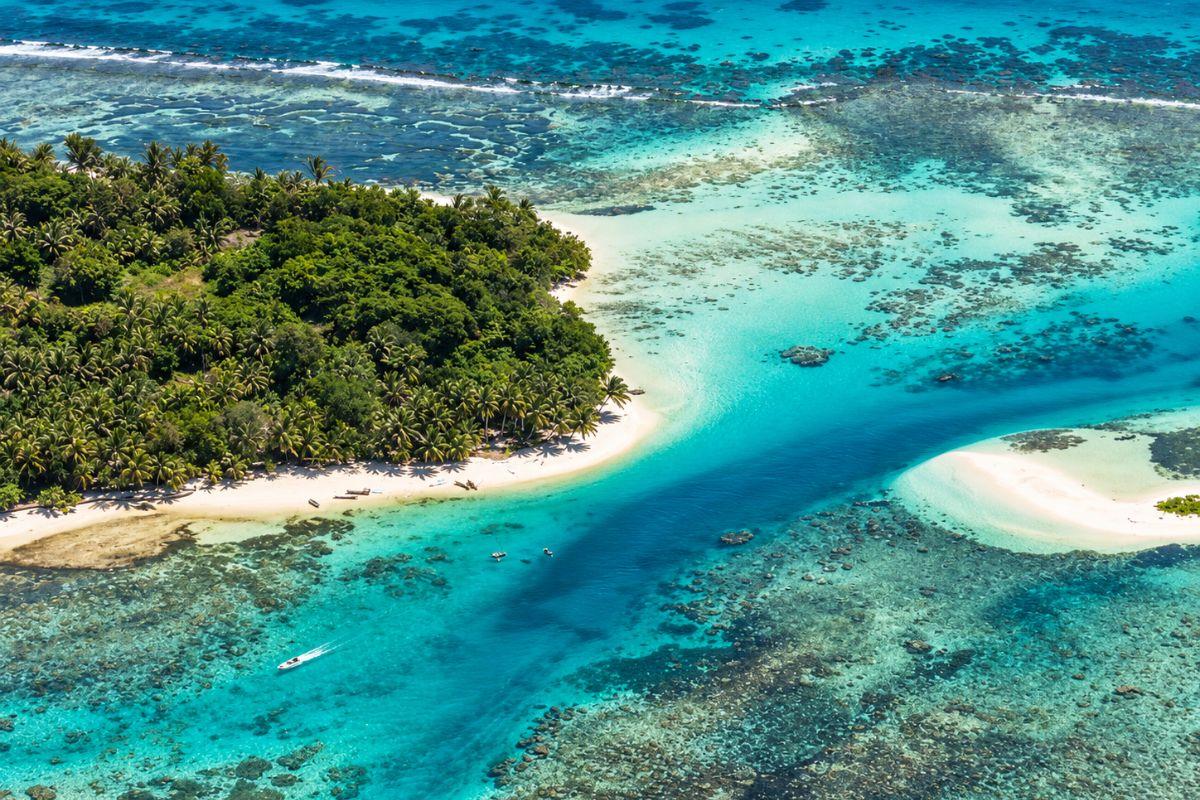
The landscape is also varied. Sainte-Marie includes lagoons, coral reefs,
mangroves, humid vegetation, fishing villages and smaller offshore islands.
This diversity is one reason the island appeals both to travellers seeking
relaxation and those who still want active experiences.
Sainte-Marie is known locally as Nosy Boraha and lies off Madagascar’s east coast
in the Analanjirofo region.
Madagascar’s National Tourism Board presents it as one of the country’s major
island destinations, combining beaches, tropical vegetation, marine life,
hiking, kayaking and cultural heritage.
The island is especially associated with humpback whales, which arrive in the
waters of eastern Madagascar during their annual migration.
It also has an unusual historical identity linked to piracy in the Indian Ocean,
particularly during the late seventeenth and eighteenth centuries.
Sources & Local Context
Information about Sainte-Marie’s whale season, coastal environments, Île aux Nattes,
mangroves and pirate heritage is supported by Madagascar’s National Tourism Board.
Humpback whales are one of the main reasons travellers visit Sainte-Marie
during Madagascar’s austral winter.
Madagascar’s National Tourism Board generally places the main
whale-watching season around Sainte-Marie between June and September.
Timing varies naturally from year to year, so wildlife sightings
should never be treated as guaranteed on a specific day.
Humpback whales migrate into the warmer waters of Madagascar
for breeding and calving.
During the season, boat excursions may reveal breaching,
tail displays, blows and other social behaviours.
Responsible whale watching
Choose operators that follow Madagascar’s whale-watching rules and maintain
appropriate distances. The goal should be observation without disturbing
the animals’ natural behaviour.
Sainte-Marie played an important role in the development of organised whale
watching in Madagascar.
Madagascar’s tourism authorities highlight the work of Cétamada, a Malagasy
association involved in research, conservation and responsible observation
of marine mammals.
Responsible whale watching is not about getting as close as possible.
Good practice involves controlled approaches, limited disturbance and
knowledgeable guides who explain the animals’ behaviour.
This is especially important around mothers and calves during the breeding season.
Sainte-Marie offers far more than beach time, making it easy to combine
relaxation with nature and cultural experiences.
During the main migration season, guided boat trips offer the chance
to observe humpback whales in the waters around the island.
This small island immediately south of Sainte-Marie is known for
beaches, tropical vegetation, walking and snorkeling.
Ampanihy combines fishing villages, tropical vegetation, mangroves
and a coastline protected in part by coral reef.
Sainte-Marie’s maritime past includes stories and historical traces
associated with pirates who used the island during the Indian Ocean
piracy era.
Mangrove environments provide an opportunity to understand an important
coastal ecosystem and its relationship with fishing communities.
Between excursions, Sainte-Marie offers plenty of opportunities
for swimming, beach walks and slower island days.
Île aux Nattes, also called Nosy Nato, is one of the most popular excursions
from Sainte-Marie.
Located immediately south of Sainte-Marie, Île aux Nattes offers
a quieter environment of beaches and tropical vegetation.
Travellers can explore parts of the island on foot, visit beaches
and enjoy a different rhythm from the larger main island.
The surrounding waters and coral environments make the island
attractive for swimming and snorkeling when conditions are suitable.
As with all marine activities, local weather, tides and sea conditions
should guide what is appropriate on the day.
Ampanihy Bay on Sainte-Marie’s eastern side provides another perspective on the island.
Madagascar’s National Tourism Board highlights the area for fishing villages,
tropical vegetation, plantations and mangrove ecosystems.
Mangroves are particularly important because they provide habitat for wildlife,
protect coastal areas and support local livelihoods, including fishing.
Exploring these environments adds an ecological dimension to a trip that might
otherwise focus only on beaches and whales.
Sainte-Marie has one of the most unusual maritime histories in Madagascar.
From the late seventeenth century into the eighteenth century,
Sainte-Marie became associated with pirates operating in the Indian Ocean.
The island’s location and protected anchorages made it useful as
a refuge and base during the piracy era.
Travellers can explore sites and stories linked to this period,
including the well-known pirate cemetery near Ambodifotatra.
The historical interest provides a strong contrast with Sainte-Marie’s
modern image as a tropical beach destination.
The natural pools at Ambodiatafana are among Sainte-Marie’s distinctive
coastal attractions.
Rocky formations create pools influenced by the ocean, resulting in
a dramatic coastal landscape that differs from the island’s calmer beaches.
Sainte-Marie’s east coast faces the Indian Ocean and conditions can
be very different from sheltered lagoons.
Always follow current local advice before swimming near exposed
coastal areas or natural pools.
Sainte-Marie is an excellent destination for slowing the pace of a Madagascar trip.
The coastline alternates between sandy beaches, reef-protected areas,
tropical vegetation and more exposed sections facing the Indian Ocean.
Some travellers spend their days almost entirely by the sea, while others
combine beach time with cycling, walking, kayaking and boat excursions.
This flexibility makes the island suitable both as a destination in its own
right and as a relaxing conclusion to a longer wildlife itinerary.
Visit during whale season to add a major marine wildlife experience
to a Madagascar itinerary.
Beaches, lagoons and nearby Île aux Nattes make Sainte-Marie
well suited to travellers who want genuine time by the ocean.
The island’s relaxed pace makes it a strong choice after a more active
rainforest or overland journey.
Combine indris and eastern rainforest with beaches and marine wildlife.
Add the waterways of the Pangalanes Canal and Palmarium Reserve
before continuing to island life.
Combine remote rainforest and marine ecosystems with a more relaxed
island stay on Sainte-Marie.
Sainte-Marie works especially well at the end of an eastern Madagascar journey.
A trip can begin with Antananarivo and the rainforest around Andasibe,
continue towards Akanin’ny Nofy or the east coast and finish with several
slower days on Sainte-Marie.
Travellers with more time can also build a broader northeastern itinerary
involving Masoala before finishing on the island.
Access options can include domestic flights or combinations of
road and boat travel depending on your wider itinerary and current services.
Transport schedules can change, so connections should be confirmed
when the itinerary is booked rather than based on old timetables.
Sainte-Marie benefits from a slower pace.
Allow enough time for beach days, excursions and weather flexibility
instead of arriving for only one night between transport connections.
If humpback whales are your priority, Madagascar’s National Tourism
Board generally identifies June to September as the main whale season
around Sainte-Marie.
For a broader island trip, consider rainfall, sea conditions and the
other regions included in your itinerary.
Light clothing, sun protection, insect repellent, rain protection
and footwear suitable for both beaches and walking are useful.
Waterproof protection for electronics is also helpful during
boat excursions and in Madagascar’s humid east.
Yes. Sainte-Marie is particularly attractive for travellers interested
in beaches, humpback whales, tropical island scenery, snorkeling,
history and a slower travel experience.
The island is especially famous for humpback whale watching,
tropical beaches, Île aux Nattes and its historical connection
with pirates in the Indian Ocean.
Madagascar’s National Tourism Board generally identifies June to September
as the main humpback whale season around Sainte-Marie, although exact
timing and sightings vary naturally.
Yes. Île aux Nattes is one of the classic excursions from Sainte-Marie
and offers beaches, walking, tropical vegetation and snorkeling opportunities.
Sainte-Marie has a well-known cemetery associated with the island’s
pirate history near Ambodifotatra, reflecting its role in Indian Ocean
piracy during the late seventeenth and eighteenth centuries.
Yes. Combining
Andasibe
and Sainte-Marie works particularly well, giving you rainforest wildlife
followed by beaches and marine experiences.
Yes, for travellers with enough time. Combining
Masoala National Park
with Sainte-Marie creates an excellent northeastern itinerary focused
on rainforest, coast and marine environments.
Sainte-Marie combines tropical beaches, humpback whales, island life,
marine ecosystems and unusual history in one of eastern Madagascar’s
most appealing destinations. Natura Travel can integrate the island into
a private itinerary with enough time to enjoy both its natural and cultural sides.