Travel by River
Spend several days moving through western Madagascar
by boat or pirogue rather than following highways and tracks.
Rather than moving quickly from attraction to attraction, a Tsiribihina
journey is built around the rhythm of the river. Days are spent navigating
westward, watching the scenery change and stopping along the way before
continuing towards the Menabe region.
The river journey can also form part of a larger adventure connecting
Madagascar’s Central Highlands with
Tsingy de Bemaraha
,
Morondava
and the
Avenue of the Baobabs
.
A Tsiribihina journey offers something that is increasingly rare
in travel: time.
Instead of spending the day inside a vehicle, travellers move gradually
through western Madagascar while watching riverbanks, villages,
agricultural landscapes and dry-country scenery unfold around them.
The experience is less about ticking off individual attractions
and more about immersion in a landscape that would be difficult
to understand from the road alone.
It is particularly suited to travellers who enjoy simple adventure,
outdoor living and journeys where the route itself is as important
as the destination.
The Tsiribihina is one of the important river systems draining
Madagascar’s Central Highlands towards the west.
The river system receives water from major tributaries descending
from the interior before continuing west through the landscapes
of Menabe and eventually towards the Mozambique Channel.
Farther downstream, the river is also closely connected to the ecology
of Menabe Antimena. Official protected-area information identifies
the Tsiribihina as the northern boundary of this major protected landscape.
Its lower reaches and delta also influence wetlands, floodplains
and mangrove habitats along Madagascar’s western coast.
Sources & Local Context
Information about the relationship between the Tsiribihina,
Menabe Antimena and western Madagascar’s mangroves is supported
by Madagascar’s official protected-area database.
The experience is deliberately slower than a conventional road trip.
Spend several days moving through western Madagascar
by boat or pirogue rather than following highways and tracks.
Depending on the chosen programme, overnight arrangements
may include simple riverside camping or other locally organised stops.
Riverbanks, open country, agricultural land and increasingly
dry western scenery create a constantly changing journey.
The river passes through landscapes where villages
and local livelihoods remain closely connected to water,
agriculture and seasonal conditions.
Long periods on the river make this less about constant sightseeing
and more about watching, listening and travelling at a different pace.
The river journey can become the first chapter
of a larger exploration of Menabe and Bemaraha.
Miandrivazo is widely used as the starting area for organised
Tsiribihina river descents.
It lies west of the Central Highlands and provides a practical transition
between an overland journey from the Antsirabe region and a river journey
into western Madagascar.
Exact embarkation points vary according to water levels,
the operator and the type of boat being used.
For this reason, travellers should treat Miandrivazo as the logistical
gateway rather than assume that every river programme begins
from exactly the same point.
Tsiribihina journeys can take different forms,
and the style of boat changes the character of the experience.
Smaller craft provide a simple and intimate way to travel
through the river landscape.
The experience can feel more adventurous and exposed,
with comfort depending heavily on the operator,
equipment and current conditions.
Larger or motorised boats can provide a different level
of comfort and carrying capacity.
Boat configuration varies considerably,
so travellers should confirm seating, shade, toilet arrangements,
safety equipment and overnight organisation before departure.
The Tsiribihina is not an experience built around a single monument,
national park entrance or viewpoint.
Much of its appeal comes from the hours between stops:
watching the banks drift past, seeing birds above the river,
noticing distant villages and observing the changing light.
This makes the Tsiribihina especially attractive for travellers
who enjoy slower journeys and who do not need every hour
to contain a scheduled attraction.
It can also provide a welcome contrast before the more physically demanding
exploration of Tsingy de Bemaraha.
Broad river sections alternate with narrower landscapes
as the water moves westward through Madagascar’s interior.
As the journey approaches Menabe, the landscape increasingly
reflects the pronounced dry season of western Madagascar.
The wider Tsiribihina system includes wetlands,
seasonal marshes and riverine environments important
to wildlife and local livelihoods.
The lower Tsiribihina eventually opens into a broad delta
on Madagascar’s western coast.
Official protected-area information for Menabe Antimena highlights
the influence of the river on coastal mangrove systems,
including a major mangrove block in the southern part of the delta.
These coastal environments are very different from the upstream
river landscapes and show how the Tsiribihina connects inland
Madagascar with the Mozambique Channel.
The river should therefore be understood not only as a tourism route
but also as part of a much larger ecological system.
The Tsiribihina is primarily a landscape and journey experience,
but wildlife observation can add interest along the way.
Riverbanks, wetlands and open western habitats
create opportunities to observe a variety of birds.
Reptiles and other animals may occur along the river system,
but sightings depend entirely on natural conditions.
The larger journey eventually connects with the dry forests
and distinctive wildlife communities of the Menabe region.
Wildlife is never guaranteed
A river descent should not be sold as a safari with guaranteed animal sightings.
Its strongest appeal is the landscape, atmosphere and journey itself.
The Tsiribihina crosses areas where agriculture,
livestock and river transport contribute to everyday life.
Boats, villages and riverbank activity are part of a living landscape,
not performances created for visitors.
Respect local customs and always ask before photographing people.
Village visits should be organised sensitively
and should create meaningful local economic benefit where possible.
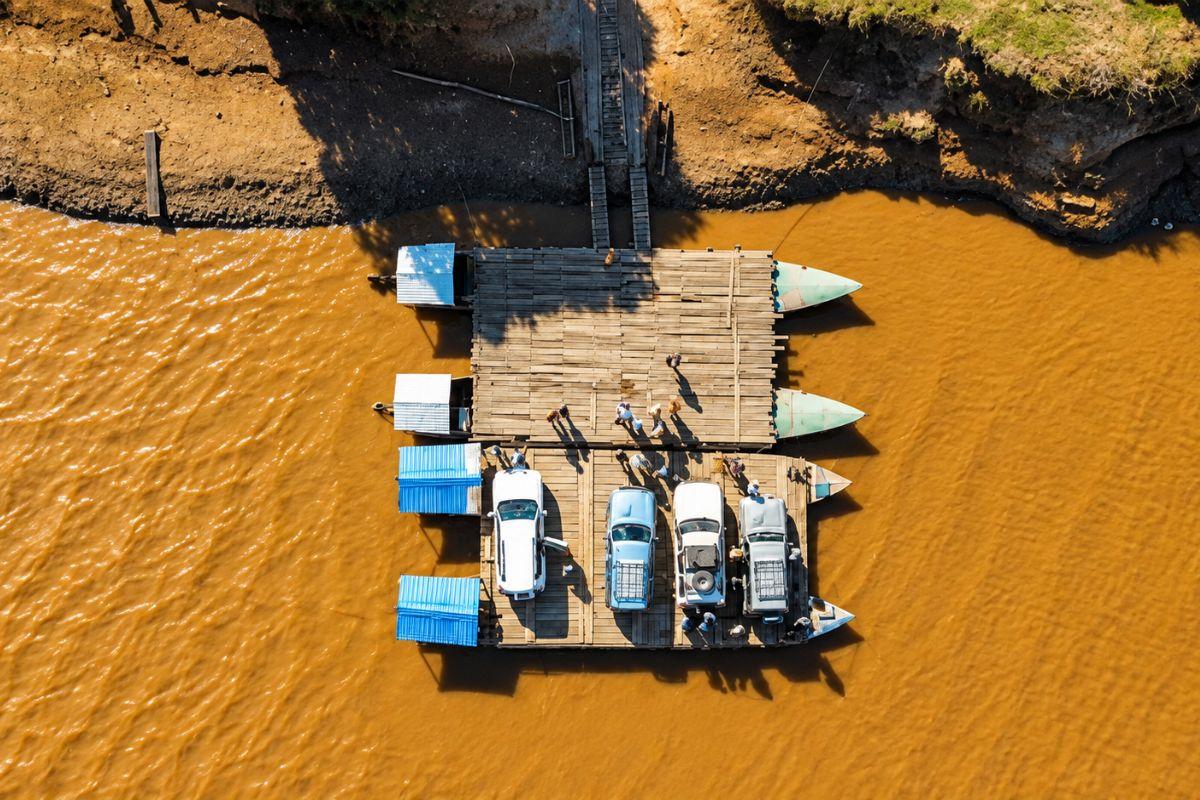
Belo-sur-Tsiribihina is an important crossing point
on western Madagascar’s overland routes.
The river is crossed here by ferry on the classic route
linking the Morondava region with Bekopaka and Tsingy de Bemaraha.
This makes the Tsiribihina central to both river travel
and road travel through western Madagascar.
River-descending itineraries can also be structured to connect
with onward transport towards the Bemaraha region,
depending on current logistics and the chosen operator.
This is one of the most natural adventure combinations in western Madagascar.
A Tsiribihina journey offers a slow approach through river landscapes
before the trip shifts dramatically into the limestone world
of Bemaraha.
The contrast between the two experiences is one of the major strengths
of the itinerary.
Transfers between river journeys and the Tsingy depend on
road conditions, ferries, seasonal access and operator arrangements.
Current logistics should therefore be confirmed as a complete journey
rather than treating each segment independently.
After a river and Tsingy journey, Morondava provides a natural finishing point
for a western Madagascar itinerary.
The city gives access to the
Avenue of the Baobabs
and
Kirindy Reserve
.
This creates an exceptionally varied route combining river travel,
limestone formations, dry forest wildlife and giant baobabs.
River travel, simple overnight conditions
and changing logistics create a genuine expedition atmosphere.
The Tsiribihina suits people who value the journey itself
and enjoy spending long periods immersed in a landscape.
Riverbanks, villages, changing light and wide western landscapes
provide opportunities for documentary and landscape photography.
Not necessarily, and that is important to understand before booking.
A river journey can involve heat, basic facilities, long periods sitting
on a boat and limited access to conventional comforts.
Travellers who enjoy simplicity and outdoor adventure may consider
these elements part of the appeal.
Those who prefer predictable hotel standards, short transfer times
and highly structured days may be happier travelling through western Madagascar
primarily by road.
Water conditions, rainfall and onward road access
all affect the practicality of a Tsiribihina journey.
The best period should therefore be considered in relation
to the whole western Madagascar itinerary rather than the river alone.
If the journey includes Tsingy de Bemaraha,
seasonal road access becomes particularly important.
Official protected-area information states that access
to Bemaraha becomes difficult during the rainy period,
approximately December to April.
Plan by route, not by destination
See our
guide to the best time to visit Madagascar
when planning a combined Tsiribihina, Tsingy and Morondava journey.
River descents are organised as multi-day journeys,
but exact duration varies with the embarkation point,
boat type, water conditions and itinerary.
Confirm the complete programme with your operator
rather than relying on a fixed duration published online.
Overnight arrangements depend on the programme
and may involve simple riverside camping.
Ask in advance about tents, mattresses, bedding,
toilets and washing arrangements so expectations are clear.
Sun protection, lightweight clothing, a hat,
insect repellent and secure footwear are useful.
Keep cameras, phones and important documents
in waterproof bags or dry sacks while on the river.
Comfort levels vary widely according to the operator
and type of river trip.
Ask specifically about shade, seating, food,
drinking water, sanitary facilities and emergency procedures.
A multi-day river journey takes place far from many urban services,
so preparation matters.
Choose an experienced operator that provides appropriate safety equipment,
reliable communication arrangements and sufficient drinking water.
Do not swim or enter the river unless your local guide explicitly confirms
that conditions are suitable.
River levels, currents and wildlife conditions can change,
so local instructions should always take priority over generic travel advice.
Multi-day trips generate food packaging,
bottles and other waste that should not remain on riverbanks.
Choose operators with a clear policy for carrying non-organic waste out.
Village stops should respect privacy,
local customs and community priorities.
Tourism should support local livelihoods without turning
daily life into a staged performance.
Continue from river landscapes into one of Madagascar’s
most extraordinary limestone environments.
Finish the western journey in the main tourism hub
of the Menabe region.
Add one of Madagascar’s most iconic landscapes
around sunrise or sunset.
Add fossa, lemurs and nocturnal wildlife
in the dry forests of Menabe.
The Tsiribihina works particularly well as the first stage
of a longer western Madagascar adventure.
A journey can begin from the Central Highlands,
continue towards the Miandrivazo area,
then move west by river before connecting with the Bemaraha region.
From Tsingy de Bemaraha, travellers can continue south
towards Kirindy, the Avenue of the Baobabs and Morondava.
The result is one of Madagascar’s most varied adventure routes,
moving from Highlands to river, limestone, dry forest and coast.
Yes, particularly for travellers who enjoy slow adventure,
remote landscapes, simple outdoor living and journeys
where the route itself is part of the experience.
The Tsiribihina flows through western Madagascar
towards the Mozambique Channel and is closely connected
with the Menabe region.
Miandrivazo is widely used as the logistical starting area
for organised river descents. Exact embarkation points
can vary by operator and river conditions.
It is normally organised as a multi-day journey,
but exact duration depends on the boat, water levels,
embarkation point and overall itinerary.
Yes. This is one of the strongest adventure combinations
in western Madagascar. The river journey can be connected
with onward travel towards
Tsingy de Bemaraha
,
provided current transport and seasonal access are coordinated.
Many programmes involve simple overnight arrangements
such as riverside camping, although facilities vary by operator.
Confirm exactly what is provided before departure.
It is better considered an adventure experience than a luxury cruise.
Comfort depends greatly on the boat and operator,
so ask about shade, seating, sanitation and sleeping arrangements.
Yes. A larger western journey can continue towards
Morondava
,
the
Avenue of the Baobabs
and
Kirindy Reserve
.
Useful items include sun protection, insect repellent,
lightweight clothing, comfortable footwear and waterproof bags
for electronics and important documents.
A Tsiribihina River journey replaces rushed road travel with several days
of landscapes, river life and genuine adventure. Natura Travel can integrate
the experience into a private western Madagascar itinerary connecting
the Central Highlands with Tsingy de Bemaraha, Kirindy,
the Avenue of the Baobabs and Morondava.