Hike Through Rainforest
Walk beneath a dense tropical canopy while looking for lemurs,
birds, reptiles, amphibians and endemic plants.
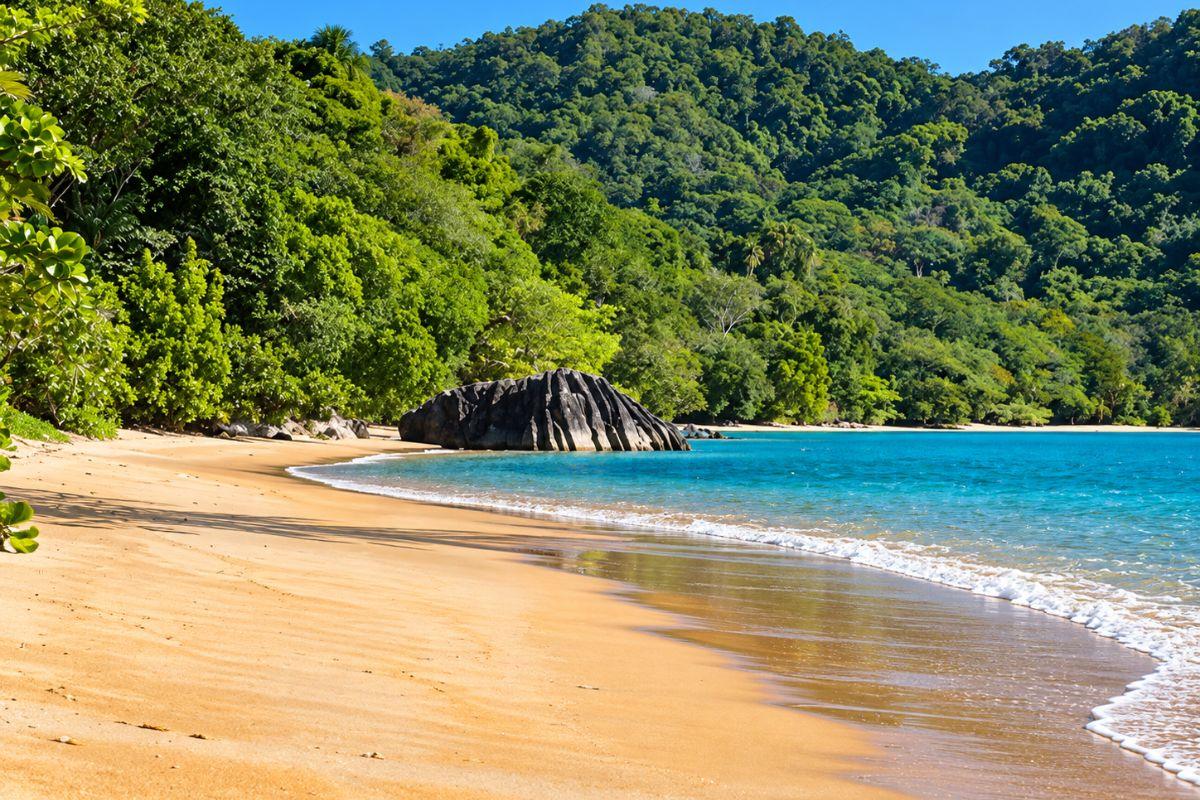
Located on the remote Masoala Peninsula in northeastern Madagascar, the park protects
an extraordinary combination of lowland rainforest, highland forest, mangroves,
beaches, coral reefs and marine ecosystems.
For travellers looking for a more adventurous and immersive nature experience,
Masoala offers something very different from the more accessible reserves of
Andasibe
.
This is a destination where rainforest trekking, wildlife watching, boat travel
and coastal exploration come together.
Masoala is for travellers who want to go deeper into Madagascar’s natural world.
Unlike destinations centred on a single forest reserve, Masoala combines
multiple ecosystems within one protected landscape. Madagascar National Parks
describes rainforest extending from sea level to more than 1,300 metres,
together with mangroves, coral reefs and seagrass beds.
That transition from rainforest to ocean is one of the defining experiences of
the peninsula. You can spend the morning walking beneath a humid forest canopy
and later find yourself beside a tropical bay or travelling by boat along the coast.
Masoala also rewards travellers who value remoteness. Reaching the park
requires more planning than visiting Madagascar’s easier road-access reserves,
but that relative isolation is a major part of its appeal.
Masoala is one of Madagascar’s largest and most important protected areas.
According to Madagascar National Parks, the protected area extends across
approximately 240,000 hectares, including around 230,000 hectares of terrestrial
habitat and 10,000 hectares of marine habitat.
The park contains virtually the full range of eastern Madagascar’s humid forest
formations, from coastal forest to medium-altitude rainforest and highland forest.
Offshore and along the coast, marine habitats include coral reefs, seagrass beds,
mangroves and small islands.
Sources & Park Information
Size, ecosystem and biodiversity information on this page is based primarily on
Madagascar National Parks, the official manager of Masoala National Park.
Masoala is part of one of Madagascar’s most important internationally
recognised conservation landscapes.
Masoala is one of six national parks that form the UNESCO World Heritage
property known as the Rainforests of the Atsinanana.
The serial property was inscribed on the World Heritage List in 2007
under natural criteria related to ecological processes and biodiversity.
UNESCO highlights the extraordinary importance of these remaining eastern
rainforests because of Madagascar’s exceptional levels of endemism and
the severe historical loss of forest habitat.
Masoala represents one of the largest and most important forest blocks
within that wider conservation system.
Authoritative source
Learn more from the
UNESCO World Heritage Centre page for the Rainforests of the Atsinanana
.
Masoala is best experienced as a combination of rainforest,
coastline and wildlife rather than as a single short park visit.
Walk beneath a dense tropical canopy while looking for lemurs,
birds, reptiles, amphibians and endemic plants.
One of Masoala’s defining features is the transition between
rainforest and coastline, creating a landscape found in few other
places in Madagascar.
Marine protected areas include coral reefs, seagrass habitats and
coastal ecosystems that add an underwater dimension to a Masoala journey.
Nosy Mangabe is a forested island reserve near Maroantsetra and is
often incorporated into wildlife-focused journeys in the Masoala region.
The peninsula’s large and varied forest ecosystems make Masoala
particularly rewarding for birdwatchers and dedicated naturalists.
Combine Masoala with other rainforest or coastal destinations for
a broader exploration of Madagascar’s east.
The defining image of Masoala is not simply rainforest.
It is rainforest meeting the Indian Ocean.
Madagascar National Parks notes that forest within Masoala ranges from
sea level up to 1,311 metres at Beanjady. Along the coast, the protected
landscape includes mangroves, coral reefs, seagrass beds and small islands.
This continuity between terrestrial and marine environments is one of the
main reasons Masoala feels so different from inland national parks.
Madagascar National Parks describes Masoala as one of the richest
biodiversity regions in the country.
The peninsula supports several lemur species, making forest walks
a central part of most wildlife-focused visits.
Extensive rainforest and coastal habitats support a remarkable
diversity of birds, including numerous species endemic to Madagascar.
Humid forest conditions provide habitat for chameleons, geckos,
frogs and many other species that are best found with experienced guides.
Masoala protects an extraordinary range of plant communities,
from lowland rainforest species to high-altitude vegetation.
Coral reefs, mangroves and seagrass beds provide habitat for fish
and other marine species along the peninsula.
The Masoala forest block remains connected through a fragile
ecological corridor towards other northeastern protected areas,
making landscape conservation especially important.
Masoala is not a destination for travellers who want everything to be quick and easy.
Weather, boat transfers, forest conditions and remoteness are all part of
travelling in this region.
But those same factors create the sense of immersion that makes Masoala special.
The experience is less about ticking off attractions and more about spending
time inside a large tropical ecosystem.
Days may combine forest walking, wildlife observation, coastal travel and
time in small communities or remote accommodation.
For travellers who enjoy genuine expedition-style nature travel,
Masoala can become one of the highlights of Madagascar.
Masoala’s extraordinary biodiversity also makes it a highly sensitive conservation area.
UNESCO has documented serious past pressures on Masoala, including
illegal logging, hunting and other forms of resource exploitation.
Conservation therefore depends not only on protected-area status but
also on continued monitoring, enforcement and cooperation with local communities.
Well-managed tourism can contribute to the local economy while creating
an incentive to protect forests and wildlife.
Travellers should follow park regulations, use authorised guides
and avoid purchasing wildlife products or goods derived from illegally
harvested forest resources.
Masoala is ideal for travellers who want to spend serious time
observing rainforest biodiversity rather than making a quick park visit.
Remote access, boat travel and forest trekking make Masoala particularly
appealing to travellers comfortable with more adventurous logistics.
Rainforest, coastline, wildlife and changing light create outstanding
opportunities for nature and landscape photography.
Combine accessible rainforest and indri observation with the more
remote wilderness experience of Masoala.
Add beaches and island life to a rainforest-focused journey
through eastern Madagascar.
Combine Masoala with the waterways, Palmarium Reserve and slow
travel atmosphere of the Pangalanes region.
Masoala is usually best treated as a major destination rather than a small
addition to a packed itinerary.
Because access involves more complicated logistics than Andasibe or many RN7
destinations, travellers should allow sufficient time for transfers and for
weather-related flexibility.
A strong eastern Madagascar itinerary can combine a more accessible rainforest
experience in Andasibe with the deeper wilderness of Masoala and then finish
with coastal or island time.
Masoala is significantly more remote than destinations such as Andasibe.
Access usually requires careful coordination of regional transport,
boat transfers and local logistics.
Because transport conditions can change, current arrangements should
always be confirmed shortly before travel.
Masoala deserves several days rather than a rushed visit.
Allow time for forest walks, coastal exploration, wildlife observation
and the transfers required to reach and leave the peninsula.
Northeastern Madagascar receives significant rainfall, and weather can
strongly affect transport and outdoor activities.
Choose travel dates based on both seasonal conditions and the rest of
your Madagascar itinerary.
Good walking shoes, lightweight rain protection, insect repellent,
quick-drying clothing and waterproof protection for electronics are
particularly useful in this humid and remote environment.
Yes, especially for travellers interested in remote rainforest,
biodiversity, wildlife, hiking and coastal ecosystems. It is one of
Madagascar’s most immersive nature destinations.
Masoala National Park is one of the six national parks that form the
UNESCO World Heritage property known as the Rainforests of the Atsinanana,
inscribed in 2007.
Its defining feature is the combination of extensive tropical rainforest
with coastal and marine ecosystems, including mangroves, coral reefs and
seagrass habitats.
The park supports lemurs, endemic birds, reptiles, amphibians and a huge
variety of tropical plants, while surrounding marine areas add a completely
different set of habitats.
Madagascar National Parks gives a total protected area of approximately
240,000 hectares, including around 230,000 hectares of terrestrial habitat
and 10,000 hectares of marine habitat.
Yes. Combining
Andasibe
with Masoala creates an excellent contrast between an accessible rainforest
destination and a much more remote wilderness experience.
Usually it works better in an itinerary with enough time for regional
transport, boat transfers and several days in the park. Travellers with
very limited time may find a more accessible destination such as Andasibe
easier to integrate.
Masoala is one of Madagascar’s most extraordinary destinations for travellers
who want to experience rainforest, wildlife and the Indian Ocean in one remote
protected landscape. Natura Travel can integrate the peninsula into a private
itinerary with realistic time for transfers, forest exploration and coastal experiences.