Explore Ampangorina
Discover local handicrafts, embroidered textiles and village life
in Nosy Komba’s best-known coastal community.
Smaller and quieter than neighbouring Nosy Be, the island offers a more
intimate travel experience. There are no large urban centres here:
the rhythm is shaped instead by villages, boats, footpaths, tropical
vegetation and the sea.
Nosy Komba is particularly easy to combine with
Nosy Be
,
but travellers looking for slow travel may prefer staying on the island
rather than visiting only for a few hours.
Nosy Komba is an excellent choice for travellers who like tropical islands
but do not want their experience to revolve entirely around resorts.
The island combines forest, beaches and villages within a relatively
compact landscape. Boats remain central to travel, while footpaths connect
many local communities and viewpoints.
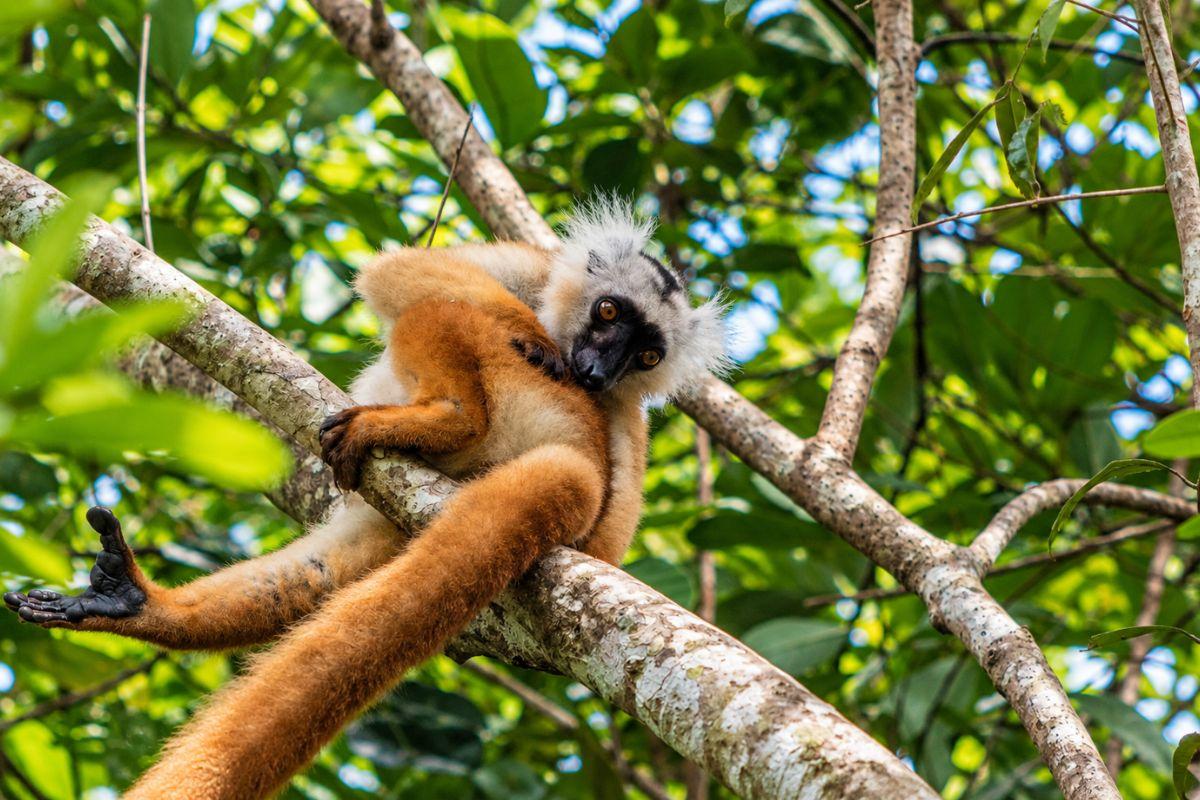
Nosy Komba is also well known for lemurs and traditional crafts,
particularly around the village of Ampangorina.
For travellers who have already explored mainland northern Madagascar,
the island provides a gentle change of pace without abandoning nature,
culture or outdoor activities.
Madagascar’s National Tourism Board describes Nosy Komba as the second
principal island in the Nosy Be archipelago.
Official tourism material highlights the island for its lemurs,
which are traditionally regarded as sacred by local communities,
as well as its natural and cultural attractions.
Nosy Komba is commonly included in boat excursions from Nosy Be,
frequently alongside the marine reserve of Nosy Tanikely.
However, staying longer gives travellers a very different experience:
quiet mornings, village life, hiking and a stronger sense of the island’s
relationship with the surrounding sea.
Island Information & Sources
Information about Nosy Komba’s place within the archipelago,
its lemurs and Ampangorina’s handicrafts is supported by publications
from Madagascar’s National Tourism Board.
Ampangorina is one of the best-known villages on Nosy Komba
and a common arrival point for visitors coming from Nosy Be.
Madagascar’s National Tourism Board specifically highlights
Ampangorina for its embroidered tablecloths and local handicrafts.
Walking through the village provides an opportunity to see
handmade products and meet people involved in their production.
Ampangorina is more than a souvenir stop. Boats, homes,
craft stalls and daily activities all form part of a living community.
Taking time to walk through the village rather than moving directly
from the boat to the next excursion creates a more meaningful visit.
Nosy Komba is best suited to travellers who enjoy simple,
nature-based activities rather than a packed sightseeing schedule.
Discover local handicrafts, embroidered textiles and village life
in Nosy Komba’s best-known coastal community.
Lemurs are closely associated with Nosy Komba and remain one
of the main reasons visitors include the island in their journey.
Forested slopes and footpaths provide opportunities for walking
between villages, viewpoints and quieter parts of the coast.
Small beaches around the island provide places to swim,
relax and enjoy the slower atmosphere away from Nosy Be.
Nosy Komba’s position within the archipelago makes it a useful
base for exploring nearby marine environments by snorkeling or diving.
Combine Nosy Komba’s quieter atmosphere with the wider choice
of activities available on neighbouring Nosy Be.
Lemurs form an important part of Nosy Komba’s identity.
Madagascar’s National Tourism Board notes that the island is known for
its lemurs and describes them as traditionally considered sacred by
the inhabitants of the island.
Travellers should remember that wildlife encounters need to be approached
responsibly. An animal being accustomed to visitors does not mean it should
be touched, handled or encouraged to approach with food.
Observing natural behaviour from a respectful distance creates a better
experience for both travellers and wildlife.
Feeding lemurs can alter their natural diet and behaviour,
increase dependency on visitors and create unnecessary contact.
Choose experiences where wildlife observation is prioritised
over staged photographs or physical interaction.
Listen to guides and local rules regarding wildlife, forests
and culturally important places.
Responsible tourism is especially important on a small island
where ecosystems and communities are closely connected.
Nosy Komba’s mountainous interior offers a completely different
perspective from the coastline.
The island rises steeply from the sea and is covered in tropical
vegetation, creating attractive routes through forest and cultivated areas.
Walks can connect villages, viewpoints and sections of coastline
that many short-stay visitors never see.
Madagascar’s tourism authorities have highlighted community-based
stays and trekking initiatives on Nosy Komba that combine hiking,
encounters with residents and nature.
These types of experiences can provide a deeper understanding
of the island than a standard day excursion.
Nosy Komba is particularly well suited to forms of tourism that involve
local communities directly.
Madagascar’s National Tourism Board has highlighted operators on the island
offering locally partnered stays, trekking and village experiences,
including programmes designed to support community development.
Choosing local guides, craft producers and community-based accommodation
can help more tourism income remain within the island economy.
It also creates opportunities for genuine exchange rather than reducing
Nosy Komba to a beach or wildlife excursion.
Nosy Komba offers small tropical beaches where travellers can
enjoy swimming and quiet time beside the sea.
The waters of the Nosy Be archipelago provide access to coral
environments and tropical marine life.
Dive operators based around Nosy Komba and Nosy Be explore
a range of marine sites within the wider archipelago.
Nosy Komba and Nosy Tanikely are frequently combined because they offer
two very different experiences within one part of the archipelago.
Nosy Komba focuses more on villages, forest, lemurs and handicrafts,
while Nosy Tanikely is primarily known for its protected marine environment.
Madagascar’s National Tourism Board includes the two islands together
in official excursions from Nosy Be, with Ampangorina visited before
continuing by boat to Nosy Tanikely.
For a slower journey, Nosy Komba can be used as a base rather than simply
being visited as part of a single-day excursion.
Nosy Komba is ideal if you prefer walking, quiet beaches,
village life and fewer organised attractions.
Ampangorina’s crafts and community life add a cultural dimension
that complements the island’s natural attractions.
Forest, lemurs, tropical vegetation and marine activities make
the island attractive to travellers looking for a balanced nature stay.
Combine Nosy Komba’s quiet village atmosphere with beaches,
Lokobe, Mont Passot and a wider choice of excursions on Nosy Be.
Add tsingy, caves, hiking and dry forest before finishing
your journey with island time.
Contrast tropical island life with cool mountain rainforest,
waterfalls and endemic wildlife.
Explore the far north before travelling south through the mainland
reserves towards the Nosy Be archipelago.
Nosy Komba works particularly well at the end of an active journey
through mainland northern Madagascar.
One itinerary can begin around Antsiranana and Amber Mountain,
continue through Ankarana and then finish in the Nosy Be archipelago.
From Nosy Be, you can travel by boat to Nosy Komba and either visit
for the day or stay longer for a quieter island experience.
For travellers who enjoy slow travel, spending a few nights here creates
a very different rhythm from remaining entirely on Nosy Be.
Nosy Komba is reached by boat, most commonly from the Nosy Be area.
Boat times and departure points can vary, so transfers should
be arranged according to current conditions and your accommodation.
A day trip is sufficient to see Ampangorina and combine the island
with Nosy Tanikely.
Staying overnight is a better choice if you want hiking,
quieter beaches and a more relaxed experience of island life.
The best period depends on sea conditions, rainfall and the other
destinations included in your northern Madagascar itinerary.
Lightweight clothing, sun protection, insect repellent,
comfortable walking shoes and waterproof protection for electronics
are useful.
If you plan to hike, bring footwear suitable for uneven and
potentially slippery trails.
Yes. Nosy Komba is particularly worthwhile for travellers interested
in island life, lemurs, villages, handicrafts, hiking and a quieter
atmosphere than Nosy Be.
Nosy Komba is best known for its lemurs, forested volcanic landscape,
beaches and the village of Ampangorina, which is particularly associated
with embroidery and handicrafts.
Yes. Nosy Komba is commonly reached by boat from
Nosy Be
and is one of the classic island excursions in the archipelago.
Yes. Madagascar’s National Tourism Board includes Nosy Komba and
Nosy Tanikely together in official excursions from Nosy Be.
It is worthwhile if you prefer slow travel. Staying overnight gives
you more time for hiking, beaches and village life after day visitors leave.
Yes. The island’s mountainous, forested interior provides opportunities
for hiking between villages and through tropical landscapes.
Yes. Combining
Ankarana
with Nosy Komba creates an excellent contrast between adventurous
mainland landscapes and relaxed island life.
Nosy Komba combines forested hills, lemurs, beaches, village life and
traditional crafts in one of the most relaxed islands of northern Madagascar.
Natura Travel can integrate the island into a private journey that balances
mainland adventure, marine experiences and genuine time to slow down.