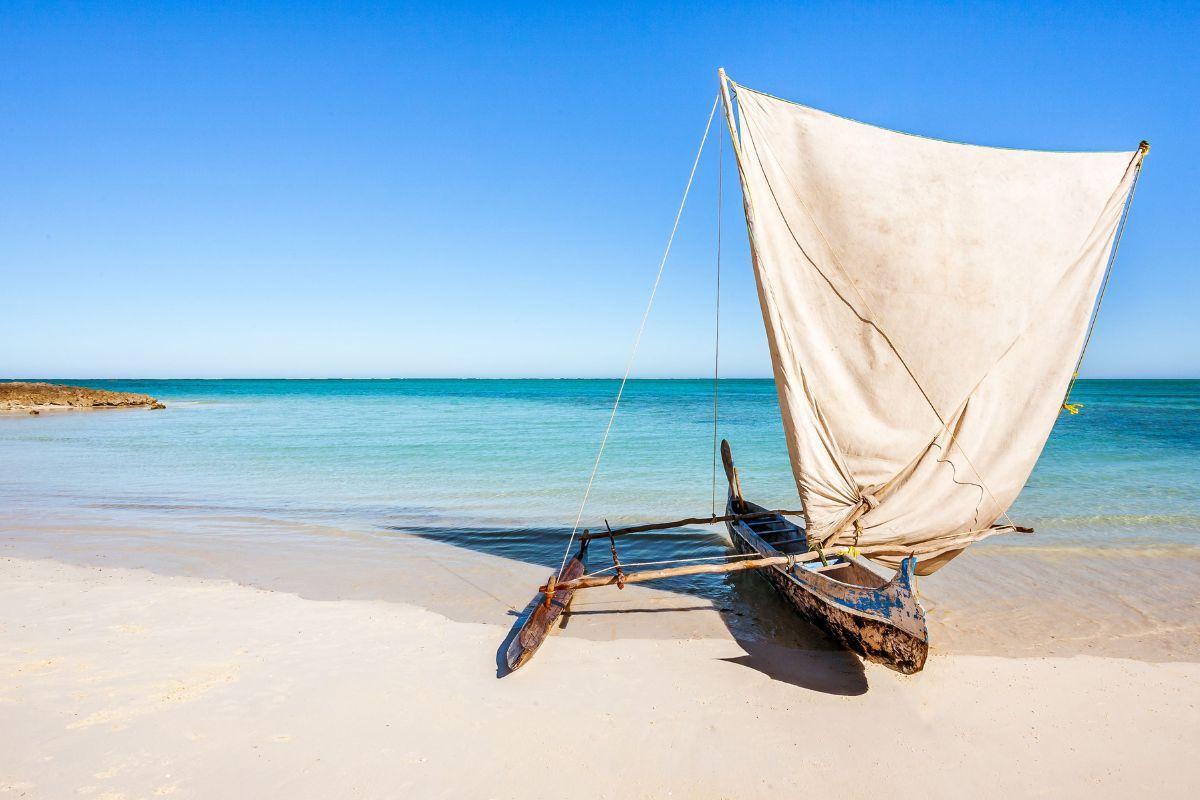
Some of Madagascar’s most memorable journeys begin where the road ends. Travelling by river, canal, pirogue or boat reveals a slower and more intimate side of the island, taking you through landscapes that cannot always be experienced from a vehicle.
Drift through the wild landscapes of western Madagascar on the Tsiribihina River, navigate the lakes and tropical waterways of the Pangalanes Canal, enter the dramatic Manambolo Gorge beneath the Tsingy, or paddle through mangroves and coastal villages in a traditional pirogue.
Some journeys are comfortable boat transfers through peaceful scenery. Others involve several days on the water, remote camps and genuine expedition conditions. What they share is a different perspective on Madagascar: villages seen from the riverbank, fishermen travelling by pirogue, forests reflected in calm water and landscapes far from the country’s main roads.
This guide introduces Madagascar’s most rewarding river and boat experiences, explains what to expect and shows how they can be combined with wildlife, trekking, culture and the island’s extraordinary national parks.
Explore Madagascar by River & Boat
- Why explore Madagascar by water?
- Which river or boat adventure should you choose?
- Tsiribihina River
- Pangalanes Canal
- Ankanin’ny Nofy & Lake Ampitabe
- Manambolo River & Tsingy de Bemaraha
- Mangoky River expeditions
- Mangrove & pirogue adventures
- Traditional pirogues around Nosy Be
- Coastal boat adventures
- What to expect on a river journey
- Best time for river and boat adventures
- What to pack
- Responsible travel on Madagascar’s waterways
- Combine river adventures with your Madagascar trip
- Recommended Madagascar tours
- Frequently asked questions
Why Explore Madagascar by River and Boat?
Madagascar is usually imagined through its roads, national parks and forests, yet water has always been an important part of travel and everyday life around the island.
Rivers connect remote communities. The Pangalanes Canal links lakes and waterways along the humid east coast. Traditional pirogues remain part of life in fishing villages and coastal communities, while larger boats provide access to islands and isolated natural areas.
Travelling by water changes the rhythm of a journey. There is no need to rush between viewpoints. Instead, landscapes unfold gradually: cliffs, forests, villages, rice fields, mangroves and open skies pass beside you while daily life continues along the riverbanks.
For travellers who enjoy adventure, photography, nature and cultural encounters, this slower pace can become one of the most memorable parts of a Madagascar trip.
River travel also combines naturally with wildlife and nature experiences in Madagascar , hiking and visits to remote communities.
Which Madagascar River or Boat Adventure Is Right for You?
Madagascar’s water-based experiences are very different from one another. Some are genuine multi-day adventures, while others are peaceful excursions that can easily form part of a wider itinerary.
| Destination | Main Experience | Adventure Level | Best For |
|---|---|---|---|
| Tsiribihina River | Multi-day river journey and camping | Moderate adventure | Remote western Madagascar |
| Pangalanes Canal | Lakes, canals, villages and tropical scenery | Easy | Slow travel and culture |
| Manambolo River | Gorge, caves and Tsingy landscapes | Easy to moderate | Short adventure near Bemaraha |
| Mangoky River | Remote expedition travel | Challenging | Experienced adventurers |
| Mangrove excursions | Pirogue or kayak through wetlands | Easy | Nature and local life |
| Nosy Be & Lokobe | Traditional pirogue and island scenery | Easy | Culture, nature and islands |
| Coastal boat trips | Islands, bays and lagoons | Easy to moderate | Marine landscapes |
The exact experience always depends on water levels, weather, navigation conditions and the selected route. In remote areas, flexibility is an important part of travelling in Madagascar.
Tsiribihina River: Madagascar’s Classic River Adventure
For travellers looking for a genuine river journey, the Tsiribihina is one of Madagascar’s great adventures.
The journey normally begins around Miandrivazo in western Madagascar before travelling downstream through increasingly remote landscapes towards the region of Belo-sur-Tsiribihina.
For several days, the river becomes your road. Villages, cliffs, vegetation and wide open landscapes replace the traffic and long road journeys found elsewhere on the island.
Several Days Away from the Main Roads
What makes a Tsiribihina descent special is not one individual attraction. It is the experience of travelling continuously through a remote landscape.
Days are spent navigating downstream, stopping according to the route and local conditions, and observing the changing scenery along the riverbanks.
This is slow travel in the most literal sense. Rather than trying to visit several sites in a single day, the journey itself becomes the experience.
Camping Beside the River
Multi-day Tsiribihina journeys can include nights camping on or near the riverbanks.
Accommodation is simple compared with a hotel, but this is part of the appeal: dinner outdoors, a dark night sky and the feeling of being far from Madagascar’s main tourist routes.
Waterfalls and Natural Stops
Depending on the itinerary, season and local conditions, stops may be made at waterfalls or other natural sites along the route.
Conditions change from year to year, so the exact programme should remain flexible rather than promising an identical experience on every departure.
Villages Along the Tsiribihina
Travelling by river also provides glimpses of everyday life in communities far from Madagascar’s main highways.
Boats and river crossings are part of local transport, and encounters along the route can add an important cultural dimension to the journey.
These are real communities rather than staged attractions, so visits should always be respectful and follow the guidance of local staff.
From the Tsiribihina to the Tsingy
One of the great advantages of the Tsiribihina is how naturally the river journey fits into a wider exploration of western Madagascar.
After leaving the river, travellers can continue towards Tsingy de Bemaraha before eventually reaching Kirindy Forest, Morondava and the Avenue of the Baobabs.
Natura Travel includes a three-day river experience within our West Madagascar Tour: Tsiribihina, Tsingy and Baobabs .
The Pangalanes Canal: Slow Travel Through Eastern Madagascar
The Pangalanes Canal offers a completely different experience from the Tsiribihina.
Rather than a wilderness river descent with camping, the Pangalanes is a network of canals, natural lakes and waterways running parallel to Madagascar’s humid east coast.
Travelling here is peaceful and scenic. Tropical vegetation reaches towards the water, fishing villages appear along the banks and small boats remain part of everyday transport.
From Manambato by Boat
Manambato is an important gateway to the northern section of the Pangalanes system.
From here, boats travel through connected lakes and waterways towards Ankanin’ny Nofy, creating a memorable transition from road travel to the landscapes of eastern Madagascar.
A Living Waterway
The Pangalanes should not be viewed simply as a tourist attraction. People live along its shores and use the waterways for transport, fishing and communication between communities.
As your boat passes villages and smaller craft, the journey provides a glimpse into a side of eastern Madagascar that is easy to miss when travelling exclusively by road.
Continue Towards Toamasina
Depending on the chosen route and navigation conditions, journeys can continue through different sections of the canal towards the Toamasina region.
Natura Travel’s eastern itinerary travels by boat from Manambato to Ankanin’ny Nofy and later continues along the Pangalanes towards Toamasina.
Discover the complete route on our East Madagascar Tour: Andasibe, Pangalanes and Sainte-Marie .
Ankanin’ny Nofy & Lake Ampitabe: Between Forest and Water
Ankanin’ny Nofy, whose name is often translated as “Nest of Dreams”, lies in a remarkable setting between forest, lakes and the Pangalanes waterways.
Its relative isolation is part of its character. Reaching the area by boat makes arrival feel very different from simply driving to another hotel or national park.
Palmarium Reserve
One of the area’s best-known nature experiences is Palmarium Reserve, where guided walks provide opportunities to encounter several Malagasy lemurs and tropical vegetation.
Depending on the programme and local conditions, evening excursions may also offer opportunities to search for the aye-aye (Daubentonia madagascariensis), one of Madagascar’s most unusual nocturnal lemurs.
Lake Ampitabe
Lake Ampitabe forms part of this landscape of interconnected freshwater environments.
Time here is less about rushing through a list of attractions and more about appreciating the atmosphere of forest, water and isolated communities.
Travellers particularly interested in endemic animals can continue their research with our guide to Madagascar wildlife and nature .
Manambolo River: Pirogue Adventures Beneath the Tsingy
Near Tsingy de Bemaraha, the Manambolo River offers one of Madagascar’s most atmospheric short boat experiences.
Limestone cliffs rise above the water as the river cuts through the dramatic Bemaraha landscape.
Pirogue excursions can provide access to the Manambolo Gorge and allow visitors to experience the limestone scenery from below before or alongside exploration of the Tsingy on foot.
Gorges, Caves and Limestone Landscapes
The appeal of the Manambolo lies in the relationship between water and geology.
The river passes below cliffs and near caves within a landscape shaped over immense periods by water acting on limestone.
This makes a pirogue excursion a natural complement to the elevated viewpoints, ladders and trails of the Grand Tsingy.
Combine Boat and Hiking Experiences
The Bemaraha region is particularly suitable for travellers who enjoy experiencing a landscape from several perspectives.
One day may involve travelling quietly through the Manambolo Gorge, while another takes you above the limestone pinnacles on foot.
Learn more about the geology in our guide: What Is the Tsingy of Madagascar and How Does It Form? .
Travellers interested in the walking component should also explore our Hiking & Trekking in Madagascar page.
The Mangoky River: An Expedition for Serious Adventurers
The Mangoky belongs in a different category from the more established Tsiribihina and Pangalanes experiences.
It crosses remote parts of western and southwestern Madagascar and has attracted expedition travellers interested in long, demanding journeys through little-visited landscapes.
A Mangoky journey should not be presented as a routine excursion. Access, river conditions, equipment, food, camping, communications and support all require careful specialist planning.
Why Choose the Mangoky?
Its appeal lies precisely in its remoteness.
Travellers considering the Mangoky are usually not looking for a conventional holiday activity. They are looking for an expedition in which isolation and logistical complexity are an important part of the experience.
For most first-time visitors who want to experience a multi-day river journey, the Tsiribihina is generally a more natural introduction.
Mangrove Adventures: Explore Madagascar’s Coastal Wetlands
Not all of Madagascar’s best boat experiences take place on major rivers.
Mangrove forests create networks of quiet channels along sections of the west, northwest and southern coasts, and they can often be explored by pirogue or kayak.
These excursions tend to be slower and shorter than a river expedition, making them ideal for travellers interested in birdlife, local fishing culture and coastal ecosystems.
Kivalo Near Morondava
Near Morondava, the community-based area around Kivalo offers an opportunity to discover mangrove environments by traditional pirogue.
Experiences connected to local communities can help visitors understand why mangroves are important not only for wildlife but also for fishing, coastal protection and local livelihoods.
Southwestern Madagascar
Wetlands and mangroves also form part of the natural mosaic of southwestern Madagascar.
In suitable locations, pirogue or kayak trips can be combined with birdwatching, coastal villages and a beach stay.
To explore Madagascar’s coastline in more detail, see our guide to Beaches & Islands in Madagascar .
Traditional Pirogues Around Nosy Be & Lokobe
Northwestern Madagascar offers a different type of boat adventure, where traditional pirogues connect coastal villages, islands and protected natural areas.
Reaching Lokobe by Pirogue
On Nosy Be, one memorable way to approach the Lokobe area is by traditional pirogue from the coastal side of the island.
Paddling with local boatmen creates a very different experience from travelling by motorboat. The journey becomes part of the excursion, connecting the sea, village life and the forest.
Lokobe protects some of Nosy Be’s remaining native forest and provides opportunities to discover Malagasy wildlife with local guides.
Island Hopping
Nosy Be is also Madagascar’s principal base for island-hopping excursions to destinations such as Nosy Komba, Nosy Tanikely, Nosy Sakatia and Nosy Iranja.
Because these excursions are primarily about islands, beaches and the marine environment, you can find much more detail in our guide to Madagascar’s beaches and islands .
Natura Travel combines northern Madagascar and the Nosy Be region on our Northern Madagascar & Nosy Be Tour .
Coastal Boat Adventures Around Madagascar
Madagascar’s long coastline creates numerous opportunities to use a boat not simply as transport but as part of the travel experience.
Sainte-Marie & Île aux Nattes
On the east coast, boats connect Sainte-Marie with surrounding coastal experiences and neighbouring Île aux Nattes.
During the humpback whale season, generally centred on the southern winter, boat excursions around Sainte-Marie also offer opportunities to observe the humpback whale (Megaptera novaeangliae).
If marine wildlife is a priority, read our complete guide to whale watching in Madagascar .
Lokaro Bay and Southeast Madagascar
Near Fort-Dauphin, boat journeys can also form part of excursions towards isolated bays and coastal environments such as Lokaro.
The southeastern landscape brings together mountains, vegetation, lagoons and the Indian Ocean and feels very different from both the dry west and the tropical islands of Nosy Be.
Southwest Madagascar
Along the southwest coast, traditional Vezo pirogues remain closely connected to fishing and everyday coastal life.
Around destinations such as Anakao and sections of the coast north of Toliara, boat journeys can be combined with lagoons, offshore islands and coastal communities.
What Should You Expect on a Madagascar River Journey?
River travel in Madagascar is not the same as taking a luxury river cruise in Europe or on the Nile.
Depending on the destination, conditions can be simple and adventurous. Boats, camps and departure times may need to adapt to water levels, weather and local circumstances.
Simple Conditions Can Be Part of the Experience
On a multi-day river journey such as the Tsiribihina, accommodation may involve camping rather than hotels.
Facilities are consequently simpler, but the reward is access to remote landscapes and nights far from urban areas.
Different Types of Boats
The type of craft varies according to the destination and programme. It may include motorised boats, traditional dugout pirogues, outrigger pirogues, canoes or larger vessels suitable for longer journeys.
A traditional pirogue excursion through mangroves is therefore very different from several days travelling along the Tsiribihina.
River Conditions Matter
Water levels change between seasons and years. Heavy rain upstream, low water or other local conditions can affect routes and journey times.
A well-designed itinerary should therefore allow for a degree of flexibility rather than promising exact navigation times months in advance.
Expect Limited Connectivity
Remote river sections may have little or no mobile signal. For many travellers, disconnecting for a few days becomes one of the pleasures of the experience.
When Is the Best Time for River & Boat Adventures in Madagascar?
The ideal period depends strongly on the destination.
Tsiribihina River
River trips through western Madagascar are generally easiest to combine with the Tsingy and other western destinations during the drier travel season, broadly from around April or May through October and November.
Natura Travel currently operates its West Madagascar itinerary from April to November, with July to October recommended for the complete route.
Pangalanes Canal
The Pangalanes and eastern Madagascar can be visited across a wider part of the year, although the east coast is humid and rainfall remains possible in every season.
Natura Travel’s East Madagascar itinerary is available year-round, with May to November particularly recommended.
Sea and Coastal Excursions
Coastal boat trips depend not only on rainfall but also on wind, waves and sea conditions.
Captains may postpone or cancel a trip when conditions are unsuitable. This is a normal safety decision and should always be respected.
For a broader overview of seasons across the island, read our month-by-month guide to the best time to visit Madagascar .
What to Pack for a River or Boat Adventure in Madagascar
What you need depends on whether you are taking a two-hour pirogue excursion or spending several nights along a remote river.
Useful items generally include:
- a lightweight waterproof or rain jacket;
- quick-drying clothes;
- a hat and sunglasses;
- high-protection sunscreen;
- insect repellent;
- a reusable water bottle;
- sandals or suitable footwear for wet landings;
- comfortable walking shoes for excursions on land;
- a dry bag for cameras, phones and documents;
- a headlamp for camping trips;
- a portable power bank;
- personal medication and basic first-aid supplies;
- a small towel;
- binoculars if you enjoy wildlife and birdwatching.
For multi-day expeditions, Natura Travel or the local operator should confirm what camping and specialist equipment is provided before departure.
Explore Madagascar’s Waterways Responsibly
Rivers, lakes, wetlands and mangroves are both natural ecosystems and places where people live and work.
Responsible travel therefore means respecting both the environment and the communities encountered along the route.
Leave No Waste Behind
Plastic and other non-biodegradable waste should never be left on riverbanks, beaches or campsites.
On remote journeys, travellers should expect to carry waste until it can be disposed of appropriately.
Respect Villages and Local Communities
River communities are not tourist exhibits. Ask permission before photographing people and follow your guide’s advice regarding local customs and sacred sites.
You can learn more about appropriate behaviour in our guide to cultural experiences in Madagascar .
Respect Wildlife
Animals should be observed quietly without feeding, touching or attempting to force a closer encounter.
On marine excursions, boats should also follow appropriate observation practices around whales and other large marine animals.
Support Local Guides and Boat Crews
Boatmen, guides, cooks, porters and village services are an important part of river travel.
Using experienced local teams provides local economic benefits while also improving safety and understanding of the places being visited.
Combine a River Adventure with the Rest of Madagascar
A river journey rarely needs to stand alone. Some of Madagascar’s strongest itineraries use the water as a natural link between wildlife, landscapes, communities and national parks.
Tsiribihina + Tsingy + Baobabs
This is the classic western combination.
Begin with a multi-day journey on the Tsiribihina, continue overland towards Tsingy de Bemaraha and finish with Kirindy and the baobab landscapes around Morondava.
It combines hiking and trekking , river travel and wildlife and nature within one adventurous route.
Pangalanes + Andasibe + Sainte-Marie
Eastern Madagascar offers a softer and more tropical combination.
Begin by searching for lemurs in Andasibe, travel by boat through the Pangalanes system to Ankanin’ny Nofy and continue towards the coast before finishing on Sainte-Marie.
During the appropriate season, Sainte-Marie can also add whale watching to the journey.
Boat Adventures + Tropical Islands
Travellers interested primarily in lagoons, island hopping and marine scenery can combine pirogue or boat experiences with Nosy Be, Sainte-Marie, Anakao or other coastal destinations.
Discover these options in our complete guide to Madagascar’s beaches and islands .
Madagascar Tours Featuring River & Boat Adventures
Natura Travel currently features two itineraries where travelling by water is a central part of the journey rather than simply an optional excursion.
West Madagascar: Tsiribihina River, Tsingy & Baobabs
Travel from the Central Highlands to Miandrivazo before spending three days exploring the Tsiribihina River, with remote landscapes, riverbank camping and village encounters.
The adventure then continues towards Tsingy de Bemaraha, Kirindy and the Avenue of the Baobabs. Explore the West Madagascar Tour
East Madagascar: Andasibe, Pangalanes & Sainte-Marie
Combine the rainforest of Andasibe with a boat journey from Manambato through the lakes and waterways of the Pangalanes Canal to Ankanin’ny Nofy.
Continue by water towards Toamasina before travelling on to Mahambo and tropical Sainte-Marie. Explore the East Madagascar Tour
Other boat and pirogue experiences can be incorporated into private itineraries depending on the destination, season, local operators and navigation conditions.
Browse all our private Madagascar tours for more inspiration.
More Experiences to Combine with a River Adventure
Wildlife & Nature
Search for lemurs, chameleons and endemic wildlife before or after your journey on the water.
Hiking & Trekking
Combine the Tsiribihina with the Tsingy or the Pangalanes with rainforest walking.
Beaches & Islands
Continue from rivers and canals towards Madagascar’s tropical coast and islands.
Whale Watching
Add seasonal marine wildlife to an eastern or coastal itinerary.
Cultural Experiences
Discover the villages, traditions and communities connected to Madagascar’s rivers and coast.
Or return to all activities and experiences in Madagascar .
Frequently Asked Questions About River & Boat Adventures in Madagascar
What are the best river trips in Madagascar?
The Tsiribihina River is the classic choice for a multi-day river adventure in western Madagascar. The Pangalanes Canal offers a gentler journey through lakes, waterways and villages in eastern Madagascar. The Manambolo River near Tsingy de Bemaraha is well suited to shorter pirogue excursions through dramatic limestone scenery.
How long does the Tsiribihina River trip take?
It depends on the route and type of boat, but multi-day journeys commonly spend around two to three days on the river. Natura Travel’s West Madagascar itinerary dedicates three days to the Tsiribihina section before continuing towards Tsingy de Bemaraha.
Where does a Tsiribihina River journey start?
Miandrivazo is the main gateway for organised Tsiribihina river journeys. It can be reached from Madagascar’s Central Highlands before continuing downstream towards western Madagascar.
Do you camp during a Tsiribihina River trip?
Many multi-day Tsiribihina itineraries include simple camping beside the river. Natura Travel’s current West Madagascar tour includes riverbank camping during the Tsiribihina journey. Exact arrangements should always be confirmed before departure.
What is the Pangalanes Canal?
The Pangalanes is an extensive system of natural lakes and man-made waterways running parallel to Madagascar’s east coast. Sections of the canal are used for local transport and tourism, with boat journeys providing access to communities and natural areas such as Ankanin’ny Nofy.
Can you travel from Manambato to Ankanin’ny Nofy by boat?
Yes. Travelling by boat from Manambato through the connected lakes and waterways to Ankanin’ny Nofy is one of the classic experiences of eastern Madagascar and is included in Natura Travel’s East Madagascar itinerary.
Can you take a boat trip near the Tsingy de Bemaraha?
Yes. Pirogue excursions on the Manambolo River can complement a visit to Tsingy de Bemaraha. The river and gorge provide a different perspective on the limestone landscape from the hiking circuits inside the protected area.
What is a Malagasy pirogue?
A pirogue is a traditional small boat widely used in Madagascar. Designs differ between regions and may include dugout canoes and outrigger craft. Pirogues remain part of everyday fishing, transport and coastal life in many communities.
Are Madagascar river trips suitable for children?
Some are, but suitability depends on the child, route, boat, weather, accommodation and length of the journey. A short Pangalanes or pirogue excursion is very different from several days camping along the Tsiribihina. Families should discuss the specific itinerary before booking.
Can wildlife be seen during a river journey?
Yes, wildlife and birdlife may be encountered depending on the route and habitat, but a river journey should not be sold as a guaranteed wildlife safari. For travellers whose priority is endemic animals, river experiences are best combined with national parks and protected forests.
What is the best time for the Tsiribihina River?
The river is most naturally combined with western Madagascar during the drier travel season. Natura Travel’s West Madagascar itinerary operates from April to November and recommends July to October for the complete Tsiribihina, Tsingy and Morondava route.
Is the Pangalanes Canal suitable all year?
Eastern Madagascar can be visited throughout the year, but it has a humid climate and rainfall can occur in any month. Natura Travel’s East Madagascar itinerary is available year-round, with May to November generally recommended.
Do I need to know how to swim?
Swimming ability is useful around water but should never replace appropriate safety equipment. Travellers should follow the crew’s instructions and use life jackets when required. If you are not a confident swimmer, tell your guide or tour operator before the excursion.
Can a river trip be combined with the Tsingy and Avenue of the Baobabs?
Yes. This is one of the classic adventure combinations in western Madagascar. The Tsiribihina can be followed by Tsingy de Bemaraha, Kirindy Forest and the Avenue of the Baobabs around Morondava.
Can I combine the Pangalanes Canal with Sainte-Marie?
Yes. Natura Travel’s East Madagascar route combines Andasibe, Manambato, Ankanin’ny Nofy and the Pangalanes Canal before continuing via Toamasina and Mahambo to Sainte-Marie.
Ready to Discover Madagascar from the Water?
Imagine waking beside the Tsiribihina after a night under the stars, travelling through quiet tropical waterways on the Pangalanes Canal, paddling beneath the limestone cliffs of the Manambolo or crossing a mangrove channel in a traditional pirogue.
A journey on the water offers a different perspective on Madagascar: slower, quieter and often far removed from the island’s main roads.
Tell us how adventurous you would like your journey to be. Natura Travel can combine rivers, canals and boat experiences with wildlife, trekking, local communities, national parks and tropical islands in a private itinerary designed around your travel dates and preferred pace.
Or discover all activities and experiences in Madagascar .