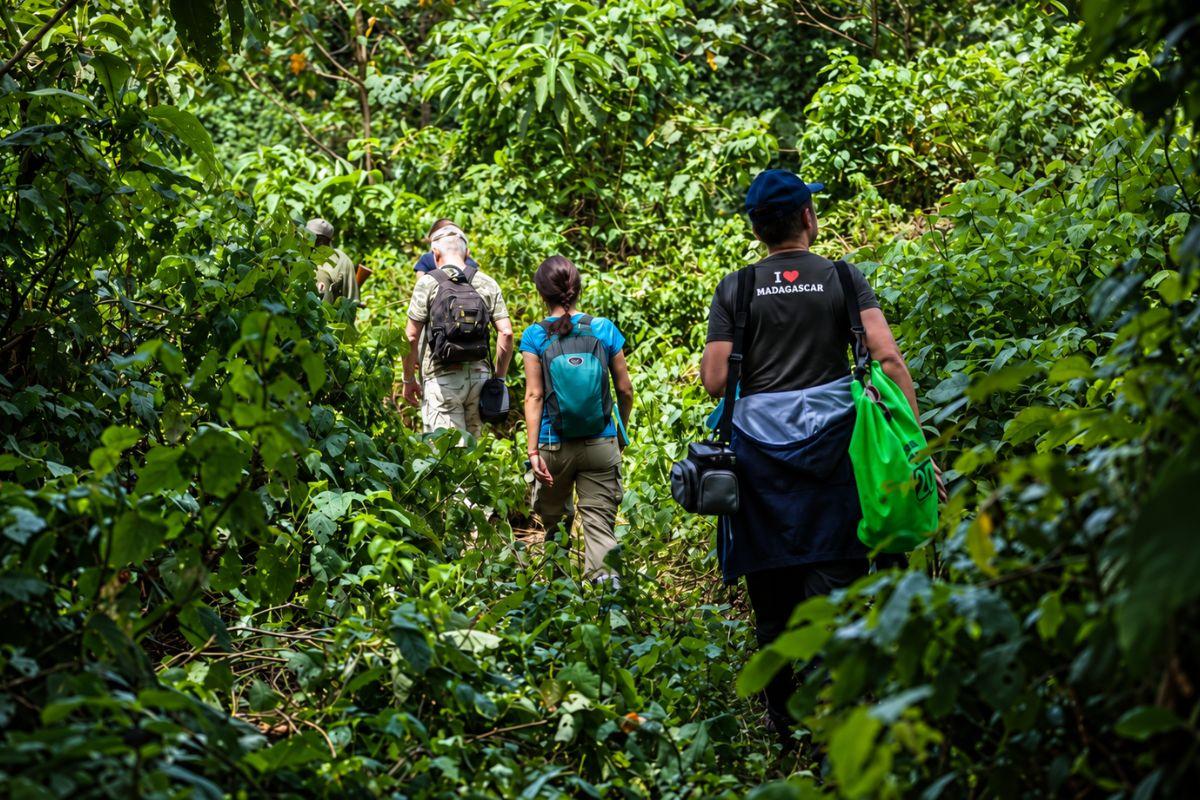
Madagascar is a remarkable destination for travellers who prefer discovering a country on foot. From granite mountains and highland villages to sandstone canyons, tropical rainforests, limestone Tsingy and remote wilderness, hiking reveals landscapes that are often impossible to fully appreciate from the road.
Trekking in Madagascar is not about one famous trail. Each region offers a completely different experience. You can climb through the dramatic mountains of Andringitra, walk between traditional Zafimaniry villages, descend into the canyons of Isalo, cross the extraordinary limestone formations of the Tsingy de Bemaraha or embark on a genuine wilderness expedition into the Makay.
Some walks last only a few hours and can be adapted to different fitness levels. Others involve full days on the trail, remote camps, mountain terrain or multi-day expeditions.
This guide introduces the best places for hiking and trekking in Madagascar, what kind of experience to expect and how to include them in a private tailor-made journey.
Explore Hiking & Trekking in Madagascar
- Why hike in Madagascar?
- Which Madagascar trek is right for you?
- Andringitra National Park & Pic Boby
- Tsaranoro Valley
- Isalo National Park
- Zafimaniry Country
- Tsingy de Bemaraha
- Makay Massif
- Marojejy National Park
- Ankarana
- Amber Mountain
- Rainforest walks in Madagascar
- Other hiking destinations
- Best time for hiking in Madagascar
- How difficult is hiking in Madagascar?
- What to pack
- Responsible trekking
- Hiking and trekking tours
- Frequently asked questions
Why Go Hiking and Trekking in Madagascar?
Hiking is one of the best ways to understand just how diverse Madagascar really is.
The island is usually associated with lemurs, baobabs and tropical beaches, but its interior contains mountain ranges, granite peaks, high plateaus, rainforest-covered hills, deep sandstone canyons and some of the most unusual limestone landscapes on Earth.
A journey on foot also changes the pace of travel. Instead of simply moving between destinations, you have time to notice the landscape, vegetation, wildlife and everyday life around you.
In some regions, walking is primarily about spectacular scenery. Elsewhere, it provides access to villages, forests or remote places that cannot easily be reached by vehicle.
Hiking can also be combined naturally with wildlife and nature experiences in Madagascar , cultural discovery and a few relaxing days beside the sea.
Which Madagascar Trek Is Right for You?
Madagascar offers everything from gentle forest walks to demanding multi-day expeditions. The right destination depends on your fitness, available time, preferred scenery and appetite for adventure.
| Destination | Main Experience | Typical Level | Best For |
|---|---|---|---|
| Andringitra | Mountains, granite peaks and high plateaus | Moderate to challenging | Mountain trekking |
| Pic Boby | High-altitude summit trek | Challenging | Experienced hikers |
| Tsaranoro | Granite cliffs and valley scenery | Moderate to challenging | Hikers and climbers |
| Isalo | Canyons, sandstone and natural pools | Easy to challenging | First-time visitors |
| Zafimaniry | Highland villages and cultural landscapes | Moderate | Culture and slow travel |
| Tsingy de Bemaraha | Limestone pinnacles, ladders and bridges | Moderate to challenging | Adventure |
| Makay | Remote canyons and wilderness | Challenging | Expedition trekking |
| Marojejy | Rainforest and mountain summit | Moderate to very challenging | Wilderness and biodiversity |
| Ankarana | Tsingy, caves and dry forest | Easy to moderate | Adventure and wildlife |
| Amber Mountain | Rainforest, waterfalls and crater lakes | Easy to moderate | Nature walks |
Difficulty varies according to the exact route, weather and length of the excursion. A trek can therefore be adapted around your experience and physical condition.
Andringitra National Park: Madagascar’s Great Mountain Trek
For travellers who think of trekking as mountains, altitude and wide open landscapes, Andringitra is one of Madagascar’s essential destinations.
Located south of the Central Highlands, the Andringitra Massif is a dramatic landscape of granite peaks, high plateaus, valleys, waterfalls and rapidly changing vegetation.
The combination of altitude and varied terrain gives Andringitra a very different character from the tropical forests and dry landscapes found elsewhere on the island.
Hiking to Pic Boby / Imarivolanitra
The best-known trekking objective in Andringitra is Pic Boby, also known as Imarivolanitra.
Rising to approximately 2,658 metres, it is the second-highest summit in Madagascar and one of the island’s great trekking objectives.
Reaching the summit requires more commitment than an ordinary national park walk. Conditions can be cold and windy at altitude, particularly during the southern winter, and itineraries should allow enough time for the approach and ascent.
The reward is a mountain environment unlike the stereotypical image of tropical Madagascar: open plateaus, granite formations and enormous views across the surrounding landscape.
Multi-Day Trekking in Andringitra
Andringitra is particularly rewarding when experienced over several days rather than as a quick stop.
Multi-day routes make it possible to explore different ecological zones, waterfalls, valleys and highland landscapes while camping or using simple accommodation depending on the itinerary.
For travellers who want hiking to be one of the central themes of their trip, our Madagascar Adventure Tour through Ranomafana, Andringitra and Isalo is the most relevant Natura Travel itinerary.
Tsaranoro Valley: Granite Cliffs and Spectacular Mountain Scenery
Close to the Andringitra Massif, Tsaranoro Valley offers some of Madagascar’s most impressive granite scenery.
Huge rock walls rise above valleys, villages and open landscapes, creating an environment that attracts both hikers and experienced rock climbers.
You do not need to be a climber to enjoy Tsaranoro. Hiking routes around the valley provide panoramic views and opportunities to experience the mountain landscapes at a slower pace.
Tsaranoro works particularly well as part of a longer Andringitra itinerary and provides an excellent transition between mountain trekking, rural landscapes and the RN7.
Isalo National Park: Canyons, Sandstone and Natural Pools
Isalo National Park offers one of Madagascar’s most accessible and visually dramatic hiking experiences.
Located near Ranohira in southern Madagascar, the park is characterised by eroded sandstone formations, plateaus, deep canyons, dry landscapes, streams and natural pools.
Unlike a single fixed trail, Isalo offers several possibilities. Walks can be adapted from shorter excursions to long full-day hikes and more extensive trekking routes.
Canyon Walks
Hiking into Isalo’s canyons reveals the contrast between the dry, exposed plateau and greener areas around streams and permanent water.
Routes may pass through narrow rock formations, vegetation and shaded sections hidden below the surrounding sandstone landscape.
Natural Pools
One of the pleasures of hiking in Isalo is the opportunity, depending on the selected route and local conditions, to reach natural pools and waterfalls surrounded by rock formations and vegetation.
Sunset at Isalo
After a day on the trail, the sandstone landscape becomes particularly impressive in the late afternoon as the rock changes colour.
The famous Isalo Window is one of the region’s best-known sunset viewpoints and can make a memorable conclusion to a day of hiking.
Isalo is included in both our Madagascar Adventure Tour and our Southern Madagascar Tour .
Zafimaniry Country: Trekking Through Culture and Highland Villages
Not every great trek in Madagascar is about reaching a summit. In Zafimaniry country, walking provides access to a remarkable cultural landscape of hills, rice fields, forests and traditional villages.
Antoetra serves as one of the main gateways to Zafimaniry territory, but many villages deeper in the region are reached primarily on foot.
Trekking here therefore becomes both a physical and cultural experience. Paths cross valleys and hills before reaching villages where traditional wooden architecture and carving remain an important part of local life.
UNESCO has recognised the traditional woodcrafting knowledge of the Zafimaniry as part of the Intangible Cultural Heritage of Humanity.
Travellers should approach the region respectfully. These are living communities rather than open-air museums, and the most meaningful experience comes from walking with local guides and respecting local customs.
Learn more about Malagasy traditions in our guide to Madagascar culture and traditions .
Zafimaniry country is also included in our 14-day Madagascar Adventure Tour .
Tsingy de Bemaraha: Hiking Through a Stone Forest
Hiking in Tsingy de Bemaraha is unlike hiking almost anywhere else in Madagascar.
Water has shaped the limestone plateau into a spectacular landscape of sharp pinnacles, narrow passages, caves, canyons and vertical rock formations.
Rather than a conventional trail, some Tsingy circuits combine walking with ladders, cables, narrow passages and suspension bridges. Safety equipment is used on routes where required.
A reasonable head for heights and good mobility are important for the more adventurous circuits.
The Grand Tsingy
The Grand Tsingy provides the most dramatic experience, taking hikers into the heart of the limestone formations.
Views from elevated sections reveal an extraordinary “forest” of limestone needles extending across the landscape.
The Manambolo and Western Landscapes
The Tsingy experience can also be combined with the Manambolo area, western dry forest, the Avenue of the Baobabs and Kirindy.
For a deeper explanation of this extraordinary geology, read our guide: What Is the Tsingy of Madagascar and How Does It Form?
The Tsingy de Bemaraha is a major highlight of our West Madagascar Tour: Tsingy, Baobabs and Tsiribihina River .
The Makay Massif: Trekking Into Madagascar’s Remote Wilderness
For experienced travellers looking for a genuine expedition, the Makay offers an entirely different level of adventure.
Located in southwestern Madagascar, this enormous sandstone massif is cut by a maze of canyons and isolated valleys.
The region remains remote and travelling there requires substantially more organisation than visiting established destinations such as Isalo or Andringitra.
A True Expedition
A Makay trek generally involves several days in remote terrain, with camping and logistical support. Access itself can be part of the adventure.
Travellers should not expect conventional hotels, frequent shops or easy road access once the expedition begins.
This isolation is precisely what makes the Makay so appealing. Canyons, rivers, cliffs and hidden pockets of vegetation create a genuine wilderness experience.
The Makay is best suited to travellers who have enough time, good physical preparation and a strong interest in remote trekking.
Marojejy National Park: Rainforest Trekking to a Mountain Summit
Marojejy National Park in northeastern Madagascar offers one of the island’s great wilderness treks.
The experience begins in tropical rainforest and climbs through changing vegetation towards the rugged Marojejy Massif.
This creates an exceptional combination of biodiversity and serious mountain trekking.
The Summit of Marojejy
The summit rises to approximately 2,132 metres. Reaching it involves a demanding multi-day trek and should be considered a genuine mountain objective rather than an ordinary park excursion.
Trails can become steep, muddy and slippery, particularly in wet conditions.
Rainforest Wildlife
Marojejy is not only about reaching the summit. Its forests are part of what makes the trek exceptional.
One of the park’s most famous inhabitants is the silky sifaka (Propithecus candidus), one of Madagascar’s distinctive lemurs.
Travellers interested primarily in Madagascar’s endemic animals should also read our guide to Madagascar wildlife and nature .
Ankarana: Tsingy, Caves and Hiking in Northern Madagascar
Ankarana in northern Madagascar combines hiking with geology, wildlife and cultural significance.
The limestone massif contains Tsingy formations, caves, canyons, forest and underground drainage systems.
Trails lead through very different environments, making Ankarana particularly interesting for travellers who prefer variety rather than a single landscape.
Compared with a classic mountain trek, the experience is more about exploring unusual terrain and discovering the relationship between the limestone landscape and the surrounding forest.
Ankarana can be combined naturally with Amber Mountain, Diego Suarez and the northern coastline on our North Madagascar Tour .
Amber Mountain: Rainforest Walks and Waterfalls
Amber Mountain National Park offers a greener and gentler hiking experience in Madagascar’s far north.
Rising above the dry landscapes around Antsiranana, the mountain supports humid forest, waterfalls, streams and crater lakes.
Trails can be adapted to travellers who want anything from relatively relaxed nature walks to longer forest excursions.
The park is particularly rewarding for travellers who want hiking to include wildlife observation rather than focusing solely on physical challenge.
It combines especially well with Ankarana and the coastal landscapes around Diego Suarez on our North Madagascar Tour .
Rainforest Hiking in Madagascar
Not all walking in Madagascar needs to involve high mountains or multi-day trekking.
Many national parks are explored primarily on foot, making forest walks an important part of almost every nature-focused Madagascar journey.
Ranomafana National Park
Ranomafana provides a completely different walking experience from Isalo or Andringitra.
Trails pass through humid tropical forest, steep slopes, bamboo and streams while local guides search for lemurs, reptiles, amphibians and endemic birds.
Rain, mud and uneven terrain can make even relatively short rainforest walks more demanding than their distance might suggest.
Ranomafana is included in our Madagascar Adventure Tour and Southern Madagascar Tour .
Andasibe-Mantadia
Andasibe is another excellent choice for travellers who enjoy walking through forest while searching for wildlife.
Rather than trekking for altitude or distance, the focus is on moving slowly through the rainforest with a local guide and listening for animals such as the indri (Indri indri).
It is therefore particularly suitable for travellers who want to combine hiking with wildlife photography and nature observation.
Discover Andasibe on our East Madagascar Tour .
Masoala Peninsula
The remote Masoala Peninsula provides another opportunity for rainforest trekking, sometimes combined with coastal exploration.
This is a wetter, more remote environment where logistics and weather play an important role. It appeals particularly to travellers looking for immersion in rainforest rather than conventional mountain hiking.
More Places to Go Hiking in Madagascar
Madagascar has many additional walking areas beyond its most famous national parks. These can be especially useful for travellers looking for shorter hikes or less-visited landscapes.
The Central Highlands
Madagascar’s Central Highlands contain rolling hills, rice terraces, rural tracks and traditional villages that are particularly suited to walking.
Hiking here is less about dramatic national park scenery and more about experiencing rural landscapes and everyday life at a slower pace.
The Ankaratra Massif
South of Antananarivo, the volcanic landscapes of the Ankaratra Massif offer hiking opportunities in one of Madagascar’s highest regions.
The altitude also means conditions can be considerably cooler than travellers expect from a tropical destination.
Ibity
The Ibity area near Antsirabe offers mountain scenery, distinctive vegetation and opportunities for day hiking without committing to a major multi-day expedition.
Montagne des Français
Near Antsiranana, the Montagne des Français provides hiking through dry vegetation and limestone scenery with panoramic views over the surrounding northern landscape.
It can be combined with Amber Mountain, Ankarana and Madagascar’s northern coastline.
When Is the Best Time for Hiking in Madagascar?
For many trekking itineraries, the drier months from approximately April or May through October and November offer some of the most favourable conditions.
Lower rainfall generally makes roads and trails easier to navigate, while cooler temperatures can make long days on foot more comfortable.
June, July and August can be particularly cool in the Central Highlands and mountain regions. Early mornings and nights around Andringitra can feel cold, so warm layers remain important.
Western routes such as the Tsingy de Bemaraha are strongly influenced by seasonal access and are normally best planned during the dry season.
Rainforest destinations such as Ranomafana, Andasibe and Marojejy can receive rain at any time, so waterproof protection remains useful even during generally favourable months.
For detailed conditions by month and region, read our month-by-month guide to the best time to visit Madagascar .
How Difficult Is Hiking in Madagascar?
Hiking in Madagascar can range from relaxed nature walks lasting only a few hours to physically demanding multi-day treks in isolated terrain.
Distance alone does not always indicate difficulty. Heat, humidity, altitude, mud, river crossings, steep slopes, rough limestone and the remoteness of a trail can all affect how challenging a day becomes.
A traveller comfortable walking ten kilometres on a flat European trail may find ten kilometres in humid rainforest or on uneven Malagasy terrain substantially more demanding.
Easy and Moderate Walks
Travellers looking for gentle hiking can choose shorter circuits in destinations such as Andasibe, Amber Mountain, Ranomafana or Isalo.
Moderate to Challenging Hiking
Longer Isalo routes, Andringitra trails, Zafimaniry walks and some Tsingy circuits require greater stamina and confidence on uneven terrain.
Expedition-Style Trekking
Pic Boby, Marojejy summit routes and expeditions into the Makay are more appropriate for travellers specifically looking for a demanding trekking experience.
When Natura Travel designs a private itinerary, hiking can be adapted around your preferred pace, experience and physical condition wherever the selected route allows.
What to Pack for Hiking in Madagascar
Your equipment should reflect the actual trek rather than Madagascar’s general reputation as a tropical destination.
A useful basic hiking kit normally includes:
- comfortable walking or hiking shoes with good grip;
- lightweight, breathable walking clothes;
- long trousers for forest trails;
- a warm layer for mountain and Highland regions;
- a lightweight waterproof jacket;
- a sun hat and sunglasses;
- high-protection sunscreen;
- insect repellent;
- a reusable water bottle;
- a small daypack;
- a headlamp or torch;
- a waterproof cover or dry bag for electronics;
- basic personal first-aid supplies;
- walking poles if you normally use them.
More technical or remote itineraries may require additional equipment, camping gear or specific logistical arrangements.
Before packing, also read our essential Madagascar travel tips .
Hike Madagascar Responsibly
Hiking often takes visitors into fragile ecosystems and rural communities, so responsible behaviour is particularly important.
Stay on established routes where required, take all non-biodegradable waste with you and avoid removing plants, rocks or other natural objects from protected areas.
Wildlife should be observed quietly without feeding, touching or deliberately disturbing animals.
Local guides are an essential part of trekking in Madagascar. In addition to helping with navigation, they provide knowledge about wildlife, vegetation, weather, local customs and the cultural meaning of the landscapes through which you walk.
On remote multi-day treks, local porters, cooks and community services can also play an important role. Responsible trekking should ensure that these services create genuine economic benefits for local communities.
When walking through villages, remember that you are entering people’s homes and communities. Ask before photographing individuals and follow the advice of your guide regarding local customs and fady (traditional taboos).
You can learn more about local customs in our guide to cultural experiences in Madagascar .
Combine Hiking with Wildlife, Culture and Beaches
One of the advantages of trekking in Madagascar is that it does not need to become the only theme of your holiday.
A journey can combine Zafimaniry villages with rainforest wildlife, mountain hiking in Andringitra, the canyons of Isalo and eventually a few days beside the Mozambique Channel.
In western Madagascar, hiking through the Tsingy can be combined with the Tsiribihina River, baobabs and Kirindy Forest.
In northern Madagascar, walks in Ankarana and Amber Mountain can be followed by the Emerald Sea or the beaches and islands around Nosy Be.
Explore our other experiences:
- Wildlife & Nature in Madagascar – combine walking with lemurs, chameleons, endemic birds and remarkable natural habitats.
- Beaches & Islands in Madagascar – finish an active journey with time beside the Indian Ocean or Mozambique Channel.
- Cultural Experiences in Madagascar – discover villages, traditions, craftsmanship and local life.
- River & Boat Adventures – combine trekking with Madagascar’s rivers, waterways and coastal journeys.
Madagascar Hiking & Trekking Tours
Hiking can be incorporated into a private itinerary according to your experience, interests, travel dates and preferred pace.
Madagascar Adventure Tour: Andringitra & Isalo
Our most hiking-focused itinerary combines Zafimaniry country, Ranomafana rainforest, the mountains of Andringitra and a full-day trek through Isalo National Park. Explore the Madagascar Adventure Tour
Southern Madagascar: Ranomafana & Isalo
Combine rainforest walks, wildlife at Anja, hiking through Isalo and a relaxing conclusion on the beaches of Ifaty. Explore the Southern Madagascar Tour
West Madagascar & Tsingy de Bemaraha
Combine the Tsiribihina River with adventurous exploration of the Tsingy de Bemaraha, Kirindy Forest and Madagascar’s iconic baobab landscapes. Explore the West Madagascar Tour
North Madagascar: Ankarana & Amber Mountain
Walk through dry forest and Tsingy at Ankarana before exploring the rainforest, waterfalls and wildlife of Amber Mountain. Explore the North Madagascar Tour
Not sure which region suits you best? Explore all our private Madagascar tours and use them as inspiration for your tailor-made itinerary.
Frequently Asked Questions About Hiking in Madagascar
Is Madagascar good for hiking and trekking?
Yes. Madagascar offers an unusually wide variety of hiking environments, including mountains, rainforest, sandstone canyons, limestone Tsingy, highland villages and remote wilderness. Trips can range from short nature walks to demanding multi-day expeditions.
What are the best places for hiking in Madagascar?
Some of the best-known destinations are Andringitra National Park, Pic Boby, Tsaranoro Valley, Isalo National Park, Zafimaniry country, Tsingy de Bemaraha, the Makay Massif, Marojejy National Park, Ankarana and Amber Mountain. The best choice depends on whether you prefer mountains, rainforest, cultural trekking, unusual geology or remote wilderness.
What is the best trek in Madagascar?
There is no single best trek because the experiences are very different. Andringitra is ideal for mountain landscapes and high-altitude trekking, Isalo combines accessible hiking with dramatic canyons, Zafimaniry offers a cultural trekking experience, and the Makay or Marojejy are more appropriate for travellers seeking demanding wilderness adventures.
Can you climb Pic Boby in Madagascar?
Yes. Pic Boby, also known as Imarivolanitra, rises to approximately 2,658 metres in Andringitra National Park. Reaching the summit requires good physical condition and appropriate preparation, particularly because mountain weather can be cold and changeable.
Do I need to be very fit to hike in Madagascar?
No. Madagascar offers routes for different fitness levels. Shorter forest walks and selected circuits in Isalo, Andasibe, Ranomafana or Amber Mountain can suit travellers who do not want a demanding trek. Longer routes in Andringitra, Marojejy or the Makay require substantially more stamina and preparation.
What is the best time for trekking in Madagascar?
The drier period from approximately May to October is particularly suitable for many hiking itineraries. April and November can also work well in certain regions. Conditions vary considerably across the island, and access to remote western destinations such as Tsingy de Bemaraha is strongly seasonal.
Do I need a guide for hiking in Madagascar?
Guided visits are required or strongly recommended in Madagascar’s protected areas and are particularly important on remote trekking routes. Local guides provide navigation, safety information and valuable knowledge about wildlife, vegetation, culture and local conditions.
Is the Tsingy de Bemaraha suitable for people afraid of heights?
Some Tsingy circuits include elevated sections, ladders, cables and suspension bridges and may not be comfortable for travellers with a strong fear of heights. Other circuits can be less demanding, so the itinerary should be chosen according to your comfort level and physical ability.
Can I combine trekking with wildlife watching?
Yes. This is one of the advantages of hiking in Madagascar. Forest walks in Ranomafana, Andasibe, Marojejy, Amber Mountain and other protected areas combine hiking with opportunities to observe lemurs, birds, reptiles and other endemic wildlife.
Can I combine trekking with a beach stay?
Yes. A hiking itinerary through Andringitra and Isalo can finish on the southwest coast, while trekking in northern Madagascar can be followed by Nosy Be. Private itineraries can be designed to balance active days with several days of relaxation by the sea.
How many days do I need for a Madagascar trekking trip?
Around 10 to 15 days allows enough time for a first journey combining one or two major hiking areas with wildlife and cultural experiences. Dedicated expeditions into remote regions such as the Makay may require more time because access and logistics are an important part of the journey.
Ready to Explore Madagascar on Foot?
Whether you dream of reaching a mountain summit, walking through rainforest, crossing the Tsingy, exploring sandstone canyons or trekking between remote Highland villages, Madagascar offers an adventure for almost every kind of hiker.
Tell us how active you would like your journey to be, the landscapes that inspire you and how much time you have. Natura Travel can design a private, tailor-made itinerary that combines trekking with wildlife, culture and relaxation at a pace suited to you.
Or discover all activities and experiences in Madagascar .