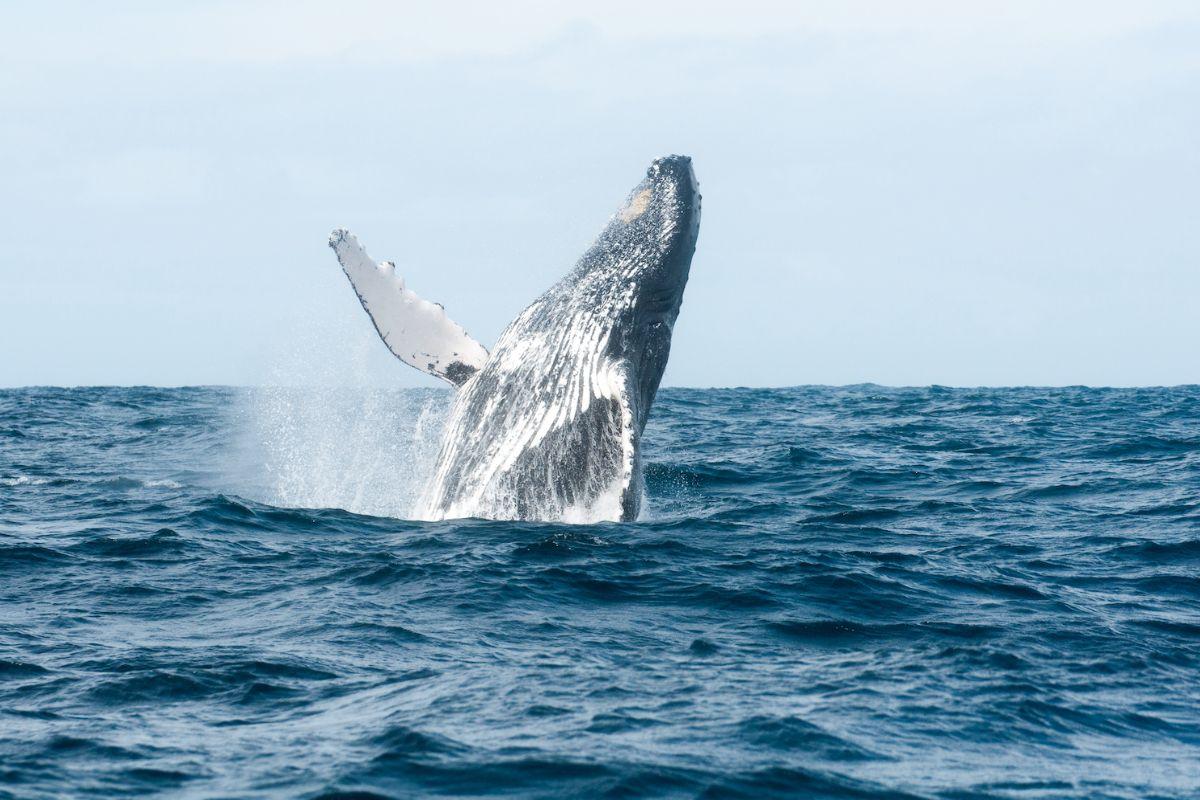
Every year, the warm waters surrounding Madagascar become the stage for one of the Indian Ocean’s most extraordinary wildlife spectacles. Humpback whales arrive from their southern feeding grounds to breed, give birth and raise their young along the Malagasy coast.
From the famous Sainte-Marie Channel on the east coast to Nosy Be in the northwest, the remote waters of Antongil Bay, the southwest around Anakao and Salary Bay and the dramatic coastline near Fort-Dauphin, Madagascar offers several very different opportunities to encounter whales in their natural environment.
A whale-watching trip can become much more than a few hours at sea. It can be combined with tropical islands, rainforest wildlife, snorkelling, local fishing communities and some of Madagascar’s most beautiful coastal landscapes.
This guide will help you understand when the whales arrive, where to see them, which species may be encountered and how to experience Madagascar’s marine wildlife responsibly.
Explore Whale Watching in Madagascar
- Why Madagascar is special for whale watching
- Humpback whales in Madagascar
- Other whales and marine wildlife
- Best places for whale watching in Madagascar
- Sainte-Marie
- Antongil Bay & Masoala
- Nosy Be
- Anakao, Toliara & Salary Bay
- Fort-Dauphin & the southeast
- Best time to see whales in Madagascar
- What happens on a whale-watching excursion?
- Whale behaviours you may observe
- Responsible whale watching
- Combine whale watching with your Madagascar trip
- Madagascar tours with whale-watching opportunities
- Frequently asked questions
Why Madagascar Is an Exceptional Whale-Watching Destination
Madagascar sits along important migration and breeding areas for humpback whales in the southwestern Indian Ocean.
Each year, humpback whales travel from productive southern feeding grounds towards warmer tropical waters around Madagascar, where they breed and give birth.
What makes Madagascar particularly interesting is the scale and diversity of its coastline. Whale encounters are possible in several regions rather than at one isolated site.
On the east coast, Sainte-Marie has become Madagascar’s best-known whale-watching destination. In the northwest, Nosy Be combines seasonal humpback whales with extraordinary marine biodiversity. Further south, the waters around Anakao, Salary Bay and Fort-Dauphin are also part of important humpback whale habitat.
Because these are wild animals following natural migration patterns, every excursion is different and sightings can never be guaranteed. That unpredictability is part of what makes seeing a whale in the wild so memorable.
For a wider introduction to Madagascar’s endemic and marine wildlife, explore our guide to wildlife and nature in Madagascar .
Humpback Whales in Madagascar
The star of Madagascar’s whale-watching season is the humpback whale (Megaptera novaeangliae).
Humpback whales undertake some of the longest migrations in the animal world. Animals using the southwestern Indian Ocean move between productive southern feeding areas and warmer tropical and subtropical breeding grounds.
Madagascar’s coastal waters provide important breeding, calving and nursery habitat.
During the season, travellers may encounter individual whales, mothers travelling with calves or groups engaged in social and reproductive behaviour.
Why Do Humpback Whales Come to Madagascar?
The whales are not primarily travelling to Madagascar to feed. They come to the region’s warmer waters during their reproductive season.
These waters provide an important environment for mating, giving birth and the first stages of a calf’s life before the whales eventually begin their southward migration.
Mother and Calf Encounters
One of the most moving encounters is seeing a female humpback whale travelling with her calf.
Calves must grow and develop rapidly before beginning the long migration towards colder feeding waters. Responsible observation is therefore especially important around mother-and-calf pairs, which should never be chased or pressured by boats.
Beyond Humpbacks: Other Whales and Marine Wildlife
Humpback whales are Madagascar’s most famous seasonal cetaceans, but the country’s waters support a much broader marine ecosystem.
Omura’s Whale
One of the most fascinating species associated with northwestern Madagascar is the Omura’s whale (Balaenoptera omurai).
This relatively little-known baleen whale was only formally described as a distinct species in the early twenty-first century. Scientific research off northwestern Madagascar, particularly around Nosy Be, helped provide some of the first detailed observations of living Omura’s whales.
Unlike the strongly seasonal humpback whale migration, research has indicated that Omura’s whales may remain in the Nosy Be region throughout the year.
They are nevertheless not an animal that a visitor should expect or assume they will see during an ordinary excursion.
Whale Sharks: A Giant, but Not a Whale
Nosy Be is also famous for the whale shark (Rhincodon typus).
Despite its name and enormous size, the whale shark is a fish, not a whale. It is the world’s largest living fish species and feeds by filtering small organisms from the water.
Whale sharks aggregate seasonally around Nosy Be, particularly later in the year, creating a marine-wildlife experience that is separate from traditional whale watching.
Dolphins
Several dolphin species also occur in Malagasy waters, and encounters can sometimes happen during marine excursions.
As with whales, dolphins should be approached responsibly and never chased simply to create a closer encounter.
Where Are the Best Places for Whale Watching in Madagascar?
Humpback whales can occur around much of Madagascar’s coastline during their seasonal migration, but some regions provide more established whale-watching experiences than others.
| Destination | Main Experience | Typical Whale-Watching Period | Best For |
|---|---|---|---|
| Sainte-Marie | Humpback whales | July to September | Classic Madagascar whale watching |
| Antongil Bay / Masoala | Humpbacks and remote marine nature | Southern winter | Remote nature journeys |
| Nosy Be | Humpbacks and diverse marine wildlife | Seasonal, often later than Sainte-Marie | Whales plus tropical islands |
| Anakao / Toliara | Humpback whales | Southern winter | Southwest coast and marine nature |
| Salary Bay | Humpbacks in remote coastal habitat | Southern winter | Remote beach stays |
| Fort-Dauphin | Seasonal humpback migration | Southern winter | Wild coast and nature |
Exact timing varies between years and regions. If whale watching is one of the main objectives of your journey, your dates should be planned around the destination rather than assuming that every coastline follows exactly the same seasonal pattern.
Sainte-Marie: Madagascar’s Classic Whale-Watching Destination
Sainte-Marie, or Nosy Boraha, is the destination most closely associated with whale watching in Madagascar.
The long tropical island lies just off Madagascar’s eastern coast, separated from the mainland by the Sainte-Marie Channel.
During the humpback whale breeding season, these waters become an important habitat for humpback whales (Megaptera novaeangliae).
The main visitor season is generally from July through September, with July and August often particularly popular.
Why Sainte-Marie Works So Well
Sainte-Marie has several advantages for travellers whose main goal is whale watching.
Whale-watching excursions are well established, the island has a long history of marine research and responsible observation initiatives, and a whale experience can easily be combined with several days of island discovery.
Away from the whales, Sainte-Marie offers beaches, tropical vegetation, fishing villages, historical sites, cycling and excursions to neighbouring Île aux Nattes.
This means a visit remains worthwhile even on a day when sea conditions are not suitable for a boat excursion.
Île aux Nattes
At the southern end of Sainte-Marie lies Île aux Nattes, a small tropical island surrounded by a lagoon.
Combining whale watching with a few quiet days around Sainte-Marie and Île aux Nattes can create one of Madagascar’s most complete island experiences.
Read our complete Sainte-Marie travel guide for beaches, activities, practical information and advice on planning your stay.
You can also include Sainte-Marie in our East Madagascar Tour: Andasibe, Pangalanes and Sainte-Marie .
Antongil Bay & Masoala: Whales in a Remote Natural Setting
North of Sainte-Marie lies the enormous Antongil Bay, beside the rainforests of the Masoala Peninsula.
The region forms part of important humpback whale breeding and nursery habitat in northeastern Madagascar.
Antongil Bay offers a very different proposition from Sainte-Marie. Tourism infrastructure is more limited and journeys into the region require more logistical preparation.
For the right traveller, however, this remoteness is part of the appeal. The region combines marine ecosystems with some of Madagascar’s most important remaining rainforest.
Combine Masoala Rainforest and the Ocean
A journey around Masoala can include rainforest walks, coastal landscapes, marine exploration and village experiences.
This makes northeastern Madagascar particularly appealing to travellers who want whale watching to form part of a larger nature expedition rather than a conventional beach holiday.
For more ideas about combining forests and wildlife, see our guide to Madagascar wildlife and nature .
Whale Watching Around Nosy Be
Nosy Be offers one of Madagascar’s richest combinations of islands, beaches and marine wildlife.
Humpback whales pass through northwestern Madagascar seasonally, while the region is also scientifically important for other marine species, including Omura’s whales and whale sharks.
Humpback Whales Around Nosy Be
Humpback whale activity around northwestern Madagascar does not always follow exactly the same timing as Sainte-Marie.
The broader period from approximately July into October can provide seasonal opportunities, although annual conditions and migration patterns vary.
Omura’s Whales
The waters around Nosy Be are scientifically significant because researchers documented a population of Omura’s whales (Balaenoptera omurai) here.
Research suggests that these whales may be resident in the region, rather than undertaking the same long seasonal migration as humpbacks.
This should be viewed as part of the extraordinary biodiversity of northwestern Madagascar rather than a guarantee that an Omura’s whale will be seen during a visitor excursion.
Whale Sharks Later in the Year
The waters around Nosy Be are also known for seasonal aggregations of whale sharks (Rhincodon typus), particularly between approximately September and December.
Remember that the whale shark is a shark and therefore a fish, despite its name.
Combine Marine Wildlife with Island Hopping
One of Nosy Be’s main advantages is the variety of experiences possible around the archipelago.
A marine-focused stay can also include Nosy Komba, Nosy Tanikely, Nosy Sakatia, Nosy Iranja and other islands depending on your itinerary.
Discover the region in more detail in our complete Nosy Be travel guide .
Or combine northern Madagascar with several days around the islands on our Northern Madagascar and Nosy Be Tour .
Anakao, Toliara & Salary Bay: Whale Watching in Southwest Madagascar
Southwest Madagascar is less internationally associated with whale watching than Sainte-Marie, but it is an important humpback whale breeding region.
The coastline between the Toliara region, Anakao and Salary Bay combines coral reefs, lagoons, Vezo fishing communities and important marine habitats.
Anakao
South of Toliara, Anakao provides one of the most established community-linked whale-watching areas in southwest Madagascar.
Boat excursions during the appropriate season may provide opportunities to observe humpback whales while experiencing a coastline deeply connected to Vezo maritime culture.
Salary Bay
North of Toliara, Salary Bay lies along another important section of southwest Madagascar’s marine habitat.
The combination of a beautiful lagoon, relatively remote surroundings and seasonal humpback whale presence makes the region particularly attractive for travellers interested in both beaches and marine nature.
Why Choose Southwest Madagascar?
The southwest works well for travellers who want whale watching to be part of a broader journey through southern Madagascar.
It can be combined with Isalo, the spiny forests, Tsimanampetsotsa, Anakao, Ifaty and other coastal destinations according to available time and seasonal conditions.
Explore the wider coastline in our guide to Madagascar’s best beaches and islands .
Fort-Dauphin: Whales Along Madagascar’s Wild Southeast Coast
Fort-Dauphin, also known as Tolagnaro, lies beside one of Madagascar’s most dramatic coastlines.
Mountains, forests, bays and beaches meet the Indian Ocean here, while humpback whales pass seasonally through the surrounding waters.
Whale-watching excursions can be organised in the region during the appropriate season, although the experience is less developed than on Sainte-Marie.
Manafiafy and the Coastal Region
North of Fort-Dauphin, areas such as Manafiafy combine rainforest, beaches, mangroves and seasonal marine wildlife.
The southeast is therefore especially attractive to travellers seeking a wild nature experience in which whales are one possible highlight rather than the only focus of the journey.
Can Whales Be Seen Elsewhere Around Madagascar?
Yes. Humpback whales migrate around a large part of Madagascar’s coastline, and seasonal sightings can occur beyond the main whale-watching destinations.
Areas around Mahajanga and other sections of the western and southern coastline may offer opportunities at certain times.
However, travellers should distinguish between a region where whales sometimes pass and a destination with established whale-watching excursions, trained guides and suitable tourism infrastructure.
If whales are one of the main reasons for your holiday, Sainte-Marie, Nosy Be or selected areas of the southwest are generally more practical choices for building a trip around the experience.
When Is the Best Time for Whale Watching in Madagascar?
Whale-watching season varies somewhat around the island because whales are moving between different sections of Madagascar’s coastline.
In broad terms, humpback whales can begin arriving around Madagascar during the southern autumn and remain in Malagasy waters into the southern spring.
June
Humpback whales are beginning to appear in greater numbers around parts of Madagascar’s coastline. Depending on the region and the year, early-season encounters may already be possible.
July
July marks the beginning of the core whale-watching period in destinations such as Sainte-Marie.
It is an excellent month for travellers who want to combine whale watching with generally favourable dry-season travel conditions across much of Madagascar.
August
August is one of the principal months for whale watching around Sainte-Marie and an important period for humpback whale activity around Madagascar.
September
September remains an excellent month in several regions and can work particularly well for travellers wanting to combine whales with Madagascar’s national parks and wildlife.
October and Later
Whale activity becomes increasingly dependent on the region as animals begin moving away from breeding areas.
Northwestern Madagascar, including Nosy Be, can remain particularly interesting for marine wildlife later in the season.
For detailed information about climate, national parks, beaches and wildlife throughout the year, read our month-by-month guide to the best time to visit Madagascar .
What Happens on a Whale-Watching Excursion?
A typical whale-watching excursion begins with a briefing about the animals, sea conditions and responsible observation practices.
The boat then heads into suitable waters while the guide and crew search for signs of whale activity.
How Do Guides Find Whales?
One of the first signs is often the whale’s blow, which may be visible above the surface from a considerable distance in good conditions.
Guides may also look for dorsal fins, tail flukes, splashes caused by surface activity or information from other boats operating responsibly in the area.
How Long Does an Excursion Last?
Duration depends on the destination, operator, sea conditions and where whales are located on the day.
It is better not to judge an excursion purely by how close or how long you remain with a whale. Responsible observation limits disturbance and allows the animals to control the encounter.
Are Sightings Guaranteed?
No.
Whales are wild animals moving through an enormous marine environment. Even during a very good season, their location and behaviour cannot be predicted with certainty.
Weather and sea conditions can also cause an excursion to be postponed or cancelled.
If whale watching is extremely important to you, spending several nights at the destination rather than relying on one single morning provides more flexibility.
Whale Behaviours You May Observe
No two whale encounters are identical. On some days the experience may be calm and subtle; on others, humpback whales may display spectacular surface behaviour.
Breaching
A breach occurs when a whale propels much of its enormous body out of the water before falling back to the surface.
It is one of the most dramatic behaviours associated with humpback whales, but it should never be expected on every excursion.
Tail Flukes
Before a deeper dive, a humpback may lift its tail flukes above the surface.
The markings on the underside of humpback whale tails vary between individuals and can be used by researchers for photo-identification.
Pectoral-Fin Slapping
Humpback whales have exceptionally long pectoral fins and may repeatedly slap them against the water during surface activity.
Tail Slapping
Whales may also strike the water with their tail, creating a powerful splash visible from a considerable distance.
Mothers and Calves
A quieter but equally memorable observation is a mother travelling alongside her young calf.
These encounters require particular care because the animals should be given plenty of space and should never be separated or pressured by vessels.
Responsible Whale Watching in Madagascar
Seeing a whale in the wild is a privilege, and the quality of the experience depends on respecting the animal rather than attempting to get as close as possible.
Madagascar has developed codes and regulations governing the approach to whales and other marine megafauna. Organisations such as Cétamada work with tourism professionals to train guides and boat crews in responsible observation practices.
Choose a Responsible Operator
A good operator should brief passengers before the excursion and explain how the boat will behave around whales.
Approaches should be controlled, observation distances respected and time spent around an individual or group limited to avoid unnecessary disturbance.
Do Not Chase Whales
Whales should always have the ability to move away.
Repeatedly cutting across their path, surrounding animals with boats or pursuing a mother and calf creates stress and is incompatible with responsible wildlife tourism.
Do Not Touch or Feed Marine Wildlife
Marine wildlife should remain wild. Never attempt to touch, feed or manipulate an animal simply to create a photograph or closer encounter.
Respect Sea Conditions
If a captain cancels or postpones an excursion because of weather or sea conditions, the decision should be respected.
A safe and responsible excursion is more important than forcing a departure simply because whale watching was planned for that day.
Combine Whale Watching with a Madagascar Journey
One of the best ways to experience whale watching in Madagascar is to make it one chapter of a larger journey rather than the only reason for visiting the country.
Whales + Rainforest
Combine the indri and rainforest of Andasibe with the Pangalanes Canal before continuing to Sainte-Marie for beaches and seasonal whale watching.
This combination brings together terrestrial and marine wildlife in one itinerary.
Whales + Tropical Islands
Around Nosy Be, whale-watching opportunities can be combined with snorkelling, diving and island hopping.
Discover Nosy Komba, Nosy Tanikely, Nosy Sakatia, Nosy Iranja and other islands in our guide to beaches and islands in Madagascar .
Whales + Southern Madagascar
Travellers exploring the RN7, Isalo and southern Madagascar can extend the journey towards the southwest coast around Toliara and Anakao.
During the appropriate season, whale watching can then become part of a wider journey through Madagascar’s dry landscapes and coastal environments.
Whales + Boat Adventures
Travellers who enjoy discovering Madagascar from the water can also explore our river and boat adventures in Madagascar .
Madagascar Tours with Whale-Watching Opportunities
Because whale watching is highly seasonal, it should be integrated into an itinerary according to your travel dates rather than added automatically to every coastal journey.
East Madagascar & Sainte-Marie
Combine Andasibe rainforest, the Pangalanes Canal, Ankanin’ny Nofy, Mahambo and Sainte-Marie. Between approximately July and September, Sainte-Marie provides the strongest whale-watching opportunity on this itinerary. Explore the East Madagascar Tour
Northern Madagascar & Nosy Be
Explore Amber Mountain, Ankarana and northern Madagascar before finishing around Nosy Be, where seasonal marine wildlife experiences can be included according to your travel dates. Explore the Northern Madagascar & Nosy Be Tour
Other whale-watching regions such as Anakao, Salary Bay, Fort-Dauphin or Masoala can be incorporated into a tailor-made itinerary according to logistics, season and your interests.
Browse all our private Madagascar tours for inspiration.
Plan Your Madagascar Whale-Watching Trip
If whales are one of the main reasons for your journey, your travel dates, destination and number of nights should be planned carefully.
Continue your research with our detailed guide to where and when to go whale watching in Madagascar .
You can also read our Best Time to Visit Madagascar month-by-month guide to compare whale season with weather, lemur watching, national parks and beach conditions.
For island ideas, see our complete guide to Madagascar’s beaches and islands .
Frequently Asked Questions About Whale Watching in Madagascar
When is the best time to see whales in Madagascar?
The main humpback whale season broadly falls during the southern winter and early spring. Around Sainte-Marie, July to September is the principal whale-watching period. Other regions can follow slightly different timing, so the best dates depend on where in Madagascar you plan to travel.
Where is the best place for whale watching in Madagascar?
Sainte-Marie is Madagascar’s best-known and most established whale-watching destination. Nosy Be is another important region, while Antongil Bay, Anakao and the southwest coast, and the Fort-Dauphin region also provide seasonal humpback whale opportunities. The best destination depends on your dates and the rest of your itinerary.
What species of whale can you see in Madagascar?
The most important species for seasonal whale watching is the humpback whale (Megaptera novaeangliae). Northwestern Madagascar is also scientifically important for Omura’s whales (Balaenoptera omurai). Other cetaceans occur in Malagasy waters, although sightings depend on region and conditions.
Why do humpback whales come to Madagascar?
Humpback whales migrate from southern feeding areas into warmer tropical waters around Madagascar during their reproductive season. Malagasy waters provide important areas for breeding, calving and raising young calves before the whales begin their migration south.
Can you see whales in Sainte-Marie?
Yes. Sainte-Marie is Madagascar’s best-known humpback whale destination. July, August and September are particularly important months for whale watching around the Sainte-Marie Channel. Sightings are natural wildlife encounters and can never be guaranteed.
Can you see whales in Nosy Be?
Yes. Humpback whales occur seasonally in northwestern Madagascar, and the Nosy Be region also supports remarkable marine biodiversity. It is additionally known scientifically for Omura’s whales (Balaenoptera omurai) and for seasonal whale shark (Rhincodon typus) aggregations.
Are whale sharks actually whales?
No. Despite the name, the whale shark (Rhincodon typus) is a shark and therefore a fish. It is the world’s largest living fish species. Whale sharks can be encountered seasonally around Nosy Be, particularly later in the year.
Are whale sightings guaranteed in Madagascar?
No. Whales are wild animals moving through a large marine environment. Even during the main season, sightings and behaviours can never be guaranteed. Sea and weather conditions can also affect whether an excursion operates.
How many days should I stay in Sainte-Marie for whale watching?
Spending at least three or four nights on Sainte-Marie gives you greater flexibility than relying on a single day. If sea conditions prevent an excursion, additional nights provide another opportunity while also allowing time to explore the island and Île aux Nattes.
Can I combine whale watching with a wildlife tour?
Yes. One of the most rewarding combinations is Andasibe rainforest followed by Sainte-Marie, allowing travellers to encounter Madagascar’s terrestrial wildlife and seasonal marine wildlife within the same journey.
Can I combine whale watching with a beach holiday?
Yes. Sainte-Marie and Nosy Be are both excellent destinations for combining marine wildlife with beaches and island activities. Southwest destinations such as Anakao and Salary Bay also combine seasonal whale watching with coastal landscapes and lagoons.
Is whale watching in Madagascar suitable for children?
It can be, depending on the child, the boat, excursion length and sea conditions. Families should choose an experienced operator, ensure suitable life jackets are available and consider whether children are comfortable spending several hours on a small boat.
What should I bring on a whale-watching excursion?
Bring sun protection, a hat, sunglasses, a light waterproof layer, drinking water and a camera or binoculars if desired. Keep electronics protected from spray. Travellers who are prone to seasickness should seek appropriate medical or pharmaceutical advice before the excursion.
Ready to See Madagascar’s Whales in the Wild?
Imagine watching a humpback whale surface beside a tropical island, seeing a mother travelling with her calf or witnessing a breach against the backdrop of Madagascar’s coastline.
Natura Travel can build whale watching into a private Madagascar journey according to the season, your preferred destinations and the other experiences you want to include.
Combine the ocean with lemurs and rainforest, tropical beaches, northern islands, cultural encounters or an adventure across several regions of Madagascar.
Or discover all activities and experiences in Madagascar .