Visit the Piscine Naturelle
Walk through the sandstone landscape to one of Isalo’s
best-known natural swimming pools.
Located beside the RN7 near Ranohira, the park is one of the major highlights
of a journey through southern Madagascar and one of the country’s strongest
destinations for hiking.
Isalo is not simply a desert of rock. Hidden within its canyons are streams,
riparian forests, natural swimming pools and habitats used by lemurs,
reptiles, amphibians and birds.
It fits naturally into a journey through
Southern Madagascar
,
particularly when combined with
Andringitra National Park
,
Ambalavao
and
Ifaty
.
Isalo offers one of the strongest landscape experiences in Madagascar.
The park protects a huge Jurassic sandstone massif shaped by erosion
into cliffs, plateaus, pinnacles and deep canyons.
What makes the experience particularly rewarding is the contrast between
the exposed, semi-arid plateau and the green habitats hidden below.
Some canyon floors contain permanent or seasonal water,
narrow forests and natural pools.
Isalo is therefore ideal for travellers who enjoy active exploration
rather than viewing landscapes only from a vehicle.
Madagascar National Parks gives Isalo National Park an area
of 81,540 hectares.
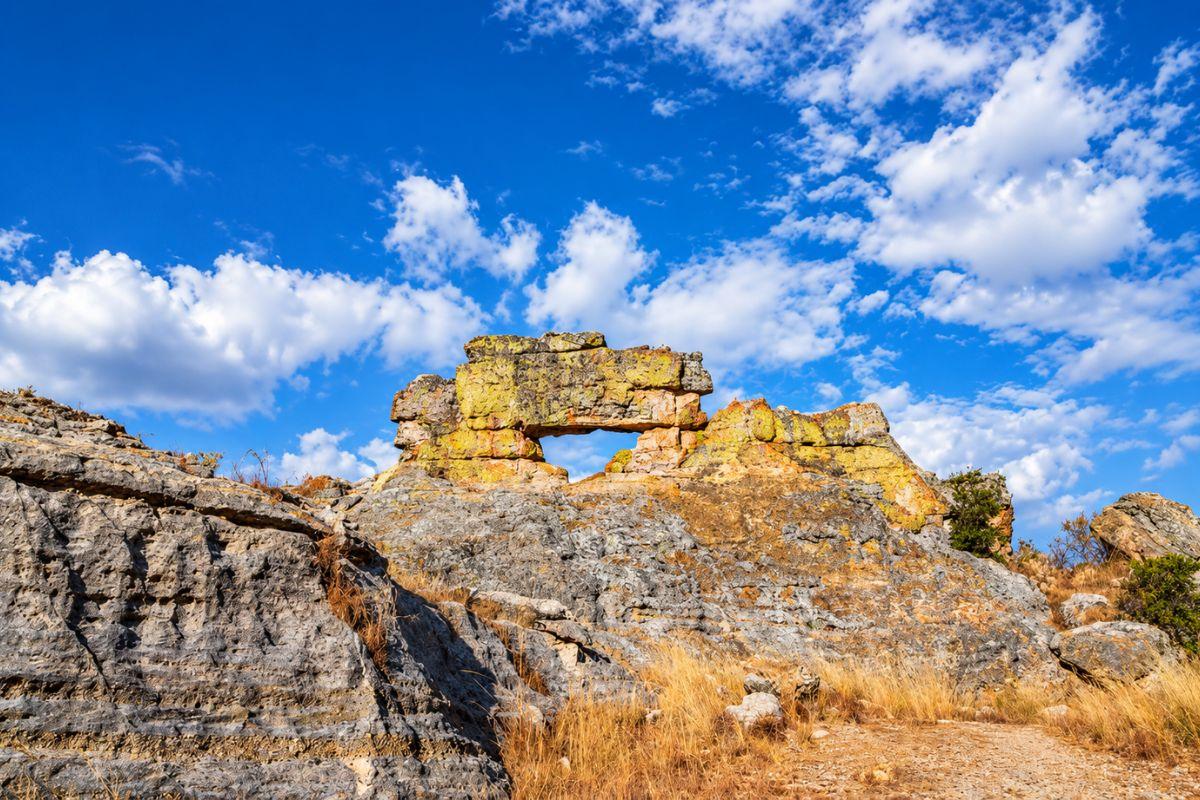
The protected landscape is characterised by ruiniform sandstone formations,
deep canyons, savannas, rocky vegetation and narrow forest habitats
associated with the park’s rivers.
Isalo was created as a national park in 1962 and later opened
to organised tourism.
Today, hiking circuits, natural pools, canyon walks and landscape observation
form the core of the visitor experience.
Sources & Local Context
Information on Isalo’s area, habitats, species, circuits and visitor rules
is based primarily on Madagascar National Parks, the official manager
of the protected area.
The defining feature of Isalo is its vast sandstone massif.
Madagascar National Parks describes it as a ruiniform formation of continental
sandstone dating from the Jurassic period.
Wind, water and time have shaped the rock into cliffs,
deep valleys and unusual silhouettes.
Some formations have acquired popular names because they resemble animals
or familiar shapes, while broad viewpoints reveal layer after layer
of eroded sandstone extending towards the horizon.
Isalo offers several official circuits and can be explored
at very different levels of difficulty.
Walk through the sandstone landscape to one of Isalo’s
best-known natural swimming pools.
Enter one of the greener parts of Isalo, where water and canyon
vegetation create a sharp contrast with the dry plateau above.
Explore canyon habitats where forest, cliffs and wildlife
combine in one of Isalo’s classic hiking environments.
Canyon and forest habitats support several lemur species,
including ring-tailed lemurs and Verreaux’s sifakas.
The western light transforms the sandstone massif and makes
sunset one of the signature visual experiences around Isalo.
Combine Isalo with mountains, rainforest and the southwest coast
for a highly varied Madagascar itinerary.
The Piscine Naturelle is one of Isalo’s most recognisable attractions.
The pool lies within a rocky setting where permanent water
supports vegetation that contrasts with the surrounding dry terrain.
The route offers a good introduction to the park’s characteristic
combination of exposed sandstone and hidden water.
Madagascar National Parks currently lists the Piscine Naturelle
as an official walking circuit.
MNP describes the return visit as roughly three and a half hours,
excluding extra time spent resting, photographing or swimming.
Plan according to conditions
Trail times are estimates. Heat, physical fitness, water levels
and trail conditions can all affect the actual duration.
Namaza shows another side of Isalo.
Instead of wide open sandstone plateaus, the canyon provides shade,
water and vegetation within narrow rocky walls.
Madagascar National Parks identifies canyon riparian vegetation
as an important habitat within Isalo, supporting lemurs,
reptiles, amphibians, fish and birds.
The change in temperature and vegetation when entering a canyon
is one of the strongest contrasts in the park.
One of the classic canyon routes, combining sandstone cliffs,
vegetation and opportunities for wildlife observation.
Another recognised Isalo circuit exploring the deep-cut landscape
of the sandstone massif.
Narrow canyon forests provide important habitat for species
that would struggle in the exposed landscape above.
Isalo is famous for geology, but it also protects highly distinctive biodiversity.
Lemur catta occurs within Isalo and can sometimes
be observed in forested canyon habitats.
Madagascar National Parks lists Verreaux’s sifaka among
the lemurs protected within Isalo.
MNP also records Eulemur fulvus among the park’s fauna.
Isalo protects threatened amphibians adapted to its highly
specialised canyon and rock habitats.
Canyon vegetation and open habitats support a range of Malagasy birds,
including locally distinctive species.
Rocky habitats, dry vegetation and shaded canyons create
conditions for several reptile species.
Isalo’s flora is closely linked to its sandstone geology
and semi-arid climate.
Madagascar National Parks highlights endemic rock vegetation
including aloes, euphorbias, pachypodiums and kalanchoes.
These plants survive on rocky soils and exposed slopes where water
can be limited for long periods.
Within the canyons, conditions become completely different,
allowing denser vegetation to develop beside permanent
or seasonal watercourses.
Madagascar National Parks offers multiple types of circuits,
which means Isalo can be adapted to different levels of fitness
and available time.
One of the classic introductions to Isalo,
combining walking and a natural pool.
A canyon-focused option with greener habitats,
water and wildlife opportunities.
A longer canyon excursion combining rock formations,
forest and nature observation.
Madagascar National Parks lists this as one of its
official walking circuits, taking roughly several hours.
A longer and more sporting canyon route than Antsifotra,
according to current MNP circuit information.
Madagascar National Parks also lists via ferrata,
mountain biking, equestrian routes and camping among
the broader ways to experience Isalo.
Sunset is one of the most famous experiences around the Isalo massif.
As the sun drops towards the western horizon,
the sandstone changes from pale gold to deeper orange and red tones.
Madagascar National Parks specifically includes sunset observation
among the experiences associated with Isalo.
The so-called Window of Isalo is one well-known viewpoint,
although the entire region offers striking evening light.
Ranohira lies on the RN7 beside the park and serves as the
principal gateway for most visits to Isalo.
Accommodation, guides and park logistics are generally organised
from the Ranohira area.
Staying only one night can make the experience unnecessarily rushed.
Allowing more time gives you the option to combine a substantial hike
with sunset and a second park experience.
No. Isalo National Park is not currently inscribed on the UNESCO World Heritage List.
UNESCO’s current list for Madagascar includes the Royal Hill of Ambohimanga,
the Rainforests of the Atsinanana and the Andrefana Dry Forests.
An official UNESCO periodic report also specifically refers to Isalo
as a national park that is not currently a World Heritage property.
This distinction is important for accurate travel information:
Isalo’s international significance should be described through its
geology, biodiversity and protected-area status rather than by incorrectly
presenting it as UNESCO-listed.
Madagascar National Parks currently states that Isalo
is open throughout the year.
However, hiking conditions can vary significantly with heat,
rainfall and water levels.
Your ideal dates should take into account not only Isalo
but also destinations such as Ranomafana, Andringitra and Ifaty.
This is particularly important because climate and rainfall
differ greatly between Madagascar’s Highlands, mountains
and southwest coast.
Plan by season
See our
complete guide to the best time to visit Madagascar
.
Yes. Madagascar National Parks states that visitors should enter
with a validated park ticket and be accompanied by a local guide.
A guide also adds considerable value beyond navigation.
They can explain the geology, point out wildlife,
identify plants and adapt the route to the group’s pace.
In a park exposed to strong sun and heat,
realistic route planning is particularly important.
Isalo is one of Madagascar’s best-known destinations
for accessible day hikes and longer walking circuits.
Sandstone formations, canyons and dramatic evening light
create outstanding photographic opportunities.
Lemurs, endemic plants, amphibians and specialised canyon habitats
add important biodiversity to the landscape experience.
Combine sandstone canyons with granite mountains
and high-altitude trekking.
Add ring-tailed lemurs, craft traditions and Betsileo culture
before continuing south.
Combine Isalo’s semi-arid sandstone landscapes with
humid rainforest and a very different wildlife experience.
Finish your RN7 journey on the southwest coast
with beaches, lagoon and spiny forest.
Isalo is one of the major anchors of the classic southbound RN7 itinerary.
A strong journey can begin in the Central Highlands,
continue through Ranomafana and Fianarantsoa,
visit Ambalavao and Andringitra,
then reach Isalo before finishing near Toliara and Ifaty.
The landscape changes dramatically along this route,
which is one reason the RN7 remains such a rewarding way
to experience Madagascar.
Ranohira is reached directly by the RN7 and is the main base
for exploring Isalo National Park.
Madagascar National Parks lists Ranohira approximately
250 kilometres from Toliara by road.
At least enough time for one substantial park hike is recommended.
Travellers who want to explore several circuits,
enjoy sunset and avoid rushing benefit from allowing additional time.
Good walking shoes, strong sun protection,
a hat and sufficient drinking water are essential.
Lightweight clothing is useful during the day,
while a light layer can be helpful in cooler morning
or evening conditions.
Isalo offers circuits at several levels.
The main challenge is often the combination of distance,
uneven terrain, exposed sun and heat rather than technical climbing.
Madagascar National Parks identifies fire as one of the principal
pressures affecting Isalo.
Visitors should respect all fire restrictions,
use designated facilities and follow park instructions carefully.
Stay on authorised routes, avoid feeding lemurs
and never remove plants, rocks or other natural material.
Isalo’s specialised rock and canyon ecosystems can be vulnerable
even when the landscape appears rugged.
Yes. Isalo is especially rewarding for travellers interested
in hiking, sandstone landscapes, canyons, natural pools
and the dramatic scenery of southern Madagascar.
Isalo is famous for its Jurassic sandstone massif,
deep canyons, natural swimming pools, unusual rock formations,
hiking trails and sunsets.
Madagascar National Parks gives the protected area
a surface of 81,540 hectares.
Some official routes include natural pools where swimming
may be possible depending on current park rules and conditions.
Always follow your guide’s instructions.
Madagascar National Parks lists ring-tailed lemurs,
Verreaux’s sifakas and brown lemurs among the fauna of Isalo.
Sightings are never guaranteed.
Yes. Madagascar National Parks states that visitors should
be accompanied by a local guide.
No. Isalo National Park is not currently inscribed
on the UNESCO World Heritage List.
Yes. Combining
Isalo National Park
with
Ifaty
creates an excellent transition from hiking and sandstone canyons
to beaches, lagoon and spiny forest.
Isalo combines sandstone canyons, natural pools, endemic wildlife
and some of southern Madagascar’s most dramatic hiking landscapes.
Natura Travel can integrate the park into a private RN7 itinerary
with realistic time for hiking, wildlife observation, sunset
and onward travel towards the southwest coast.