Look for Indris in Analamazaotra
Early forest walks offer the chance to listen for indri calls and
observe groups moving through the rainforest canopy.
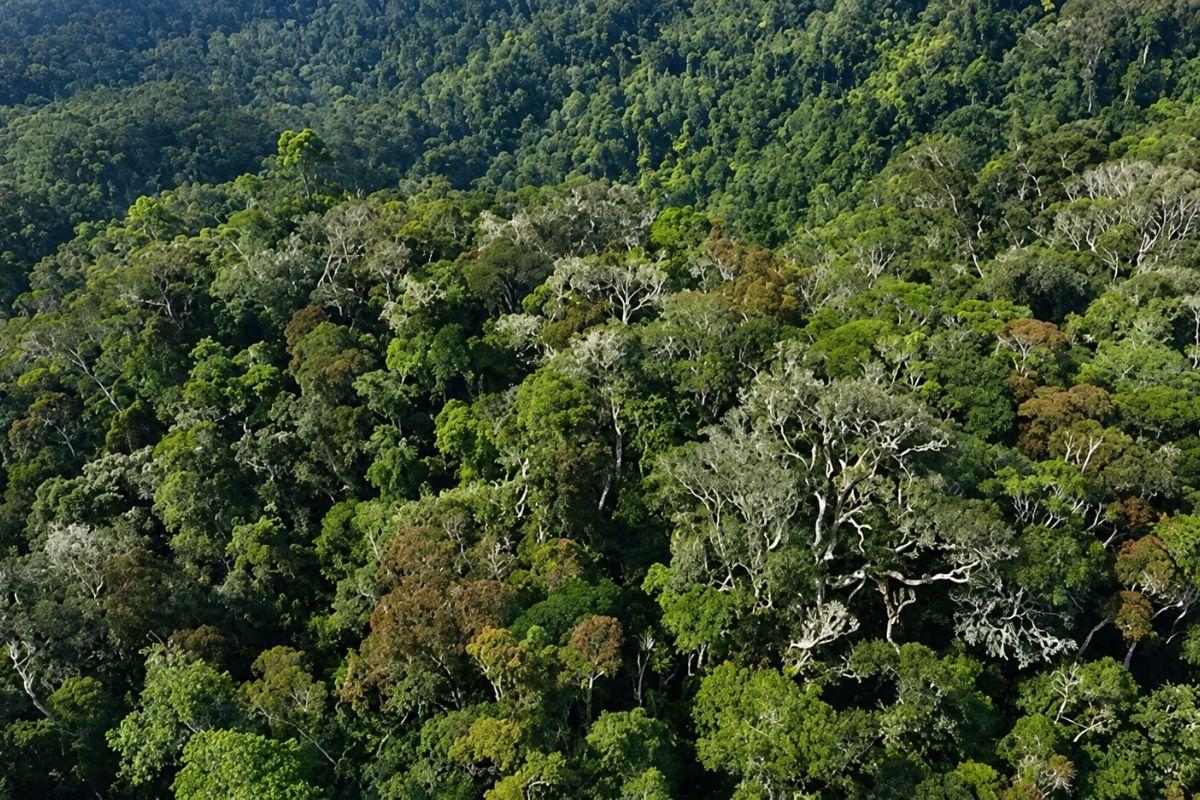
Located east of Antananarivo, the area is best known for the indri,
Madagascar’s largest living lemur, whose powerful calls echo through the forest
in the early morning.
Andasibe is not a single park. The destination includes several protected forest
areas, most notably Analamazaotra Special Reserve and Mantadia National Park,
together creating one of the most rewarding wildlife regions in
Eastern Madagascar
.
Andasibe is one of the strongest choices for a first wildlife experience in Madagascar.
Its forests are relatively accessible from Antananarivo, yet they already provide
the atmosphere many travellers imagine when they think of eastern Madagascar:
humid rainforest, moss-covered trees, orchids, frogs, chameleons, birds and lemurs.
The indri is the star attraction, but focusing only on one species would undersell
the destination. Mantadia and Analamazaotra protect a much broader community of
endemic wildlife and plants.
Andasibe is also easy to combine with other destinations, making it suitable for
both short wildlife-focused trips and longer tailor-made journeys across Madagascar.
The indri is one of Madagascar’s most distinctive animals.
Known locally as babakoto, it is the largest living lemur and is especially famous
for its powerful vocalisations.
In Andasibe, hearing the indris calling through the forest is often as memorable
as seeing them.
Madagascar’s National Tourism Board describes Andasibe as an essential destination
for travellers wanting to encounter the indri in its natural habitat and highlights
the species during the local Festival Indri.
The calls help groups communicate across the forest and can carry over considerable
distances, creating one of the most recognisable soundscapes in Madagascar.
Wildlife etiquette
Observe indris quietly and follow the instructions of your local guide.
Avoid trying to approach wildlife too closely or changing an animal’s behaviour
simply to obtain a photograph.
Understanding the difference between these protected areas helps you plan
your time in Andasibe more effectively.
Analamazaotra is the smaller and more accessible protected area near Andasibe
and is particularly famous for indri observation.
Madagascar National Parks lists the reserve at 874 hectares.
Its location makes it well suited to travellers who want an accessible
rainforest walk focused on wildlife.
Mantadia is much larger and provides a wilder forest experience.
Madagascar National Parks states that the park covers 15,480 hectares
of tropical forest.
The larger protected area supports a particularly rich variety of
lemurs, birds, reptiles, amphibians and forest habitats.
Madagascar National Parks describes Mantadia as one of the remaining strongholds
of humid forest in eastern Madagascar.
Official park data lists 14 species of lemurs, 108 bird species,
51 reptile species and 84 amphibian species within the protected area.
That diversity is one reason Andasibe appeals to more than casual wildlife watchers.
Birders, herpetology enthusiasts, photographers and naturalists can spend far more
time here than visitors whose only goal is to see an indri.
The forest also plays an important ecological role in water conservation and
provides habitat for many species found nowhere else.
A good stay in Andasibe combines daytime forest walks, different protected areas
and at least one experience after dark.
Early forest walks offer the chance to listen for indri calls and
observe groups moving through the rainforest canopy.
Mantadia offers a larger and more immersive forest environment,
with trails through humid forest, valleys, streams and waterfalls.
Night excursions can reveal an entirely different side of the forest,
including nocturnal lemurs, frogs, chameleons, insects and other species
that are difficult to see during the day.
The forests around Andasibe support a rich bird community and are particularly
rewarding for travellers interested in Madagascar’s endemic species.
Andasibe is an excellent region for reptiles and amphibians,
especially when exploring with guides who know where and how to look.
Andasibe can be the first rainforest stop before continuing towards
waterways, coastal forest and islands further east.
One of the best ways to appreciate Madagascar’s biodiversity is to experience
the forest after sunset.
Many Malagasy species are nocturnal or much easier to detect after dark.
The forest changes completely once daylight fades.
Guides may look for nocturnal lemurs, sleeping chameleons,
frogs, insects and other small animals.
Night walks are usually slower and more focused than daytime hikes.
A flashlight or headlamp is essential, and quiet observation often
produces better wildlife encounters than trying to cover long distances.
Exact locations and access arrangements should be confirmed locally,
as rules can differ between protected areas and community-managed sites.
Wildlife sightings can never be guaranteed, but the diversity of habitats
around Andasibe creates excellent opportunities for observation.
Indris are the best-known species, but Mantadia protects numerous
other lemurs, including both diurnal and nocturnal species.
Madagascar National Parks records more than one hundred bird species
in Mantadia, making the region attractive for dedicated birdwatchers.
Chameleons, geckos, snakes and a remarkable variety of frogs form
an important part of the region’s biodiversity.
Madagascar National Parks states that Mantadia can be visited throughout the year.
The park identifies May to October as the drier period and generally the most
favourable season for wildlife observation and forest activities.
From November to April, the forest is particularly lush and birding can be rewarding,
but rainfall is more frequent and trails can be wetter.
The best period for your trip should also depend on the rest of your itinerary.
If you are combining Andasibe with western, southern or coastal Madagascar,
consider conditions across all regions rather than choosing your dates solely
for Andasibe.
See our
complete guide to the best time to visit Madagascar
.
Andasibe is one of the easiest ways to add a strong rainforest and
lemur experience to a first Madagascar itinerary.
Lemurs, birds, reptiles and amphibians make the region one of the
strongest wildlife destinations in eastern Madagascar.
Rainforest, wildlife and the dramatic behaviour of indris create
excellent opportunities for nature photography.
Combine Madagascar’s capital and cultural heritage with one of the
country’s most accessible rainforest destinations.
Continue east for boat travel, Palmarium Reserve and the landscapes
of the Canal des Pangalanes.
Combine rainforest wildlife with beaches and island life on Madagascar’s east coast.
Andasibe can also be added before a longer RN7 journey through
Ranomafana, Andringitra and Isalo.
Andasibe is particularly useful in itinerary design because it provides
high-quality rainforest wildlife without requiring a very remote expedition.
Many travellers combine it with Antananarivo near the beginning or end of a trip.
From there, the itinerary can continue east towards Akanin’ny Nofy or return to
the Highlands before heading south.
The important point is not to underestimate forest time. A single rushed walk
gives far less chance to appreciate Andasibe than allowing time for Analamazaotra,
Mantadia and a night excursion.
Andasibe is reached by road via the RN2 from Antananarivo through Moramanga.
Madagascar National Parks lists direct road access to both Analamazaotra
and Mantadia through this corridor.
Travel times can vary with traffic and road conditions, so itinerary
planning should allow flexibility.
Staying long enough to experience more than one forest walk is strongly recommended.
A good visit can include Analamazaotra, Mantadia and a night excursion,
rather than treating Andasibe as a quick day trip.
Yes. Madagascar National Parks states that local guiding is compulsory
in Mantadia.
Beyond the rule itself, guides are invaluable for detecting wildlife
that visitors would easily miss.
Waterproof protection, walking shoes with good grip, insect repellent,
water and binoculars are useful.
Madagascar National Parks specifically recommends hiking footwear,
covering clothing, rain protection, mosquito protection, water and binoculars.
Yes. It is one of Madagascar’s strongest destinations for rainforest,
indris and endemic wildlife, and it can be combined relatively easily
with Antananarivo and other eastern destinations.
Andasibe is most famous for the indri, Madagascar’s largest living lemur,
as well as the rainforests of Analamazaotra and Mantadia.
Analamazaotra is smaller and particularly accessible for indri observation,
while Mantadia is a much larger national park with extensive rainforest
and a very rich range of wildlife.
Madagascar National Parks states that Mantadia is accessible year-round
and identifies May to October as the generally favourable dry season
for wildlife observation, while the wetter months can be especially lush.
Yes. Andasibe is connected to Antananarivo by the RN2 and is one of the
most practical rainforest destinations to combine with the capital.
Yes. Combining
Andasibe
and
Akanin’ny Nofy
creates a strong eastern Madagascar itinerary focused on rainforest,
wildlife and waterways.
Andasibe is one of the best places to begin discovering Madagascar’s unique wildlife.
From the calls of the indri in Analamazaotra to the deeper rainforest of Mantadia,
the region offers far more than a quick lemur stop. Natura Travel can integrate
Andasibe into a private itinerary designed around your interests, travel dates
and preferred pace.