Visit Craft Workshops
Meeting artisans and seeing woodworking techniques firsthand can make the town’s craft traditions much easier to appreciate than simply browsing finished objects in a shop.
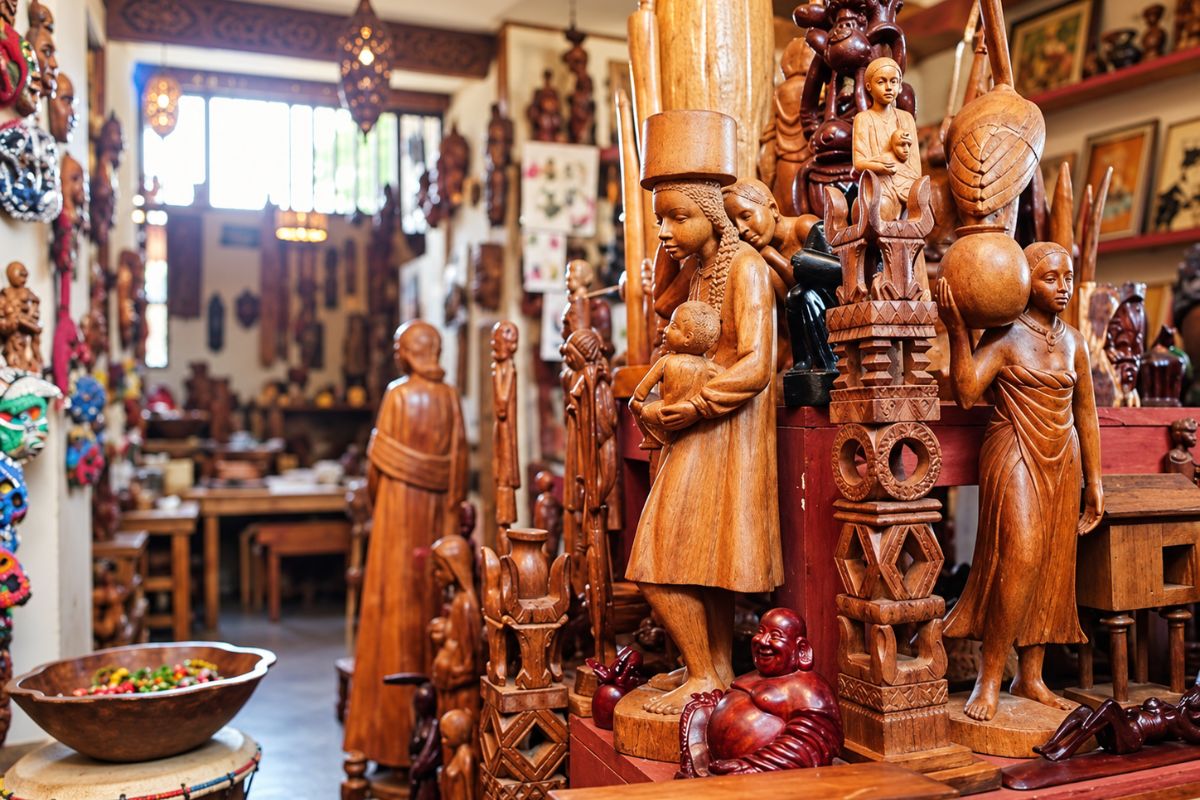
Ambositra is one of the most interesting cultural stops in Madagascar’s Central Highlands. Surrounded by rolling hills and agricultural landscapes, the town is especially associated with Malagasy craftsmanship, carved wood, traditional decorative arts and the cultural heritage of the surrounding region.
For travellers following Madagascar’s classic route south, Ambositra is much more than a place to break the journey. It offers an opportunity to discover another side of the island, one shaped by artisans, markets, architecture, Highland landscapes and traditions that remain closely linked to everyday life.
Ambositra fits naturally into a journey through the Central Highlands of Madagascar, between Antsirabe and Fianarantsoa.
Ambositra is an excellent stop for travellers who want to understand Madagascar beyond wildlife and national parks.
The town is strongly associated with craftsmanship and decorative arts, particularly woodcarving. Workshops, shops and local markets provide a window into skills that remain important in the cultural identity of Madagascar’s Highlands.
Ambositra is also valuable because of its setting. The surrounding countryside is characterised by hills, cultivated land, villages and winding roads through a distinctly Highland landscape.
Rather than simply passing through on the way south, spending time here can make the transition between Antsirabe and Fianarantsoa much more meaningful.
Craftsmanship is one of the main reasons travellers remember Ambositra. The town is widely associated with carved wood, decorative objects, furniture and traditional Malagasy craftwork.
Woodworking traditions in this part of Madagascar are visible in furniture, architectural decoration, boxes, sculptures and everyday objects.
Many pieces use geometric motifs and detailed carving techniques, reflecting a long relationship between craft, identity and local artistic expression.
Ambositra is a good place to look for locally produced handicrafts, but it is worth taking time to understand where an object comes from and how it was made.
When possible, buying directly from artisans or reputable workshops helps connect your purchase more closely with the people and skills behind it.
One of the most important cultural traditions associated with the wider region is the woodcrafting knowledge of the Zafimaniry.
The Zafimaniry communities live in the mountainous region southeast of the Central Highlands. Over generations, their foresters, carpenters and artisans developed highly specialised knowledge around wood, construction and carving.
According to UNESCO, wooden houses, beams, doors, tools, furniture and other everyday objects can be richly decorated, while traditional structures use sophisticated joinery techniques rather than relying on nails or metal fittings.
The decorative motifs are not simply ornamental. They can express social values, family relationships, community life and aspects of Zafimaniry belief and identity.
UNESCO inscribed the woodcrafting knowledge of the Zafimaniry on the Representative List of the Intangible Cultural Heritage of Humanity in 2008, after the tradition had originally been proclaimed in 2003.
Important distinction
Ambositra itself is not the UNESCO-listed element. The UNESCO recognition concerns the woodcrafting knowledge of the Zafimaniry, a living tradition practised by Zafimaniry communities in the wider region.
Authoritative source
Learn more on the official UNESCO page on Zafimaniry woodcrafting knowledge.
Ambositra is best enjoyed at a slower pace. Rather than looking for one major monument, use the visit to explore craftsmanship, markets, local life and the surrounding Highland atmosphere.
Meeting artisans and seeing woodworking techniques firsthand can make the town’s craft traditions much easier to appreciate than simply browsing finished objects in a shop.
Markets offer a glimpse into everyday life in the Highlands and can be interesting places to observe local products, food, textiles and crafts.
Ambositra has a relaxed Highland atmosphere where walking between neighbourhoods, shops and workshops can be as rewarding as visiting any single attraction.
Beyond woodcarving, travellers may encounter different forms of decorative arts, handmade objects and traditional craftwork associated with the wider region.
The road around Ambositra passes through green hills, cultivated valleys and rural communities, making the surrounding landscape an important part of the experience.
Ambositra works particularly well as part of a longer Highland journey towards Fianarantsoa and the national parks of southern Madagascar.
Ambositra can look modest at first glance.
It does not have the monumental landscapes of Isalo or the wildlife reputation of Andasibe. Its interest lies instead in the relationship between place, craftsmanship and people.
A carved object becomes more meaningful when you know who made it, how the technique was transmitted and why particular forms or patterns are used.
This is why Ambositra works especially well for travellers interested in cultural encounters rather than simply collecting attractions.
Ambositra is an excellent stop if you want to understand Madagascar through craftsmanship, local life and Highland traditions.
Its location makes Ambositra a natural cultural stop between Antsirabe and Fianarantsoa on a journey towards southern Madagascar.
Anyone interested in woodworking, handmade objects, design or traditional artistic techniques can find more depth here than in a simple souvenir stop.
Ambositra fits naturally into the journey south through Madagascar’s Central Highlands.
A typical progression begins in Antananarivo, continues through Antsirabe and Ambositra, then reaches Fianarantsoa before branching towards some of southern Madagascar’s best-known natural destinations.
From Fianarantsoa, travellers can continue towards Ranomafana, Ambalavao, Andringitra and Isalo depending on the route and available time.
Combine Ambositra with Antsirabe for a broader introduction to Madagascar’s Central Highlands, local life and rural landscapes.
Continue south to Fianarantsoa, an important Highland city and gateway to several major destinations in southern Madagascar.
Add rainforest wildlife to your cultural journey with a visit to Ranomafana, one of Madagascar’s best-known national parks.
Ambositra is easiest to appreciate when it is treated as part of a Highland journey rather than as an isolated attraction.
The right amount of time depends on your itinerary and how interested you are in crafts and local culture.
Travellers moving quickly along the RN7 may stop briefly, while those who want to visit workshops, markets and the surrounding countryside benefit from a slower pace.
A knowledgeable local guide can add considerable value if your priority is craftsmanship and culture, particularly when visiting workshops or learning about techniques and traditions.
Ambositra can be included in Central Highlands itineraries during different parts of the year, but weather conditions and the wider route through Madagascar should guide your timing.
If you buy crafts, favour transparent sellers and workshops where the origin of the objects and the people who made them can be explained.
This is particularly important when traditional knowledge is being transformed into products for visitors.
Yes, especially if you are interested in Malagasy culture, handicrafts, woodworking and life in the Central Highlands. It also makes a logical stop on the route between Antsirabe and Fianarantsoa.
Ambositra is especially known for craftsmanship and woodcarving and is often associated with the broader woodworking traditions of the region.
No. Ambositra itself is not a UNESCO World Heritage Site. However, the woodcrafting knowledge of the Zafimaniry communities in the wider region is inscribed on UNESCO’s Representative List of the Intangible Cultural Heritage of Humanity.
It is a living tradition of woodworking, construction and decorative carving practised by Zafimaniry communities. UNESCO recognises the knowledge and skills associated with this tradition as intangible cultural heritage.
Yes. Ambositra fits naturally into a route through Fianarantsoa towards Ranomafana National Park, making it possible to combine cultural experiences with rainforest wildlife.
Consider Antananarivo, Ambohimanga, Antsirabe and Fianarantsoa.
Ambositra adds a cultural dimension to a journey through the Central Highlands. Rather than simply passing through, spend time discovering craftsmanship, Highland landscapes and the traditions that have shaped this part of Madagascar. Natura Travel can include Ambositra in a private itinerary designed around your interests, available time and preferred pace.