Visit Lokobe National Park
Explore one of the last important remnants of primary forest on Nosy Be,
looking for lemurs, reptiles, birds and endemic plants.
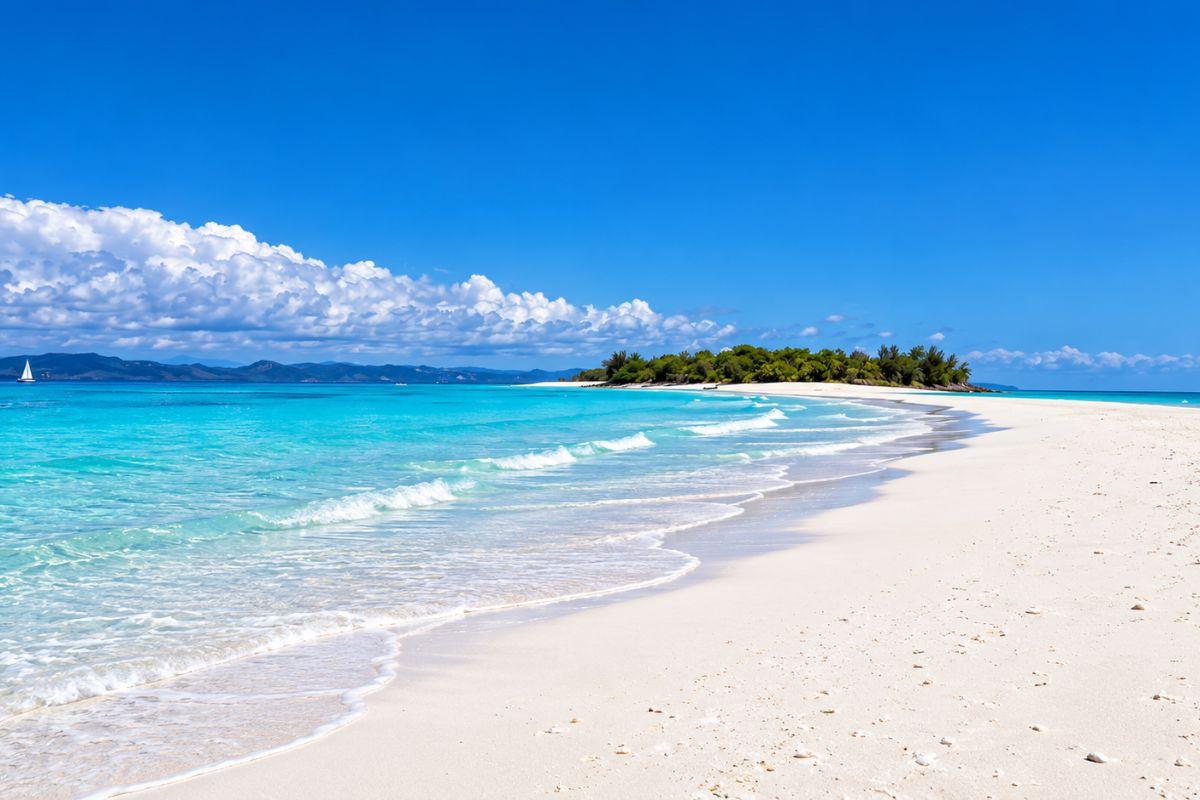
Often called the “Perfume Island” because of its long association with aromatic
plants such as ylang-ylang, Nosy Be offers much more than a conventional beach stay.
Travellers can explore Lokobe National Park, watch the sunset from Mont Passot,
snorkel around Nosy Tanikely, visit Nosy Komba and discover the island’s markets,
villages and cultural heritage.
Nosy Be is also an excellent final stop after a journey through
Northern Madagascar
,
particularly when combined with
Ankarana
and
Amber Mountain
.
Nosy Be is one of the easiest places in Madagascar to combine relaxation
with genuine nature and cultural experiences.
You can spend one day on a beach, another walking through primary forest
in Lokobe, and another travelling by boat between neighbouring islands.
The surrounding archipelago adds enormous variety. Nosy Tanikely is known
for snorkeling and marine biodiversity, while Nosy Komba offers villages,
craft traditions, forested hills and a quieter island atmosphere.
This makes Nosy Be suitable both for travellers looking for a tropical
conclusion to an active Madagascar journey and for those who want to build
an entire holiday around the northwestern islands.
Madagascar’s National Tourism Board commonly refers to Nosy Be as the
“Perfume Island”, reflecting its association with aromatic crops and plants.
Official tourism itineraries highlight ylang-ylang, vetiver and other
fragrant plants as part of the island’s identity, alongside markets,
crafts, beaches and nature.
Distilleries and plantations provide an opportunity to understand another
side of Nosy Be beyond the coast, showing how agriculture, fragrance and
local economic life have shaped the island.
This combination of island culture and tropical nature is one reason
Nosy Be remains such a distinctive destination in Madagascar.
Nosy Be offers far more than beaches. A good stay combines the main
island with forest, viewpoints and excursions into the surrounding archipelago.
Explore one of the last important remnants of primary forest on Nosy Be,
looking for lemurs, reptiles, birds and endemic plants.
The island’s highest point offers panoramic views across crater lakes,
forests, coastlines and surrounding islands.
The marine park around Nosy Tanikely is one of the classic excursions
from Nosy Be, with coral reefs and abundant marine life close to shore.
Discover a smaller neighbouring island known for forested slopes,
villages, handicrafts and a slower atmosphere.
Visit a plantation or distillery to learn why aromatic plants
form such an important part of Nosy Be’s identity.
Nosy Be offers numerous coastal areas where travellers can swim,
relax, watch the sunset or use the beach as a base for marine excursions.
Lokobe is one of Nosy Be’s most important natural areas and an essential
stop for travellers who want more than a beach holiday.
Madagascar National Parks describes Lokobe as one of Madagascar’s
remaining refuges of primary forest.
The park lies on the southeastern side of Nosy Be and protects
humid forest descending towards the coast.
Madagascar National Parks gives Lokobe a total area of 862 hectares,
including approximately 740 hectares of terrestrial habitat and
122 hectares of marine habitat.
This combination of forest and coastal ecosystems makes Lokobe
particularly important for the island’s biodiversity.
Authoritative source
Learn more from
Madagascar National Parks’ official Lokobe page
.
Madagascar’s tourism authorities highlight Lokobe for lemurs,
chameleons, birds, reptiles and other endemic wildlife.
The forest also protects distinctive plant life, including palms and other
species associated with Madagascar’s humid northwestern ecosystems.
The experience is very different from a conventional island excursion.
Once inside the forest, the emphasis shifts from beaches and boats to careful
observation beneath the canopy.
A local guide is particularly valuable because many reptiles and smaller
forest animals are exceptionally difficult to locate without trained eyes.
Nosy Be is volcanic in origin, and Mont Passot offers one of the clearest
views of that landscape.
Mont Passot is the highest point on Nosy Be and provides panoramic
views over the island and surrounding archipelago.
It is particularly popular around sunset, when the changing light
reveals the island’s hills, coast and surrounding sea.
The road and walking routes around Mont Passot pass several volcanic
crater lakes, some of which also hold cultural significance locally.
These lakes are an important reminder that Nosy Be is much more
geographically varied than a simple beach island.
Nosy Tanikely is one of the most popular marine excursions from Nosy Be.
Madagascar’s National Tourism Board describes Nosy Tanikely as a
marine national park particularly well known for snorkeling,
diving and marine biodiversity.
Coral reefs are located relatively close to shore, making the
underwater environment accessible even to many casual snorkelers.
Official tourism information records colourful reef fish,
coral, marine invertebrates and sea turtles among the area’s
notable marine life.
Sightings naturally vary with conditions and should never be guaranteed.
Protect the reef
Avoid touching or standing on coral, keep a respectful distance from marine
animals and use operators that follow protected-area rules.
Nosy Komba is one of the easiest ways to add another island atmosphere
to a stay on Nosy Be.
Official tourism itineraries commonly combine Nosy Komba and Nosy Tanikely
in a day excursion from Nosy Be.
Around Ampangorina, visitors can discover village life and handicrafts,
including embroidery, while the island’s forested landscape provides a
strong contrast to the more developed areas of Nosy Be.
If you prefer a slower experience, Nosy Komba can also justify a longer stay
rather than being treated solely as a short excursion.
Nosy Be is one of Madagascar’s principal bases for exploring the marine
environments of the northwest.
Reef excursions around islands such as Nosy Tanikely provide
opportunities to observe coral and tropical marine life.
The wider Nosy Be archipelago offers diving for different experience
levels, with reefs and a varied marine environment.
Day trips and longer cruises connect Nosy Be with smaller islands,
fishing communities, reefs and remote coastal landscapes.
Nosy Be can also offer seasonal encounters with large marine wildlife.
Madagascar’s National Tourism Board identifies northwestern Madagascar
as one of the regions where humpback whales may be observed during their
annual migration through Malagasy waters.
Tourism authorities have also worked with Cétamada in Nosy Be to train
guides and boat operators in responsible whale-watching practices.
Wildlife seasons vary, so if marine mammals are a priority, travel dates
should be planned around the species you hope to observe rather than
treating sightings as guaranteed.
Ylang-ylang is closely associated with Nosy Be and contributes
to its long-standing reputation as the “Perfume Island”.
Other fragrant and tropical plants also form part of the agricultural
landscape and local production.
Madagascar’s National Tourism Board includes visits to perfume-plant
distilleries in official Nosy Be itineraries.
Such visits provide useful context for understanding how locally
grown plants are processed into aromatic products.
A meaningful trip to Nosy Be should include more than the hotel and beach.
Local markets provide a glimpse into island life through food,
spices, produce and everyday commerce.
Excursions around the island and neighbouring islands can introduce
travellers to fishing communities and rural life.
Nosy Be lies within a region strongly influenced by Sakalava history
and cultural traditions, adding an important dimension to the island
beyond its beach identity.
Nosy Be is one of Madagascar’s strongest choices for travellers
who want genuine beach and island time.
Lokobe, marine reserves and seasonal marine wildlife mean you do
not have to choose between nature and relaxation.
Nosy Be works particularly well at the end of an active Madagascar
itinerary when you want a slower pace without running out of things to do.
Add a quieter, more intimate island experience with villages,
handicrafts and forested landscapes.
Combine beach time with tsingy, caves, dry forest and hiking
on mainland northern Madagascar.
Add cool rainforest, waterfalls and endemic wildlife for a dramatic
contrast with Nosy Be’s tropical coastline.
Explore Madagascar’s far north, with bays, beaches and access
to some of the region’s most distinctive landscapes.
Nosy Be works extremely well as the final stage of an overland journey
through northern Madagascar.
One possible route begins around Antsiranana and Amber Mountain,
continues through Ankarana and then reaches Nosy Be for several slower days
of island exploration.
From Nosy Be, you can then add excursions or overnight stays on neighbouring
islands such as Nosy Komba.
This combination creates a particularly varied itinerary moving from bays
and mountain rainforest to limestone landscapes, marine reserves and beaches.
Nosy Be can be reached by air or through an overland and boat
combination from mainland northern Madagascar.
Flight and ferry schedules can change, so current connections
should be confirmed when planning your itinerary.
Avoid treating Nosy Be as a one-night beach stop.
Allow enough time for at least some combination of Lokobe,
Mont Passot, neighbouring islands and genuine relaxation.
The ideal period depends on your priorities, including beach conditions,
diving, marine wildlife and the other regions in your itinerary.
See our
complete guide to the best time to visit Madagascar
.
Sun protection, lightweight clothing, insect repellent and suitable
footwear for forest excursions are useful.
For boat trips, waterproof protection for phones, cameras and valuables
is also sensible.
Coral reefs and marine animals are vulnerable to disturbance.
Avoid touching coral, feeding wildlife or pursuing animals for photographs.
Use operators that respect protected-area and wildlife-observation rules.
Markets, craft producers, local guides and community-based services
provide opportunities for more of the value of tourism to remain locally.
Choosing well-run local experiences can also provide a more meaningful
understanding of the island than remaining entirely inside a resort.
Yes. Nosy Be is particularly worthwhile if you want to combine beaches,
island excursions, rainforest, snorkeling and a slower pace within one destination.
Nosy Be is famous for tropical beaches, ylang-ylang, Lokobe National Park,
Mont Passot and excursions to islands such as Nosy Komba and Nosy Tanikely.
Yes. Lokobe is one of the main reasons to explore beyond Nosy Be’s beaches.
Madagascar National Parks protects primary forest, coastal habitat and
endemic wildlife within the park.
Yes. Nosy Komba is commonly visited by boat from Nosy Be and can be
combined with Nosy Tanikely or enjoyed as a longer island stay.
Yes. Nosy Tanikely is a marine protected area known for coral reefs,
tropical fish and other marine life, with snorkeling accessible close to shore.
Humpback whales migrate through northwestern Madagascar seasonally.
Sightings depend on timing and natural conditions and are never guaranteed.
Yes. Combining
Ankarana
with Nosy Be is an excellent way to balance adventure, wildlife
and beach time in northern Madagascar.
Nosy Be combines beaches, rainforest, marine life and island culture in
one of Madagascar’s most versatile destinations. Natura Travel can integrate
the island into a private journey with enough time for Lokobe, neighbouring
islands, marine excursions and genuine relaxation.