Visit the Rova of Antananarivo
The Rova is one of the most important historic landmarks in Madagascar. Located above the city, the royal complex reflects centuries of royal, political and cultural history.
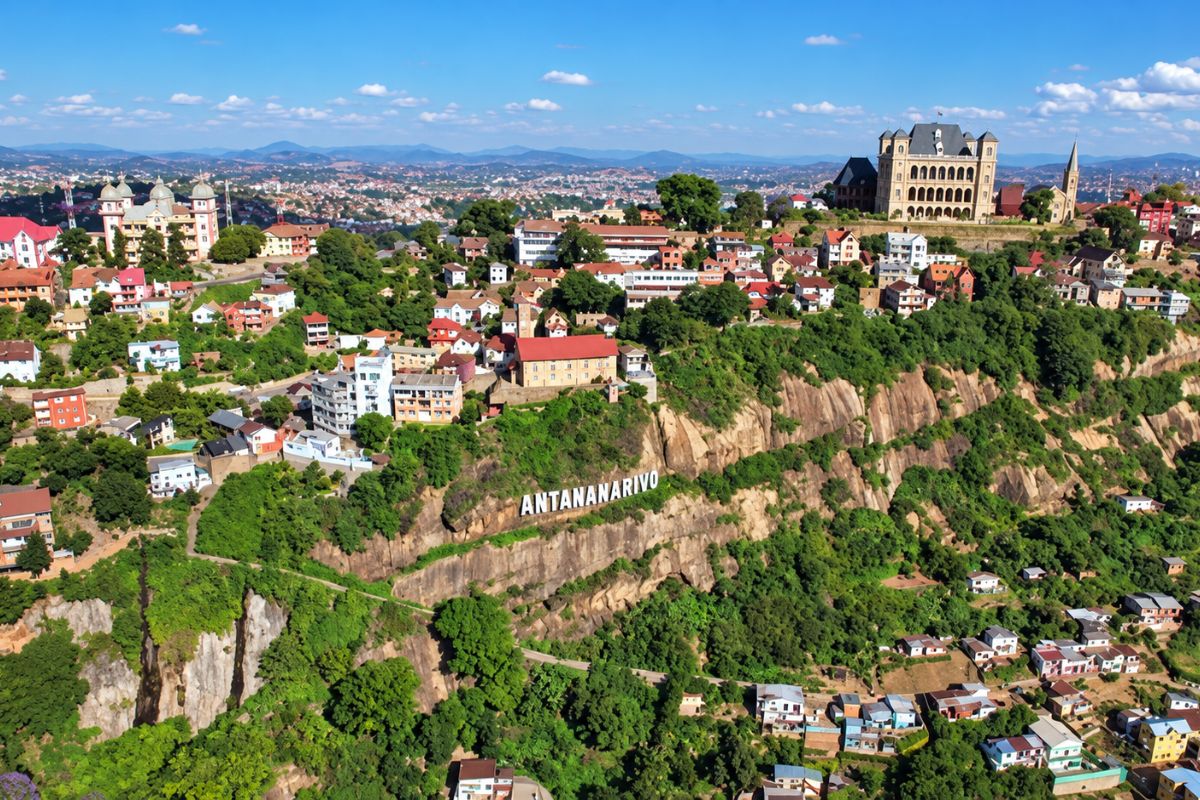
Antananarivo is far more than the place where most journeys through Madagascar begin. Built across hills in the Central Highlands, the capital combines royal history, traditional neighbourhoods, busy markets, historic architecture and everyday Malagasy life.
Known locally as Tana, the city rewards travellers who take time to explore beyond the airport and hotel district. The historic Upper Town, the Rova, hillside streets and views across the surrounding plains reveal a side of Madagascar that is very different from the national parks, rainforests and beaches elsewhere on the island.
Antananarivo is also the natural starting point for exploring the Central Highlands of Madagascar, including nearby Ambohimanga.
Many travellers treat Antananarivo simply as an arrival point. That is understandable, but it means missing one of the best places to understand Madagascar’s history and contemporary life.
The city brings together several layers of Malagasy history. The Upper Town reflects the royal period of the Merina kingdom, while lower neighbourhoods show later colonial influences and the growth of a modern African capital.
Antananarivo also offers something that national parks cannot: a chance to see how Malagasy history, architecture, religion, markets, food and daily life interact in one dense urban environment.
Spending even a little time exploring the city can make the rest of a Madagascar trip feel more connected and meaningful.
The historic city developed on the hills of Madagascar’s Central Highlands. According to UNESCO’s documentation for the Upper Town of Antananarivo, the area was once known as Analamanga before King Andrianjaka established a royal centre on the highest hill in the early seventeenth century.
The royal settlement grew around the Rova and became increasingly important as the political influence of the Merina kingdom expanded.
By the late eighteenth century, Antananarivo had become firmly established as the political centre of the Highlands. The city continued to develop through the nineteenth century, when royal architecture, religious buildings and diplomatic influences transformed its skyline.
During the colonial period, development expanded into the lower city, including Analakely and what is now Avenue de l’Indépendance.
Today, Antananarivo remains Madagascar’s political, economic and cultural capital, while the historic Upper Town preserves important traces of these different periods.
Heritage note
The Upper Town of Antananarivo has been on Madagascar’s UNESCO World Heritage Tentative List since 2016. This is different from being fully inscribed on the World Heritage List.
Antananarivo is best explored through a combination of history, viewpoints, neighbourhoods and everyday city life.
The Rova is one of the most important historic landmarks in Madagascar. Located above the city, the royal complex reflects centuries of royal, political and cultural history.
The Haute Ville is one of the most atmospheric parts of Antananarivo, with steep streets, historic buildings and views across the capital.
The lower city around Analakely is busier and more commercial, offering a very different perspective from the quieter historic hills.
Markets provide a window into everyday urban life and can reveal local food, spices, textiles, household goods and Malagasy craftsmanship.
Antananarivo’s hills create excellent viewpoints over red-roofed neighbourhoods, rice fields and the surrounding Highlands.
Extend your historical exploration beyond the capital with the Royal Hill of Ambohimanga, one of Madagascar’s most important cultural sites.
The Rova is the historic royal complex that dominates the Upper Town and is one of the key places for understanding Madagascar’s royal history.
The Rova developed over several centuries and became associated with successive rulers of the Merina kingdom.
Its position above the city reflects both the strategic and symbolic importance of royal power in the Highlands.
The complex suffered a major fire in 1995 and has undergone extensive reconstruction and restoration work since then.
Today, the site remains one of the most significant historic landmarks in Antananarivo and continues to play an important role in presenting Madagascar’s royal heritage.
Practical note
Opening arrangements and exhibitions at the Rova can change. Before visiting, it is worth confirming current access conditions rather than relying on older guidebooks or blog posts.
The Upper Town is one of the most rewarding areas to explore on foot.
Historic houses, churches, royal-era architecture and steep streets create a cityscape that differs greatly from the commercial districts below.
UNESCO’s description of the Upper Town highlights its architectural and landscape value and its close relationship with the Rova.
This area is particularly interesting for travellers who enjoy history, architecture and photography rather than simply visiting individual monuments.
The Upper Town of Antananarivo was submitted to UNESCO’s World Heritage Tentative List in 2016 by Madagascar’s Ministry of Culture.
The proposal highlights the historic city, the Rova, traditional architecture and the exceptional landscape created by the city spreading across the hills.
It is important to make the distinction correctly: the Upper Town is currently on the Tentative List and is not yet an inscribed UNESCO World Heritage Site.
Nearby Ambohimanga, by contrast, has been officially inscribed on the World Heritage List since 2001.
Authoritative source
You can consult the official UNESCO page for the Upper Town of Antananarivo.
Antananarivo is one of the best places to experience the contrast between Madagascar’s historic identity and its modern urban life.
Markets and commercial districts reveal the rhythm of everyday city life, from food and clothing to household goods and craft products.
The city’s hills display layers of architectural history, from traditional Highland houses and royal buildings to religious and colonial-era structures.
Time in the capital is also an opportunity to experience Malagasy cuisine and understand how local ingredients and Highland food traditions fit into contemporary city life.
Yes, especially if this is your first trip to Madagascar.
Many itineraries rush travellers out of the capital as soon as possible. But spending time here can give you valuable cultural and historical context before you travel into the rest of the country.
It is particularly worthwhile for travellers interested in history, photography, architecture, markets and contemporary Malagasy life.
Antananarivo is also a practical base for a visit to Ambohimanga before continuing south through the Highlands or east towards Andasibe.
Combine the capital with Madagascar’s most important royal and sacred hill for a deeper introduction to the history of the Central Highlands.
Travel east for rainforest, indris and wildlife, creating an excellent cultural-and-nature combination at the start of a Madagascar journey.
Head south through the Highlands towards Antsirabe and continue along the classic RN7 route.
Antananarivo sits at the centre of many classic Madagascar itineraries. Depending on your interests and available time, you can travel east towards Andasibe, south along the RN7 or begin with cultural exploration in the Highlands.
This makes the capital much more than an airport stop. It is the natural connecting point between several of Madagascar’s major travel regions.
The right amount of time depends on your interests and flight schedule. Travellers interested in history and culture benefit from having enough time to explore the Upper Town and visit Ambohimanga rather than rushing onward.
Yes, particularly in the historic districts. Antananarivo’s most interesting stories are often linked to buildings, royal history and neighbourhoods that are much easier to understand with local interpretation.
Antananarivo can be visited year-round as part of a Madagascar itinerary, but weather conditions across the rest of your route should guide your travel dates.
Antananarivo is spread across hills and traffic conditions can make travel times unpredictable. Build flexibility into your schedule, especially around airport transfers and appointments.
Yes, particularly if you are interested in Malagasy history, culture, architecture and everyday urban life. The city also provides useful cultural context before travelling elsewhere in Madagascar.
Antananarivo is Madagascar’s capital and is particularly known for its historic Upper Town, the Rova, hillside neighbourhoods and role in the history of the Merina kingdom.
No. The Upper Town of Antananarivo is currently on UNESCO’s World Heritage Tentative List. It has not yet been fully inscribed as a World Heritage Site.
Highlights include the Rova, the historic Upper Town, city viewpoints, markets and a cultural excursion to nearby Ambohimanga.
Yes. Antananarivo and Andasibe combine very naturally, allowing you to experience the capital’s cultural heritage before travelling east for rainforest and wildlife.
Consider Ambohimanga, Antsirabe, Ambositra and Fianarantsoa.
Antananarivo is more than a gateway to Madagascar. With royal history, historic neighbourhoods, local markets and easy access to Ambohimanga, it can provide a meaningful introduction to the country before you continue towards the rainforests, Highlands or southern routes.