Look for Lemurs
Guided walks offer opportunities to observe several lemur species
moving through rainforest and bamboo habitats.
Located southeast of Fianarantsoa, the park is particularly famous for its lemurs,
including several bamboo lemur species, but its biodiversity extends far beyond primates.
Birds, frogs, reptiles, orchids, ferns and hundreds of plant species thrive
in this humid environment.
Ranomafana is also one of the most important conservation sites on the classic
route through
Southern Madagascar
,
and combines naturally with
Fianarantsoa
,
Ambalavao
and
Andringitra National Park
.
Ranomafana is one of the strongest destinations in Madagascar for travellers
who want to experience a genuine humid rainforest ecosystem.
The forest covers steep hills and river valleys where mist, rain and dense
vegetation create an atmosphere very different from the dry south or the open
sandstone landscapes of Isalo.
Wildlife is the main attraction, but the experience also includes waterfalls,
bamboo forests, mountain viewpoints and night walks focused on smaller nocturnal species.
Ranomafana is especially rewarding when given enough time for more than one walk,
because different circuits and different times of day reveal very different aspects
of the forest.
Madagascar National Parks currently gives Ranomafana National Park
an area of approximately 43,550 hectares.
The park protects humid evergreen forest, bamboo forest, marshes
and highland forest between roughly 600 and 1,200 metres in elevation.
Madagascar National Parks records 14 lemur species, 125 bird species,
101 amphibian species and 938 plant species within the protected area.
Of those plants, MNP reports that 705 are endemic to Madagascar
and 17 are locally endemic to the Ranomafana area.
Sources & Local Context
Biodiversity, habitat, access and visitor information on this page
is based primarily on Madagascar National Parks, the official manager
of Ranomafana National Park.
Ranomafana forms part of one of Madagascar’s most important
internationally recognised conservation landscapes.
Ranomafana National Park is one of the components of the UNESCO
World Heritage property known as the Rainforests of the Atsinanana.
The serial natural property was inscribed in 2007 under criteria
related to ecological processes and biodiversity.
UNESCO recognises these rainforests for their exceptional levels
of endemism and their importance for the survival of Madagascar’s
unique plants and animals.
Primates and lemurs are particularly significant within the wider
World Heritage property.
Authoritative source
Read more on the
official UNESCO page for the Rainforests of the Atsinanana
.
Ranomafana is best experienced through guided forest walks
at different times of day.
Guided walks offer opportunities to observe several lemur species
moving through rainforest and bamboo habitats.
Bamboo habitats are particularly important within Ranomafana
and form part of the park’s distinctive ecology.
After dark, the surrounding forest can reveal nocturnal lemurs,
frogs, chameleons and other species that are difficult to detect by day.
With more than one hundred bird species recorded by Madagascar National Parks,
Ranomafana is an important destination for birders.
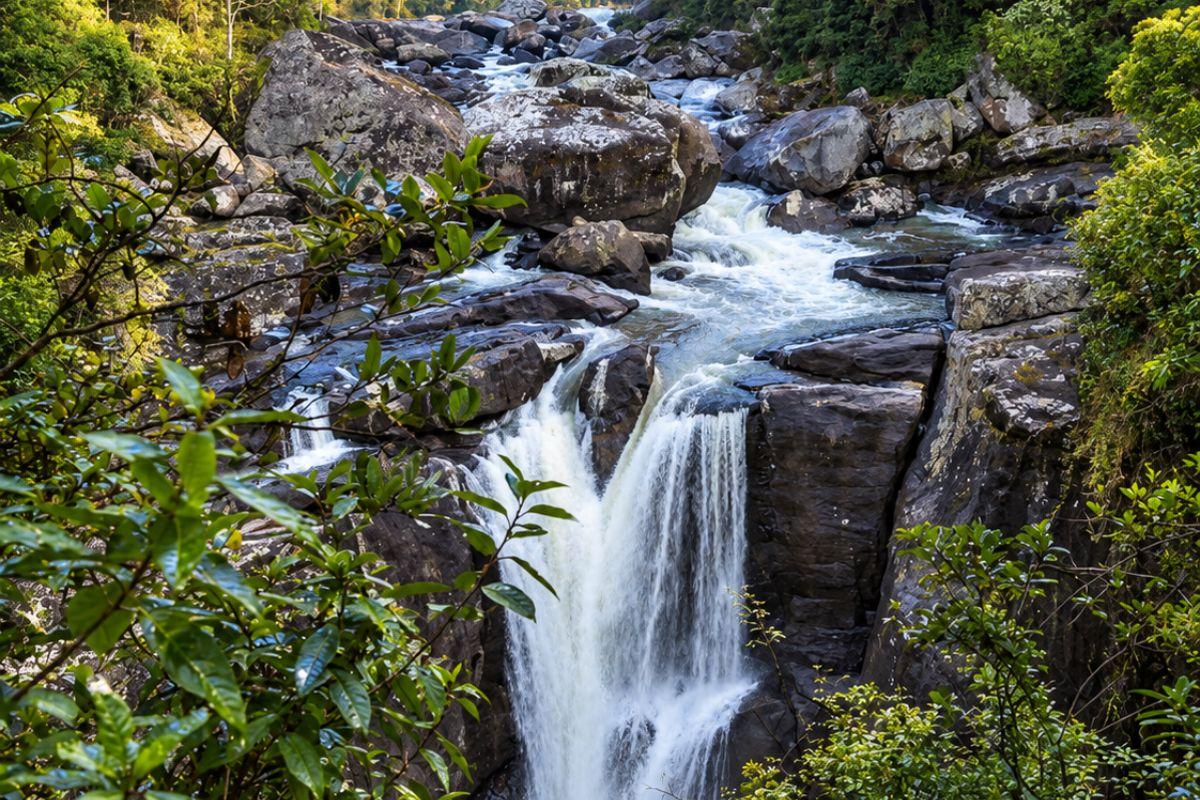
Mountain streams, rivers and waterfalls form an essential part
of the park’s rainforest landscapes.
Combine rainforest with Highland culture, mountains,
sandstone canyons and the dry southwest.
Lemurs are one of the main reasons travellers visit Ranomafana.
Madagascar National Parks currently records 14 species in the park,
including several species associated with bamboo and humid forest habitats.
The exact species encountered varies according to the route,
time of day, season and natural animal movement.
This is why a guided visit should focus on patient observation
rather than treating any particular sighting as guaranteed.
Wildlife etiquette
Keep a respectful distance, remain quiet around animals,
never feed lemurs and follow your guide’s instructions.
Bamboo groves form one of the characteristic habitats
within Ranomafana National Park.
They provide food and shelter for specialised animals
that have evolved alongside these plants.
Bamboo areas also support birds, reptiles, amphibians,
insects and a much wider forest community.
A knowledgeable guide can help reveal smaller species
that are easily overlooked when attention is focused only on lemurs.
The forest changes completely after sunset.
Night excursions may reveal nocturnal lemurs,
frogs, chameleons, insects and other small animals.
Some species are much easier to detect after dark
than during daytime forest walks.
Night walks are generally more about careful observation
than covering long distances.
Follow current rules on where night excursions are permitted,
as access arrangements may differ between park and surrounding areas.
Ranomafana’s humid climate makes it particularly rich in amphibians.
Madagascar National Parks records 101 amphibian species in the protected area,
an exceptional number that reflects the importance of the park’s streams,
marshes and wet forest habitats.
For travellers interested in smaller wildlife,
frogs can be just as fascinating as the park’s better-known lemurs.
Rainy and humid conditions may increase animal activity,
although they also make forest trails wetter and more slippery.
Dense forest provides habitat for many birds associated
with Madagascar’s humid eastern ecosystems.
Madagascar’s exceptionally high level of endemism makes
Ranomafana particularly attractive for specialist birdwatchers.
Morning forest walks can be especially productive
for bird activity as well as lemur observation.
Water is central to the Ranomafana ecosystem.
Madagascar National Parks identifies the park as an important water reservoir
associated with the Namorona, Faraony and Manananonoka river systems.
Rainfall, steep mountain slopes and dense vegetation create streams,
cascades and river valleys throughout the landscape.
These waterways are important not only scenically but also for amphibians,
plants, local communities and wider regional ecosystems.
Hiking conditions differ greatly from the dry trails of parks such as Isalo.
Ranomafana is mountainous, humid and frequently wet.
Trails can include slopes, roots, mud and slippery sections,
so footwear with good grip is especially important.
The best walk depends on your fitness, wildlife interests,
available time and current forest conditions.
A local guide can adapt the day according to where animals
have recently been observed and how conditions are changing.
Madagascar National Parks currently identifies April to November
as the generally favourable period for visiting Ranomafana.
Morning visits are also recommended by MNP for wildlife observation.
Madagascar National Parks states that the park remains accessible
throughout the year.
Wetter periods can mean muddier trails but can also make the forest
exceptionally lush and increase activity among amphibians.
Plan for your whole route
Choose your dates according to the complete itinerary,
especially if combining Ranomafana with Andringitra, Isalo and Ifaty.
See our
guide to the best time to visit Madagascar
.
Ranomafana is one of the strongest nature extensions from Fianarantsoa.
Madagascar National Parks places the park approximately 67 kilometres
from Fianarantsoa by the current road access route.
Combining the two creates an excellent contrast between rainforest wildlife
and the historic, cultural landscapes of the southern Highlands.
Lemurs, frogs, reptiles and birds make Ranomafana one of
southern Madagascar’s richest wildlife destinations.
Dense vegetation, waterfalls and misty mountain forest create
a completely different experience from Madagascar’s dry south.
Forest textures, wildlife, bamboo and changing misty light
provide excellent opportunities for nature photography.
Combine rainforest with historic architecture,
Betsileo culture and the landscapes of the southern Highlands.
Continue south for Anja Reserve, ring-tailed lemurs,
Antemoro paper and traditional crafts.
Contrast humid rainforest with granite mountains,
high-altitude trekking and Pic Boby.
Continue south into a dramatically drier landscape
of sandstone canyons and natural pools.
Finish your RN7 journey with beaches,
spiny forest and the dry southwest coast.
Ranomafana is one of the most important wildlife stops on a classic
southbound Madagascar itinerary.
A strong route can travel from the Central Highlands towards Ranomafana,
continue through Fianarantsoa and Ambalavao, then move into the mountains
of Andringitra and the dry landscapes around Isalo.
This progression shows the remarkable ecological diversity of Madagascar,
moving from humid rainforest to Highlands, granite massifs,
sandstone canyons and eventually the southwest coast.
Ranomafana is reached by road from the RN7 corridor,
with the main access passing through the Fianarantsoa region.
Madagascar National Parks currently lists the park
approximately 67 kilometres from Fianarantsoa.
Staying long enough for more than one forest walk is recommended.
A rushed visit gives fewer opportunities to experience different
habitats, daytime wildlife and nocturnal species.
Yes. Madagascar National Parks requires visitors
to be accompanied by a guide.
Guides are especially valuable in rainforest,
where many animals are difficult to locate without experienced eyes.
Madagascar National Parks recommends plenty of drinking water,
a hat, sun protection, mosquito repellent,
leech protection and a raincoat.
Good walking shoes with strong grip are also highly recommended
because trails can be wet and slippery.
Ranomafana protects part of one of the most important remaining
humid forest systems in Madagascar.
Its UNESCO status reflects the global importance of the biodiversity
found across the Rainforests of the Atsinanana.
UNESCO continues to monitor threats affecting the wider World Heritage
property, including forest loss, resource exploitation and mining pressures.
Responsible tourism, effective protected-area management
and continued community involvement remain important for long-term conservation.
Current UNESCO context
The Rainforests of the Atsinanana were removed from UNESCO’s
List of World Heritage in Danger in 2025, but monitoring continues.
In 2026 UNESCO specifically continued to request action regarding
gold mining pressures around Ranomafana.
Yes. Ranomafana is one of Madagascar’s strongest destinations
for rainforest, lemurs, amphibians, birds and guided forest hiking.
Ranomafana is famous for its humid rainforest,
bamboo habitats, lemurs, frogs, waterfalls and exceptional biodiversity.
Madagascar National Parks currently gives the park
a surface area of approximately 43,550 hectares.
Madagascar National Parks currently records 14 lemur species
within the protected area.
Ranomafana National Park forms part of the serial UNESCO World Heritage
property known as the Rainforests of the Atsinanana,
inscribed in 2007.
Yes. Madagascar National Parks states that the park remains
accessible year-round and generally identifies April to November
as a favourable period for visits.
Yes. Madagascar National Parks requires visitors
to be accompanied by a guide.
Yes. Ranomafana combines particularly well with
Fianarantsoa
,
allowing travellers to experience rainforest wildlife
and Highland culture within the same regional journey.
Yes. Combining Ranomafana with
Isalo National Park
creates one of the strongest ecological contrasts on the RN7,
from humid rainforest to semi-arid sandstone landscapes.
Ranomafana combines UNESCO-listed rainforest, extraordinary lemur diversity,
bamboo forest, waterfalls and some of Madagascar’s richest amphibian and bird life.
Natura Travel can integrate the park into a private southern Madagascar itinerary
with realistic time for forest walks, wildlife observation and onward travel
through the RN7 region.