Visit Palmarium Reserve
Palmarium is the best-known wildlife experience in Akanin’ny Nofy.
The reserve protects humid forest and provides opportunities to observe
lemurs, reptiles, birds and a rich variety of tropical plants.
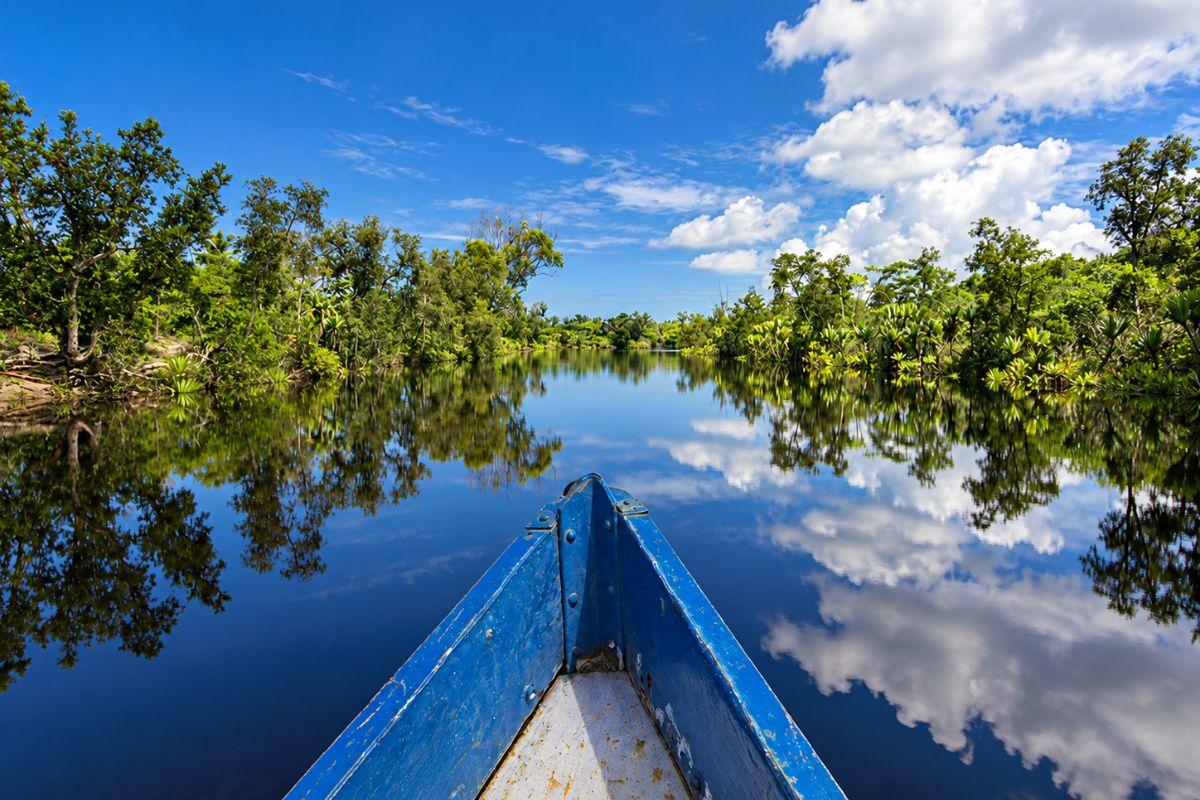
Reached by boat rather than by a conventional road journey, the destination
offers a very different travel experience: slow movement across the water,
tropical vegetation, rainforest wildlife and the opportunity to explore
the well-known Palmarium Reserve.
Akanin’ny Nofy fits naturally into a journey through
Eastern Madagascar
and can be combined with
Andasibe
,
Toamasina or other destinations along Madagascar’s humid east coast.
Akanin’ny Nofy is ideal for travellers who want to experience eastern Madagascar
at a slower pace.
Instead of moving between destinations entirely by road, part of the journey
unfolds on the Canal des Pangalanes, a long system of waterways, lakes and rivers
running parallel to Madagascar’s east coast.
Once there, the focus shifts to forest, wildlife and water. Palmarium Reserve
is the main attraction, but the experience also comes from the atmosphere:
lush vegetation, lake views, birdlife and the feeling of being away from
Madagascar’s busier road circuits.
This makes Akanin’ny Nofy particularly attractive for wildlife enthusiasts,
photographers, couples and travellers who enjoy quiet nature experiences.
The Canal des Pangalanes is one of the defining landscapes of eastern Madagascar.
Madagascar’s National Tourism Board describes it as a long succession of rivers
and lakes running south from the Toamasina region, often separated from the
Indian Ocean by only a narrow strip of forest or sand.
The contrast is part of its appeal. On one side are waterways, humid vegetation
and mangrove environments; on the other lies the Indian Ocean coastline.
Akanin’ny Nofy sits within this watery landscape and is commonly reached by boat,
which means that the transfer itself becomes part of the travel experience.
Official tourism itineraries from Madagascar’s National Tourism Board include
boat transfers along the Pangalanes to Akanin’ny Nofy followed by visits to
Palmarium Reserve and nocturnal wildlife excursions.
Sources & Regional Context
Information about the Canal des Pangalanes, boat access to Akanin’ny Nofy
and Palmarium wildlife experiences is supported by recent itineraries
published by Madagascar’s National Tourism Board.
The destination is centred on nature, wildlife and the waterways of eastern Madagascar.
Palmarium is the best-known wildlife experience in Akanin’ny Nofy.
The reserve protects humid forest and provides opportunities to observe
lemurs, reptiles, birds and a rich variety of tropical plants.
Official tourism programmes in the region include nocturnal visits,
giving travellers the chance to experience the forest after dark
and look for species that are less active during the day.
The boat journey is not merely transport. It offers views of lakes,
villages, vegetation and everyday life along one of Madagascar’s
most unusual travel corridors.
Akanin’ny Nofy is particularly popular with travellers who want
relatively accessible encounters with lemurs in a lush eastern
forest environment.
The humid forest supports palms, ferns, orchids, traveller’s trees
and other characteristic plants of Madagascar’s eastern ecosystems.
Combine the waterways of Akanin’ny Nofy with rainforest wildlife
in Andasibe or other destinations along the east.
Palmarium is the main nature attraction associated with Akanin’ny Nofy.
Madagascar’s National Tourism Board highlights the reserve for its
lemurs, reptiles and birds.
The attraction for travellers is the opportunity to experience
eastern rainforest wildlife within a relatively compact nature stay.
Official tourism material also highlights palms, ferns, orchids,
valuable forest trees and the traveller’s tree, or ravinala.
This diversity helps make Palmarium more than simply a lemur stop:
the forest itself is a major part of the experience.
Responsible wildlife travel
Wildlife should be observed with respect. Follow local rules and guide
instructions, avoid disturbing animals and do not assume that every close
encounter is appropriate simply because an animal appears accustomed to people.
One of the strongest reasons to include Akanin’ny Nofy in an itinerary is
that the journey itself feels different.
Road travel in Madagascar can be long and demanding. Here, part of the route
takes place on water.
The slower rhythm gives you time to watch the vegetation change, see settlements
along the banks and experience an important transport corridor of Madagascar’s east coast.
For many travellers, this change of pace is exactly what makes Akanin’ny Nofy memorable.
The humid environment of eastern Madagascar supports a very different
ecosystem from the dry forests of the west or the spiny landscapes of the south.
Lemurs are one of the main reasons travellers visit Palmarium and
the surrounding forest environment.
Wetlands, forest and lake environments create varied habitats for
birdlife and make the area interesting for nature observation.
Guided day and night excursions can reveal reptiles and other
forest species that are easy to overlook without local knowledge.
Palmarium and the surrounding humid forest make Akanin’ny Nofy
a strong addition to a wildlife-focused Madagascar itinerary.
Travellers who enjoy boat journeys, quiet accommodation and staying
close to nature may particularly appreciate the slower rhythm here.
Water, rainforest, wildlife and tropical vegetation create varied
opportunities for nature and landscape photography.
Combine Akanin’ny Nofy with one of eastern Madagascar’s most famous
rainforest destinations for a wildlife-rich journey.
Add tropical beaches and island life after a rainforest and waterways itinerary.
Explore the wider east for rainforests, wildlife, waterways
and the Indian Ocean coast.
Akanin’ny Nofy works particularly well as part of a journey focused on
rainforest and eastern Madagascar.
One approach is to combine Antananarivo and Andasibe before continuing
east towards the Pangalanes region. Another is to connect the destination
with Toamasina and onward coastal travel.
The key is to allow enough time for the boat transfers and nature activities
rather than trying to treat Akanin’ny Nofy as a rushed stop.
Boat travel is a central part of reaching Akanin’ny Nofy.
Recent official tourism itineraries include transfers along the
Canal des Pangalanes from the Toamasina area.
Transfer arrangements can vary, so they should be confirmed as part
of your itinerary rather than assumed from old travel reports.
Allow enough time to enjoy both the reserve and the setting.
A rushed arrival and departure would miss much of what makes
the destination appealing.
Eastern Madagascar is humid, and weather can affect boat and road
travel. Consider the conditions across your entire east-coast itinerary.
Lightweight rain protection, insect protection, comfortable walking
shoes and protection for cameras or electronics are useful in a humid
forest and boat environment.
Yes, especially for travellers interested in lemurs, rainforest,
boat travel and quieter nature experiences in eastern Madagascar.
It is best known for Palmarium Reserve, humid forest,
lemurs and its location along the Canal des Pangalanes.
Madagascar’s National Tourism Board highlights lemurs, reptiles,
birds, palms, ferns, orchids and other humid-forest flora.
Night visits are included in official tourism itineraries for Palmarium,
although exact arrangements should be confirmed locally when planning your stay.
Boat transfers on the Canal des Pangalanes are a typical way to reach
the destination. Current arrangements depend on your wider itinerary.
Yes. Combining it with
Andasibe
creates a strong eastern Madagascar itinerary focused on rainforest
and wildlife.
Akanin’ny Nofy offers a quieter way to experience eastern Madagascar,
combining boat travel, rainforest, wildlife and the landscapes of the
Pangalanes Canal. Natura Travel can integrate it into a private itinerary
designed around your interests, travel dates and preferred pace.