Explore the Upper Town
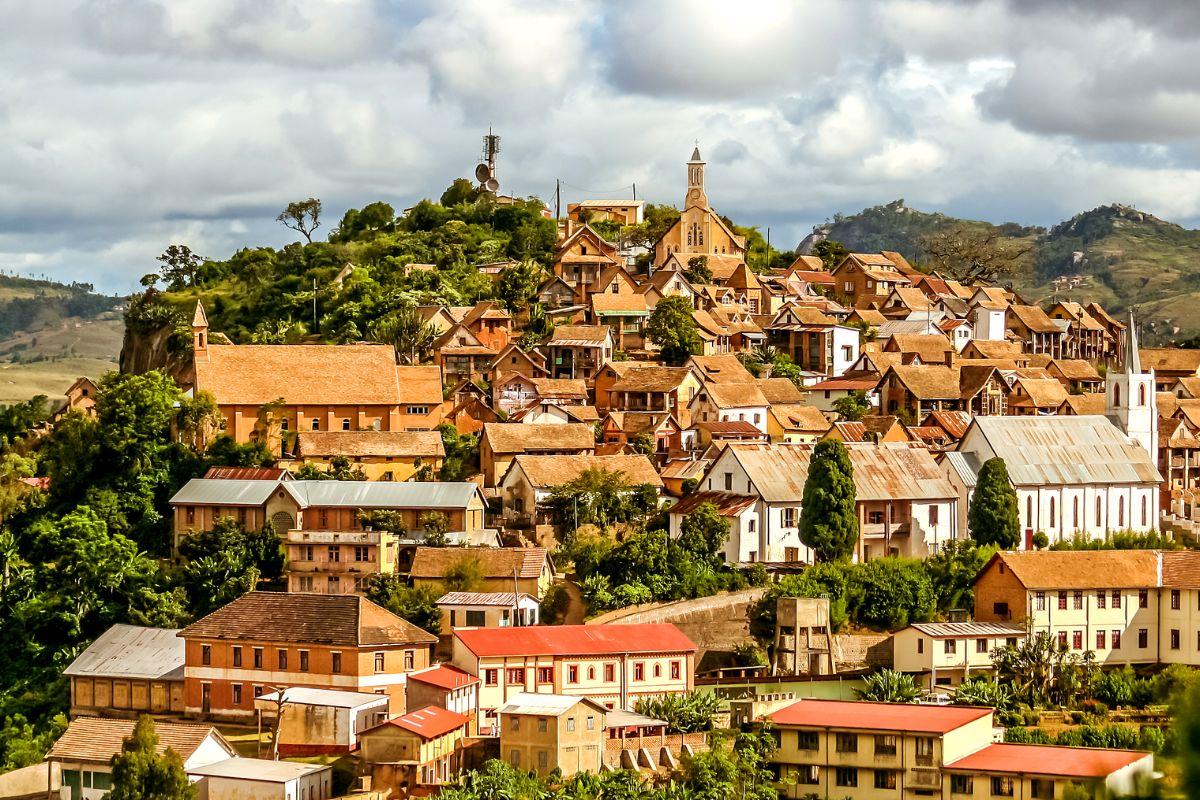
Walk through Fianarantsoa’s historic Haute Ville, where narrow lanes,
old buildings, churches, small squares and hillside views create one
of the city’s most distinctive environments.
The city is also an important crossroads. Travellers following the classic RN7 route
pass through Fianarantsoa before continuing towards Ranomafana, Ambalavao,
Andringitra and Isalo, while the surrounding Haute Matsiatra region is known for
tea plantations, vineyards and rural landscapes.
Fianarantsoa therefore works particularly well as a bridge between the
Central Highlands
and
Southern Madagascar
.
Fianarantsoa deserves more attention than it often receives from travellers
hurrying south along the RN7.
The city’s historic Upper Town is one of its main attractions, with narrow streets,
small squares, traditional architecture, craft shops and viewpoints over the surrounding hills.
But Fianarantsoa is also valuable because of its cultural setting.
It lies in the heart of Betsileo country and provides a useful introduction
to the traditions, agricultural landscapes and communities of the southern Highlands.
The surrounding region adds another dimension, with vineyards, tea plantations
and access to some of Madagascar’s most interesting road and rail journeys.
Fianarantsoa is the principal city of the Haute Matsiatra region and one of
the major urban centres of Madagascar’s southern Highlands.
Madagascar’s National Tourism Board highlights Haute Matsiatra for its cultural
heritage, vineyards, tea plantations and numerous visitor sites.
Official tourism material also specifically recommends visiting Fianarantsoa’s
Upper Town, describing its small streets, squares, craft shops and viewpoints
as part of a remarkable architectural ensemble.
This combination of urban heritage and rural culture makes Fianarantsoa
more than simply a transport hub.
Sources & Regional Context
Information about the Upper Town, regional cultural heritage, vineyards and
tea-growing landscapes is supported by publications from Madagascar’s
National Tourism Board and the regional tourism authorities.
Fianarantsoa is best experienced by combining the historic city with
excursions into the surrounding Highlands.
Walk through Fianarantsoa’s historic Haute Ville, where narrow lanes,
old buildings, churches, small squares and hillside views create one
of the city’s most distinctive environments.
Fianarantsoa lies in the heart of Betsileo country and provides
an excellent base for understanding the culture, traditions and
agricultural landscapes of this part of Madagascar.
Markets provide a glimpse of everyday life in the southern Highlands,
with agricultural produce, food, clothing and locally made goods.
The Sahambavy area is known for its tea plantation and green Highland
landscapes, making it one of the most interesting excursions from Fianarantsoa.
Haute Matsiatra is also associated with vineyards and wine production,
an unusual feature within the wider Madagascar travel experience.
Fianarantsoa is well positioned for combining Highland culture
with rainforest and wildlife.
The Upper Town is one of the most rewarding areas to explore in Fianarantsoa.
The Haute Ville is characterised by old houses, churches, narrow streets,
stairways and small public spaces built across the city’s hills.
Rather than focusing on one monument, the attraction lies in the
overall urban landscape and the atmosphere created by its historic fabric.
Fianarantsoa’s hillside setting provides attractive views over
neighbourhoods, rice fields and the wider Highland countryside.
Exploring on foot allows you to experience the relationship between
the historic city and the landscape surrounding it.
Fianarantsoa is widely associated with the Betsileo, one of the major cultural
groups of Madagascar’s Central and southern Highlands.
The wider region is characterised by intensive rice cultivation,
terraced landscapes and long-established rural communities.
Cultural traditions remain an important part of regional identity,
from agricultural practices and crafts to ceremonies and social customs.
Travellers should approach these traditions with respect rather than treating
them as performances. A knowledgeable local guide can help explain what is
appropriate to visit, photograph or discuss.
One of the most distinctive excursions in the Fianarantsoa region is Sahambavy.
Madagascar’s National Tourism Board identifies Sahambavy as the location
of the country’s only large tea plantation.
The plantation was established in 1969 and covers hundreds of hectares
of green Highland countryside.
Visits can offer an introduction to tea cultivation and processing,
while the surrounding countryside is also well suited to walking
and enjoying the cooler Highland scenery.
Sahambavy adds an agricultural and landscape dimension to a stay
in Fianarantsoa and can provide a pleasant contrast to the historic city.
Source note
Madagascar’s National Tourism Board describes the Sahambavy plantation as
extending over more than 350 hectares and highlights tea production,
walking opportunities and its position in the Fianarantsoa region.
Fianarantsoa is also the starting point of one of Madagascar’s most
famous railway routes.
The FCE railway links Fianarantsoa in the Highlands with Madagascar’s
southeastern coast and has historically connected remote communities
with regional markets.
The route passes through green hills, forested landscapes,
agricultural areas and settlements on its way towards the coast.
For travellers, the appeal of the FCE lies in the landscapes and
slow progression from the Highlands towards the humid east.
However, railway schedules and operating conditions can change,
so availability should always be checked locally before building
an itinerary around the train.
Practical advice
Do not rely on old timetables for the FCE. Confirm current passenger services
before travel, as schedules and operating arrangements may change.
The wider Haute Matsiatra region is one of the parts of Madagascar most
closely associated with vineyards and wine production.
For travellers, the interest is not only the wine itself but also the
agricultural landscapes and communities surrounding Fianarantsoa.
Combining the city with nearby rural areas creates a more complete picture
of the region, moving from historic urban streets to rice fields,
vineyards and tea-growing landscapes.
Fianarantsoa is an excellent destination for travellers interested
in Highland history, architecture, Betsileo culture and everyday life.
The city sits at an important transition point between the Central
Highlands and Madagascar’s southern national parks.
Those interested in old neighbourhoods, local food, tea plantations,
vineyards and rural landscapes can easily justify spending more time
in and around Fianarantsoa.
Fianarantsoa occupies an important position on Madagascar’s classic RN7 journey.
Travellers commonly arrive after passing through Antsirabe and Ambositra,
then use Fianarantsoa as a transition point before continuing towards
rainforest, mountain landscapes and the drier south.
This makes the city particularly valuable in a well-paced itinerary,
because it links several very different parts of Madagascar.
Combine Fianarantsoa with Ambositra for a deeper introduction
to Highland culture and Madagascar’s craft traditions.
Add rainforest, lemurs and biodiversity to your Highland journey
with one of Madagascar’s best-known national parks.
Continue south to a smaller town surrounded by dramatic landscapes
and known for traditional crafts and regional culture.
Combine cultural exploration with mountains and trekking
in one of Madagascar’s most spectacular highland massifs.
Continue further south towards sandstone canyons,
natural pools and dramatically different scenery.
Travellers who only use Fianarantsoa as an overnight stop miss much
of what makes the area interesting.
Allow additional time if you want to explore the Upper Town,
visit Sahambavy or experience the surrounding rural landscapes.
Yes. A guide can add significant value in the Upper Town and when
exploring cultural sites, rural areas or local communities.
Fianarantsoa can be included in many Madagascar itineraries,
but the best timing should be based on the wider route,
especially if you continue to rainforest or mountain destinations.
Fianarantsoa sits at elevation, and temperatures can feel cooler
than on the coast, especially early in the morning and at night.
Layers are useful when travelling through Madagascar’s Highlands.
Yes. Fianarantsoa is particularly worthwhile for travellers interested
in historic architecture, Betsileo culture, Highland landscapes and
excursions such as Sahambavy.
Fianarantsoa is known for its historic Upper Town, its position in the
Betsileo region, the surrounding vineyards and tea-growing areas,
and its role as a major stop on the RN7.
Explore the historic Upper Town, discover Betsileo culture,
visit local markets and consider an excursion to Sahambavy
and the surrounding Highland countryside.
Yes. Sahambavy lies in the wider Fianarantsoa region and is known
for its tea plantation, lake and green Highland scenery.
Fianarantsoa is the inland terminus of the Fianarantsoa–Côte Est railway.
However, operating schedules can change, so current passenger services
should always be verified locally before travel.
Popular next stops include
Ranomafana National Park
,
Ambalavao
,
Andringitra National Park
and
Isalo National Park
.
Fianarantsoa is where Madagascar’s Central Highlands begin to open towards
the rainforest, mountains and landscapes of the south. Its historic Upper Town,
Betsileo culture and surrounding tea and vineyard country make it worth more
than a quick overnight stop. Natura Travel can integrate Fianarantsoa into a
private itinerary designed around your interests, travel dates and preferred pace.