Walk Through the Rainforest
Follow forest trails beneath a dense canopy of tropical vegetation
while looking for lemurs, reptiles, birds and other endemic species.
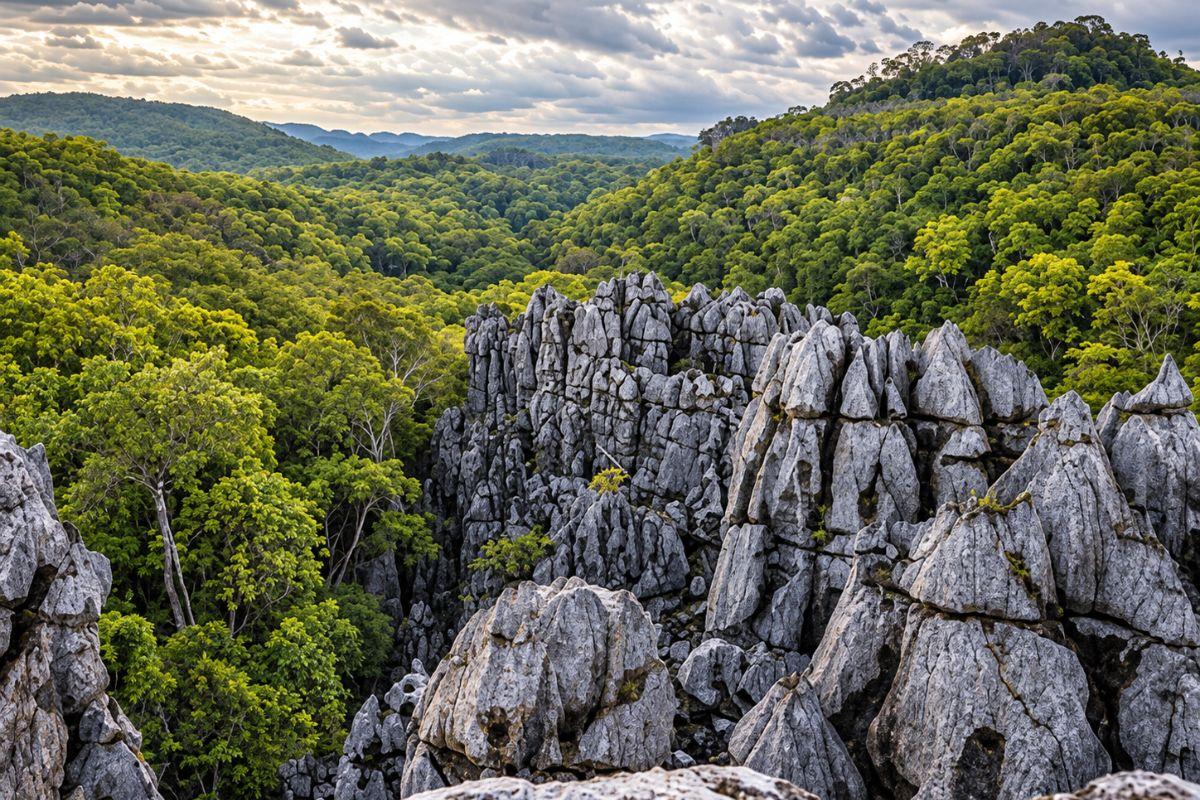
Its atmosphere comes as a surprise to many travellers. After crossing the drier
landscapes of Madagascar’s far north, you suddenly enter dense vegetation,
misty forest and a much cooler mountain environment.
Amber Mountain fits naturally into a journey through
Northern Madagascar
and combines especially well with
Antsiranana
and
Ankarana
.
Amber Mountain is one of the best places in northern Madagascar to experience
humid rainforest without travelling to the eastern side of the country.
The park’s altitude creates a cooler and wetter environment than the surrounding
lowlands, resulting in lush vegetation, streams, waterfalls and forest habitats
that support a wide variety of endemic species.
It is also relatively easy to combine with Antsiranana, making it a strong choice
for travellers who want to mix wildlife, landscapes and northern Madagascar’s
coastal scenery.
For photographers and nature lovers, the contrast between mossy forest,
volcanic features and waterfalls gives Amber Mountain a very different character
from Ankarana or the islands around Nosy Be.
Amber Mountain is a volcanic massif rising above the far north of Madagascar.
Its elevation captures moisture from the surrounding air, creating a humid
forest environment that is strikingly different from the drier landscapes below.
This difference in altitude and rainfall explains the park’s extraordinary
vegetation. Large trees, ferns, mosses, orchids and other forest plants thrive
in the cooler conditions.
Water is one of the defining features of the park. Streams and waterfalls
descend through the forest, while volcanic activity in the distant past
helped create crater lakes within the massif.
The result is one of the most atmospheric landscapes in northern Madagascar.
The park is best explored on foot, combining wildlife observation
with forest scenery and volcanic landscapes.
Follow forest trails beneath a dense canopy of tropical vegetation
while looking for lemurs, reptiles, birds and other endemic species.
Waterfalls are among the park’s best-known landscape features and
provide some of its most attractive forest viewpoints.
The volcanic history of the mountain has left several crater lakes
embedded within the highland forest landscape.
Several lemur species inhabit the forest, and guided walks offer
opportunities to observe them moving through the canopy.
Amber Mountain is particularly interesting for reptiles,
including chameleons and geckos that can be difficult to spot
without experienced local guides.
Combine rainforest with limestone landscapes, beaches and islands
elsewhere in the north.
Water defines much of the Amber Mountain experience.
Streams descending through the massif create a series of waterfalls
surrounded by dense vegetation.
These sites are especially attractive after periods of rain,
although trail conditions can also become wetter and more slippery.
Crater lakes reflect the volcanic origins of the massif and add
another layer to the park’s landscape.
They also help distinguish Amber Mountain from other forest reserves
in Madagascar.
Amber Mountain’s isolated humid forest provides habitat for a remarkable
range of endemic wildlife.
Visitors may encounter lemurs, birds, chameleons, geckos, frogs and a wide
variety of invertebrates.
Some of the smaller species are exceptionally difficult to detect without
a guide, which makes local knowledge especially valuable here.
Wildlife sightings can never be guaranteed, but slow walking and patient
observation generally provide a much better experience than rushing between
viewpoints.
Amber Mountain is particularly rewarding for travellers who appreciate
the smaller details of Madagascar’s biodiversity.
Forest vegetation provides ideal habitat for several chameleon species,
which guides often locate among leaves and branches.
Leaf-tailed and other geckos can be exceptionally well camouflaged
against bark and vegetation.
The humid forest and abundant water create favourable conditions
for amphibians, especially during wetter periods.
The strongest impression is often the change in atmosphere.
You may begin the day in the warmer surroundings of Antsiranana and then climb
into cooler mountain air, mist and dense rainforest.
Forest sounds replace the open landscapes below, and waterfalls and streams
appear among the trees.
This contrast makes Amber Mountain particularly memorable when combined
with the dry limestone landscapes of Ankarana or the beaches of northern Madagascar.
Use Antsiranana as your main gateway to Amber Mountain and combine
rainforest with bays, beaches and the landscapes of Madagascar’s far north.
Contrast humid rainforest with dramatic limestone formations,
caves and dry forest.
Continue west towards Madagascar’s best-known island destination
for beaches, marine experiences and a slower coastal stay.
Add a quieter island experience after exploring the forests
and landscapes of mainland northern Madagascar.
Amber Mountain is one of the easiest natural destinations to combine
with Antsiranana.
A northern itinerary can begin around Antsiranana and Amber Mountain,
continue through Ankarana and then move towards Nosy Be and the surrounding islands.
This creates one of Madagascar’s most varied regional journeys,
moving from humid mountain forest to dry limestone landscapes and finally
to tropical islands.
The park is ideal for travellers interested in lemurs,
reptiles, amphibians and rainforest biodiversity.
Forest trails, waterfalls and changes in elevation make Amber Mountain
an enjoyable walking destination.
Misty rainforest, waterfalls, small endemic species and volcanic
landscapes provide very different subjects from Madagascar’s dry north.
Amber Mountain is generally visited from the Antsiranana area,
making it one of the most practical national park excursions
in Madagascar’s far north.
Current road and access conditions should be confirmed locally
when planning the visit.
A day can provide a good introduction to the park, but travellers
with a strong interest in wildlife or hiking may benefit from allowing
more time for different trails.
The mountain environment is cooler and wetter than the surrounding lowlands.
Comfortable walking shoes, rain protection and a light layer are useful,
even when the weather around Antsiranana feels warm.
A local guide adds significant value, especially for wildlife.
Many chameleons, geckos, frogs and other small animals are extremely
difficult to find without trained eyes.
Amber Mountain can be included in northern Madagascar itineraries during
different parts of the year, but conditions in the forest vary with rainfall.
Wetter periods can make the vegetation particularly lush and increase activity
among amphibians, while trails may also become muddier and more slippery.
Drier conditions can make hiking more comfortable, but the exact timing should
be chosen based on the wider northern itinerary rather than Amber Mountain alone.
Yes. It is one of the best places in northern Madagascar to experience
humid rainforest, waterfalls, volcanic landscapes and endemic wildlife.
Amber Mountain is best known for its cool rainforest,
waterfalls, crater lakes and rich diversity of lemurs,
chameleons, geckos, frogs and birds.
Yes. Amber Mountain is commonly visited from
Antsiranana
and is one of the major nature excursions in Madagascar’s far north.
Yes. Its elevation creates a humid mountain forest ecosystem
that contrasts strongly with the drier lowlands surrounding it.
Yes. Combining Amber Mountain with
Ankarana
is particularly interesting because the two destinations offer
very different ecosystems and landscapes.
Good walking shoes, rain protection, water, insect repellent
and a light layer are useful. Binoculars can also improve
wildlife observation.
Amber Mountain offers one of northern Madagascar’s most striking contrasts:
cool rainforest, waterfalls and endemic wildlife rising above the drier
landscapes around Antsiranana. Natura Travel can integrate the park into
a private northern itinerary combining forest, limestone landscapes,
beaches and islands.